
Studies to see if mutations behind monkeypox spread: WHO / Photo: Stefani Reynolds - AFP/File
 Lawrence's fifty leaves Pakistan facing record chase to level England series
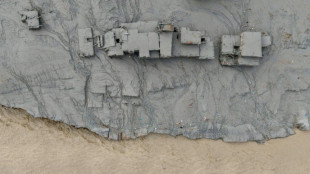
 Netanyahu condemns settler attack in flashpoint West Bank village

 Munoz saves Iraola in Liverpool draw, big-spending Spurs lose again

 Newcastle condemn dismal Spurs to second successive defeat

 Police appeal for footage after life-threatening Stratford assault

 Family searches for Boston engineer missing after Nepal-Tibet floods

 Dolly Parton’s Imagination Library leaves global children’s reading legacy

 BMC rejects negligence claims in three Rajawadi Hospital maternity cases

 Chembur man held over alleged poisoning of woman’s soft drink

 Andhra Pradesh Speaker seeks stronger sports quota and school facilities

 Kolkata police register new FIR against Mamata Banerjee over rally timing

 India and China have not named two new border meeting sites

 Tamil Nadu and NUS agree to expand postgraduate and research links

 Tamil Nadu goalball team’s national silver highlights need for wider support

 Rural Tamil Nadu students present 64 technology projects at IIT-M research park

 Matt Leinart assesses Arch Manning and the leading names in college football

 Los Angeles triplets weigh 19.3 pounds in unusually heavy birth

 Editorial questions Letitia James’ record as New York attorney general

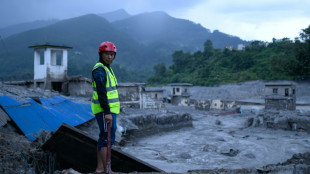 In London, son's agonising wait for news of parents missing in Nepal-Tibet floods

 Ivory Coast captain Kessie snubs Juventus to rejoin Atalanta

 Strasbourg fight back to beat Lens in Ligue 1

 Maharashtra Accepts Tribal Students’ Demands After 17-Day Protest

 Sixteen Keralites Return From Flood-Hit Nepal as Seven Remain Uncontactable

 Chirag Paswan Defends Caste-Based Reservations Amid NDA Dispute

 Tamil Nadu Seeks Public Input on List of Agamic Temples

Studies are under way to see whether genetic changes in the monkeypox virus are driving the rapid spread of the disease, the World Health Organization told AFP on Wednesday.
The two distinct clades, or variants, of the virus were called the Congo Basin (Central African) and West African clades, after the two regions where they are each endemic.
On Friday, the WHO renamed the groupings as Clade I and Clade II respectively, to avert the risk of geographic stigmatisation.
It also announced that Clade II had two sub-clades, IIa and IIb, with viruses within the latter identified as being behind the the current global outbreak.
On Wednesday, the UN health agency specified that Clades IIa and IIb are related and share a recent common ancestor -- therefore IIb is not an offshoot of IIa.
- Research into mutations -
Clade IIb contains viruses collected in the 1970s, and from 2017 onwards.
"Looking through the genome, indeed there are a few genetic differences between the viruses from the current outbreak and the older Clade IIb viruses," the WHO told AFP.
"However, nothing is known about the significance of these genetic changes, and research is ongoing to establish the effects (if any) of these mutations on transmission and disease severity.
"It is still early on in both the outbreak and laboratory studies to tell if the rise in infections could be driven by the observed genotypic changes in the virus, or are due to host (human) factors."
There is also no information yet on what the mutations mean in terms of how the virus interacts with the human immune response.
A surge in monkeypox infections has been reported since early May outside the endemic African countries.
The WHO declared the situation an international public health emergency on July 23.
More than 35,000 cases in 92 countries, and 12 deaths, have now been reported to the WHO.
Almost all new cases are being reported from Europe and the Americas.
Experts have been studying samples from cases.
"The diversity between the viruses responsible for the current outbreak is minimal, and there is no obvious genotypic differences between the viruses from the non-endemic countries," the WHO said.
- Renaming monkeypox could take months -
Meanwhile the WHO said its drive to rename monkeypox could take "a number of months".
The organisation has for weeks voiced concern about the name, with experts concerned that it is misleading.
Monkeypox received its name because the virus was originally identified in monkeys kept for research in Denmark in 1958.
However, the disease is found most frequently in rodents, and the current outbreak is being spread through human-to-human close contact.
The WHO has called for help from the public in coming up with a new name, with a dedicated website where anyone can make suggestions.
"We will update the public by the end of the year," the WHO said.
F.Bennett--AMWN