'Close shave!' How De Gaulle escaped assassin's bullets 60 years ago / Photo: © AFP/File
 Galloway accuser could not foresee publishing-sector fallout, lawyer argues
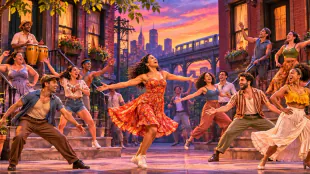 New York City Center revives In the Heights as a timely community story

 Vessel operator seeks witnesses after Vancouver grounding

 US Air Force deploys F-16 fighters to remote Aleutian base for readiness drill

 Bezos grant helps Seattle nonprofit move thousands of families toward housing

 Shrini Srivastava joins crew of Varanasi-Delhi Vande Bharat Sleeper service

 Nearly Half of Australian Workers Overqualified, Survey Finds

 RBI eases export-declaration compliance for individual service exporters

 India proposes more import entry points for drugs and medical devices

 Derek Tierney Outlines Ten-Year Strategy for National Digital Health System

 NBC’s Steve Kornacki Reveals Tech Habits Ahead of Midterm Elections

 India and Israel oppose UN draft on regional conventional arms control
 BLS Polymers shares open 65.3% above IPO price

 Capital-markets shares rally as Motilal Oswal and Angel One lead gains

 Latino Voters Defy ICE Fears, Turn Out in Record Numbers for Midterms

 ITC shares rise as analysts anticipate gradual cigarette-business recovery

 Reliance rally puts historical one-year return pattern in focus
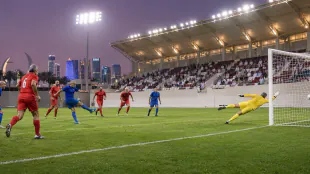 Kuwait edges Oman 1-0 in veterans Gulf Cup in Doha

 Saudi Aramco quarterly profit climbs 34.6% amid elevated oil prices

 Washington reports movement in Iran negotiations aimed at preventing escalation

 Korea’s Labor Share of GDP Hits Record Low Amid Semiconductor Boom

 littlefish and Halo Dot Partner to Replace Payment Terminals with SoftPOS

 Kuwait inspectors destroy 115 kilograms of unverified meat in Farwaniya

 Egypt Accelerates Construction of 341km Sinai Railway Linking Arish and Taba

 John Schneider Admits Owes Millions in 'Dukes of Hazzard' Divorce Battle

August 22, 1962: French President Charles de Gaulle and his wife are being whisked by car through the Paris suburb of Petit-Clamart for a flight back to their country home, when a man on the side of the road waves a newspaper.
The signal has been given.
A group of right-wing extremists spring into action and rake the presidential Citroen DS with gunfire.
Three of the bullets penetrate the bodywork and pass within inches of De Gaulle's head but he and his wife Yvonne miraculously escape unharmed.
"They're such bad shots!," France's World War II hero later jokes about the attempt on his life which shocks the country and gives De Gaulle an opportunity to boost the powers of his office.
Yvonne's immediate concern meanwhile is for the jellied chicken she has in the boot of the car, having stocked up on the delicacy while in the capital.
- Hail of bullets -
Speeding along that summer evening towards a military airfield where they will board a plane taking them to their estate in the village of Colombey-les-Deux-Eglises, the presidential car is flanked by an escort vehicle and two motorcycle outriders.
Night is falling when the signal comes from the mastermind of the attack, Jean-Marie Bastien-Thiry, an engineer in the Air Ministry with the rank of lieutenant-colonel.
Bastien-Thiry is a member of the Secret Armed Organization, known by its French acronym OAS, a far-right paramilitary group incensed by De Gaulle's decision to grant independence to Algeria after a brutal eight-year liberation war.
The dozen-strong hit squad is a mix of "pieds-noirs" -- Europeans born in Algeria during French rule which lasted from 1830 to 1962 -- as well as former soldiers and students. The youngest is just 20 years old.
They open fire first with a machine gun from a yellow van, then from a second vehicle parked further down the road.
The attack lasts just 45 seconds.
More than 150 bullets are fired and there are eight impacts on the car body. One bullet goes through to the back passenger seat, shattering the window by the president and his wife, showered in glass.
The De Gaulles owe a debt of gratitude to the sangfroid of their driver Francis Marroux, who had also been at the wheel a year earlier when the presidential car survived a first assassination attempt -- later attributed to Bastien-Thiry -- in the northeastern village of Pont-sur-Seine.
Marroux manages to keep control of the vehicle and speeds off on two flat tyres under more fire.
De Gaulle's son-in-law Alain de Boissieu also plays a key role. Sitting in the front of the car he shouts "Get down, father!" to France's leader.
- 'Close shave' -
The unflappable De Gaulle, aged 71 at the time, initially acts as if nothing has happened. On arrival at Villacoublay military airport he reviews the troops as usual.
But when boarding the plane with Yvonne he admits to de Boissieu: "This time, it was a close shave!"
Jean-Noel Jeanneney, French historian and author of a book on the attack, says a combination of factors explains the failure of the 1962 hit, notably that none of those involved were ready to die for the cause.
Interviewed by AFP in 2012, one survivor of the cell blamed weapons jamming and shooters not being sufficiently trained.
"They're such bad shots," De Gaulle tells Prime Minister Georges Pompidou in a phone call on the night of the attack.
News of the assassination attempt spreads quickly.
"Failed attack against De Gaulle" AFP writes in a first "flash" at 8:55 pm.
Another follows: "Shots were fired shortly after 8:00 pm against General De Gaulle's car near Villacoublay. No one was hit".
Later it emerges that a man driving in the opposite direction was hit on the hand by a stray bullet but only lightly injured.
- Mastermind executed -
The hunt for the culprits is swift and efficient, with one of the suspects spilling the beans on the whole operation after his arrest.
Nearly all those involved are caught, including Bastien-Thiry. Nine men are put on trial, three of whom are sentenced to death.
De Gaulle pardons two of them but refuses clemency for Bastien-Thiry, who is the last person to be executed by firing squad in France on March 11, 1963 at the age of 35.
Ever the strategist, De Gaulle harnesses public outrage over the attack to build support for a constitutional amendment to have the president elected by popular vote, rather than by an electoral college.
The attack he confides to one of his ministers came "at just the right time."
F.Bennett--AMWN