Tiny light, big dream: Harvesting power from soil in Japan / Photo: Philip FONG - AFP
 SGFX Creates a Standout Brand Experience at Forex Expo Dubai 2026

 Pope urges Europe to help combat 'deceit and lies' in international ties

 Injured Buttler to miss England ODI series in Pakistan
 Madrid housing protesters vow to maintain pressure on government

 In kayaks or waist-deep in floodwater, shoppers return to Bangkok markets

 UK police probes Iran link to air base bomb scare: media

 Eala blasts into Asian Games quarters in just 55 minutes

 Taiwan gender-row boxer Lin Yu-ting guarantees Asian Games medal

 Comedian on trial for allegedly insulting Erdogan in standup show

 More Asian Games transport woes as bus takes Pakistan to wrong venue

 Death toll in South Africa bar shooting rises to 18

 Aide to Venezuelan opposition leader returns from exile

 Messi and Alcaraz love it, now padel takes step closer to Olympics

 Tolls mount in Thailand, Myanmar floods

 Why India's opposition wants top poll official out

 PU Prime Strengthens UAE Momentum with Strong Showing at Forex Expo Dubai 2026

 Eight dead in Thailand floods since mid-September

 Oil prices spike after Trump rejects Iran truce offer

 Taylor Swift sets new record at MTV VMAs
 Seoul seeks apology after Ukraine reveals transfer of North Korean POWs

 Messi on target again but Miami downed by Columbus

 In Washington's political cauldron, a fight over foie gras

 Flavio Bolsonaro: political heir in his father's shadow

 Ravens grab last-second win in Rio as Commanders stop Seahawks

 Paycheck Suddenly Smaller? Clear Start Tax Explains How IRS Wage Garnishment Works and How to Stop It

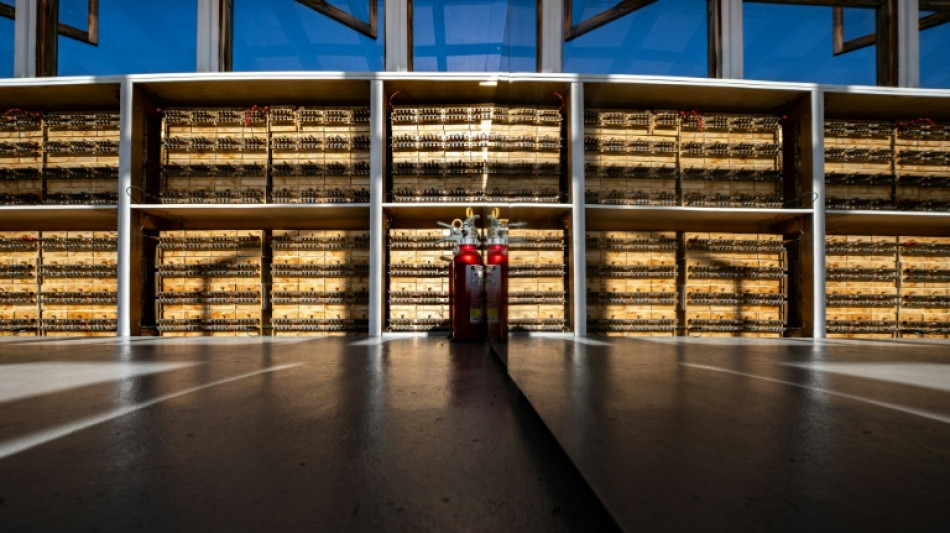
Glinting in the night, halfway up a hill in Japan, the greenhouse-like "Ku-An" test lab is lit by electricity harnessed from 1,500 wooden boxes of soil and compost.
Designer Satoshi Nakagawa has long battled sceptics, but believes that the technology powering the 800 LEDs has a role to play in solving humanity's energy conundrum.
And, failing that, it at least looks nice -- and gets people thinking.
"As the population moves toward 10 billion, energy issues will become just as critical as food issues," said Nakagawa, chief executive of design firm Tripod Design.
"Even if it's just a small contribution, I want people to be able to produce their own electricity using the soil around them," the Japanese product designer and engineer told AFP.
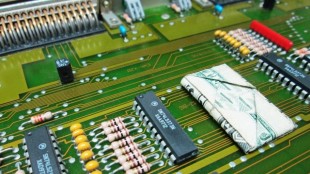
The 72-year-old said he has pioneered "micropower collection (MPC)" -- a way to source tiny dribbles of electrical current from everything from wine to French bread.
His system uses the same mechanism as the voltaic pile, the world's first electrical battery giving a continuous current invented in 1799 by Alessandro Volta.
It involves inserting electrodes made of materials such as zinc and copper into substances that contain moisture or ions, and then collecting the small but steady electrical currents.
Within eyeshot of the glass-covered "Ku-An", which he has rigged up in the remote town of Hitachi-ota, is "Lu-An", which opened last year.
"Lu-An" has some 2,000 plastic cylinders of soil and compost to give 100 watts of output, enough to power a rice cooker and other appliances.
Nakagawa said the technology could be applied, for example, in places without power, including after natural disasters.
It could also provide enough electricity for off-grid devices requiring little power, such as sensors to detect pest damage to farmland, overflowing rivers, landslides or even burglar alarms.
Once installed, the technology produces no carbon dioxide, and unlike other renewables such as solar or wind power is not weather-dependent, Nakagawa said.
- 'Move our emotions' -
Prototype products include a "stand-alone node" -- a bollard-like object powered by soil which enables data communication with a satellite.
He has also used the technology for art installations with flexible rods that, when speared into the ground, have tips that glow in the dark like fireflies on tall grass.
Professional engineers have said Nakagawa's products can be aesthetically pleasing and thought-provoking, but that his system is not practical.
"Its output is significantly inferior compared with regular batteries or car batteries," said Masayuki Nakao, engineering professor emeritus at the University of Tokyo, who has known Nakagawa for years.
"But what is notable about Mr Nakagawa's works is that the light that he creates has the power to move our emotions. People are moved by it when they see the light. They are beautiful," said Nakao.
Nakagawa has shrugged off his sceptics and said engineers must build new products that benefit from MPC.
"I say it's micro power, so we have to think about what micro power can do," he said.
"We should look at the combination of various energy-harvesting technologies as crucial to our overall energy strategy," he said.
"Possibility is without limit."
L.Durand--AMWN