
TrustScale Launches Argus to Detect and Correct AI Hallucinations and Power Safe Enterprise AI Adoption
 Galloway accuser could not foresee publishing-sector fallout, lawyer argues

 New York City Center revives In the Heights as a timely community story

 Vessel operator seeks witnesses after Vancouver grounding

 US Air Force deploys F-16 fighters to remote Aleutian base for readiness drill

 Bezos grant helps Seattle nonprofit move thousands of families toward housing

 Shrini Srivastava joins crew of Varanasi-Delhi Vande Bharat Sleeper service

 Nearly Half of Australian Workers Overqualified, Survey Finds

 RBI eases export-declaration compliance for individual service exporters

 India proposes more import entry points for drugs and medical devices

 Derek Tierney Outlines Ten-Year Strategy for National Digital Health System

 NBC’s Steve Kornacki Reveals Tech Habits Ahead of Midterm Elections

 India and Israel oppose UN draft on regional conventional arms control

 BLS Polymers shares open 65.3% above IPO price

 Capital-markets shares rally as Motilal Oswal and Angel One lead gains

 Latino Voters Defy ICE Fears, Turn Out in Record Numbers for Midterms

 ITC shares rise as analysts anticipate gradual cigarette-business recovery

 Reliance rally puts historical one-year return pattern in focus

 Kuwait edges Oman 1-0 in veterans Gulf Cup in Doha

 Saudi Aramco quarterly profit climbs 34.6% amid elevated oil prices

 Washington reports movement in Iran negotiations aimed at preventing escalation

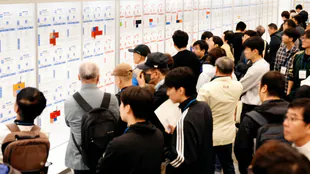 Korea’s Labor Share of GDP Hits Record Low Amid Semiconductor Boom

 littlefish and Halo Dot Partner to Replace Payment Terminals with SoftPOS

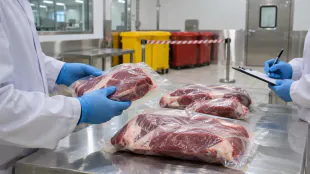 Kuwait inspectors destroy 115 kilograms of unverified meat in Farwaniya

 Egypt Accelerates Construction of 341km Sinai Railway Linking Arish and Taba

 John Schneider Admits Owes Millions in 'Dukes of Hazzard' Divorce Battle

‘Lie Detector for AI' catches LLM mistakes in real-time, with up to 98.5% accuracy and 135x faster than manual research.
LOS ALTOS, CA / ACCESS Newswire / August 5, 2026 / As generative AI scales, research confirms that large language models (LLMs) continue to hallucinate, fabricate sources and make mistakes with confidence. This creates unprecedented risks for enterprises deploying AI for agentic automation, research, content creation and decision-making.
To solve this problem, TrustScaletoday announced the launch of Argus, a patent-pending AI assurance platform. Unlike "AI checking AI" approaches, Argus uses empirical evidence and deterministic verification to review AI-generated content, flag unsupported claims and suggest evidence-based corrections before AI mistakes are published, shared or relied upon.
Research shows that AI hallucination rates vary greatly by task and increase with complexity. Even simple query responses on frontier models can average up to 20% hallucinations, with industry-specific AI query responses hallucinating as much as 88% of the time (Stanford RegLab). Hallucinations cost organizations nearly $70 billion a year. Argus empowers users to verify AI-generated claims up to 135x faster than manual research, reducing hallucinations and improving AI output accuracy by up to 98.5%.
"The AI industry spent years making AI smarter, but trustworthy AI is the bigger problem to solve now," said Lawrence Snapp, CEO of TrustScale. "AI is probabilistic by design but enterprises are responsible for the costs and risks of AI mistakes. Argus mitigates the problem by providing independent evidence before users act on generative AI outputs."
Healthcare, law and academia are high-stakes industry examples where AI users are unsuspectingly exposed to AI hallucination risks. Compounding the issue, Anthropic research shows 91.3% of AI users do not check facts and claims, creating environments where a 'silent failure' can lead to direct human harm. In real-time, Argus prevents unintended consequences by detecting hallucinations, overlaying color-coded TrustScore highlights and offering deterministic evidence to support or contradict AI claims. It then empowers users with inline suggestions to correct AI mistakes with one-click.
Based on more than 20 years of AI data experience, Argus is built on the TrustScale Engine, a proprietary platform that creates a continuous trust control plane for AI assurance, helping users make informed decisions without disrupting workflows.
"AI makers claim to be safer for you, self-governing or truth-seeking. But conflicting evidence, varying perspectives, nuanced language and independent assurance matter when it comes to AI", said Dominique Shelton Leipzig, CEO of Global Data Innovation. "TrustScale's Argus is the first real-time, continuous assurance platform that empowers humans with evidence and enables trustworthy AI. The AI stakes are too high to let a few big models dictate your truth."
Argus by TrustScale is available today in 12 languages for enterprises and as a research preview for individuals at TrustArgus.ai or use it anywhere via the Chrome extension. The enterprise solution can be installed in private and public data environments alongside any AI model, including ChatGPT, Claude, Gemini, Copilot and Grok. Request a demo at www.TrustScale.ai.
About TrustScale
TrustScale is an AI training, evaluation and assurance company helping organizations create, shape and use artificial intelligence with greater confidence and control. Built on more than 20 years of experience in AI data across 200-plus languages, TrustScale develops independent deterministic technologies that detect AI mistakes, evaluate claims against empirical evidence and keep people at the center of consequential decisions. Its Argus platform provides real-time hallucination detection, TrustScore ratings and evidence-based correction suggestions across public and private data environments. Learn more at TrustScale.ai.
Media contact:
Songue PR for TrustScale
[email protected]
SOURCE: Trustscale
View the original press release on ACCESS Newswire
F.Pedersen--AMWN