Bulk book purchases feed AI training through destructive scanning
 Nepal floods leave trail of destruction, aid challenge

 Experts outline sustainable ways to declutter Australian homes

 Bulk book purchases feed AI training through destructive scanning

 George and Amal Clooney attend Lake Como event after France evacuation

 Michelle Obama describes relief and adjustment after daughters leave home

 Very strong El Niño forecast to peak during southern African summer

 SAFA opens tender for dressing rooms, ablutions and grandstands

 TEEKS brings Māori-rooted soul and a new view of masculinity to South Africa

 Saudi customs seize 1.95 million amphetamine pills in lentil shipment

 Trump says Russia will not attack NATO as CIA chief visits Moscow

 British Museum schedules new Bayeux Tapestry ticket release

 From forced labour to living heritage: Sao Tome's colonial plantations

 Motorola September 2026 Deals: Up to $700 Off Razr Ultra and Moto G

 In war-split Myanmar 'spirit consorts' commune across divide

 Leaders of Russia, China, Iran to attend summit in Kyrgyzstan

 Alpha1 AI Expands Support for Federal Agencies

 Kane confirms talks on Bayern extension

 Trump govt. mulls deal to give away part of Yosemite park

 Indian release of Sonia Gandhi memoir uncertain after publisher clarification

 Cities show cleaner transport policies can reduce severe air pollution

 Four patients harmed in Nashville hospital medication mix-up

 Essex council hires private guards as Wethersfield asylum centre expands

 Haakon VIII becomes Norway's king after Harald V dies at 89

 Six injured after sign falls at Christian festival in West Sussex

 Dubai airport expands scanners that keep laptops and liquids in bags

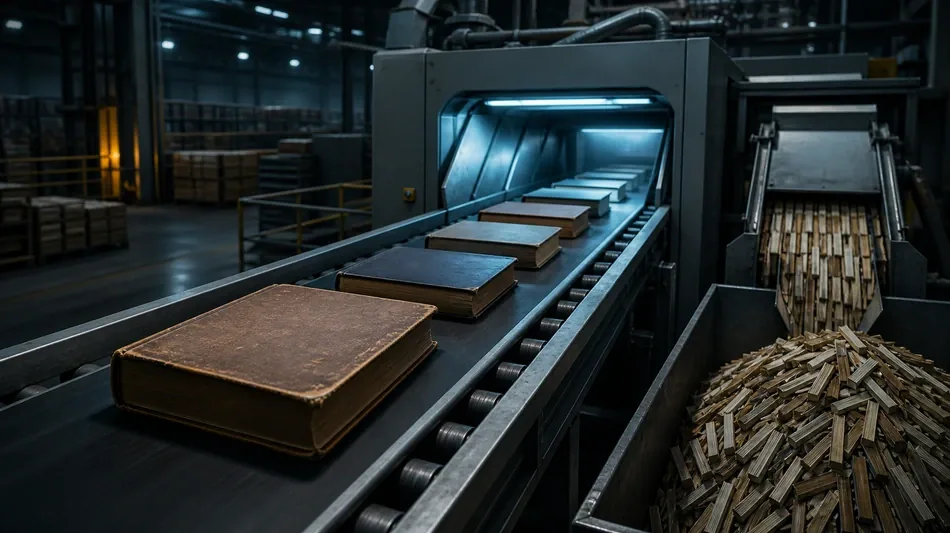
British booksellers have reported unusual bulk orders as technology companies acquire physical books, remove their bindings and scan the pages to expand artificial-intelligence training data.
Second-hand booksellers in Britain have reported large and unusually varied orders for non-fiction titles, raising concern that physical books are being acquired for artificial-intelligence training through a process known as destructive scanning. The method removes a book’s spine, separates and scans its pages, and then discards the original.
Lucy Hingston of Compass Books in Dartmouth, Devon, began comparing notes with other dealers after receiving an order for unrelated works covering subjects including Peruvian geology, South African history, railways, cheese and Hong Kong jewellery. Dealers in York and Felixstowe described similar orders, often involving obscure or out-of-print books and overseas buyers. Online catalogues appeared to make the shops easier to target.
Court records showed that Anthropic, developer of the Claude chatbot, began buying and scanning millions of print books in early 2024 under an initiative called Project Panama. The company had previously used more than seven million digitised books obtained from pirate websites, including five million from one source. A federal judge in San Francisco approved a $1.5 billion, or £1.1 billion, settlement this month in a class action filed by three authors in California in 2024.
Buying physical copies engages the US first-sale doctrine, which generally allows owners to dispose of purchased goods. The records said Anthropic spent millions of dollars on millions of books, stripped their bindings and scanned the pages. Anthropic said Claude is trained on publicly available web material, commercially acquired datasets and internally generated data, and said its programmes do not buy and destroy rare or antiquarian books.
An investigation by 404Media also linked an Amazon warehouse near Las Vegas, known as VGT3, to large-scale book scanning. Amazon said it purchases books through commercial channels to develop and improve customer products and services. Elon Musk said his SpaceXAI team had been told to preserve rare books and scan them by turning pages rather than cutting their spines.
Dealers said many orders appeared to favour non-fiction published before 2022, when generative AI entered widespread use. Oxford University associate professor Yarin Gal said repeatedly training models on AI-generated material can produce a feedback problem known as model collapse, increasing demand for reliably human-written work.
Zoom Books, named by several sellers as a purchaser, denied involvement in destructive scanning. Booksellers remain divided because bulk sales can help businesses operating on narrow margins, while publishers and dealers warn that destruction may eliminate scarce copies and that authors and other creators receive no additional compensation when the text is used for AI training.
D.Kaufman--AMWN