-
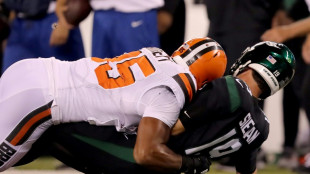 Huge NFL deals send Garrett to Rams, Brown to Patriots
-
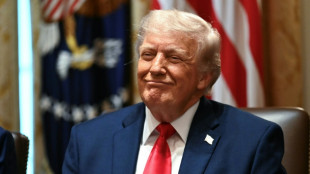
Trump admin agrees to temporarily freeze 'slush fund' for allies
-
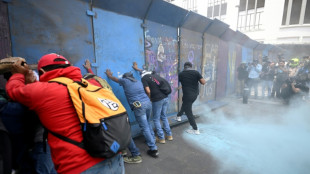 Mexican police tear-gas teachers' protest 10 days before World Cup
-
Berrettini back in French Open quarters after injury 'darkness'

-
 Sabalenka bests Osaka at French Open, Berrettini into quarters
-
Sabalenka overpowers Osaka to reach French Open quarter-finals

-
 Pro-Trump lawyer, leftist senator launch Colombia runoff campaigns
-
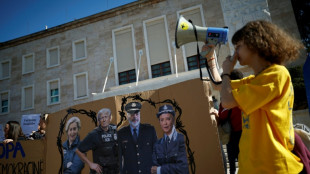
EU reaches deal on 'return hubs' migration reform
-
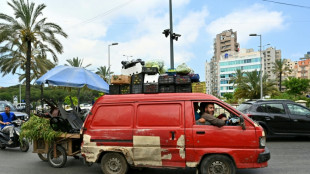 Lebanon's US embassy says Hezbollah accepted US proposal to stop attacks
-
Florida sues OpenAI, CEO Altman over ChatGPT harm to minors

-
 Macron announces 93 bn euros in 'Choose France' foreign investments
-
Joshua says 'only success' matters as Fury fight looms

-
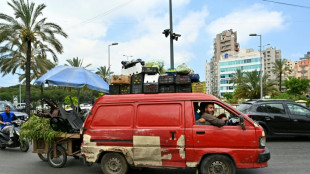 UN Security Council to meet on Lebanon war as Israeli forces push into south
-
UN agency blocks Trump official's appointment over US arrears
-
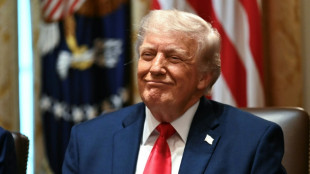 Trump says Israel, Hezbollah agree to halt fighting
-
Monaco sack coach Pocognoli

-
 Auger-Aliassime gallops past Tabilo and into last eight
-
Sabalenka to face Osaka, Berrettini into French Open quarters

-
 AI giant Anthropic confidentially files for IPO
-
'Resilient' Berrettini powers into French Open last eight

-
 Colombia right-winger accused of 'stealing' national jersey
-
Still in the game: Athletes who made comeback in their 40s

-
 Iran truce on the rocks as Guards threaten 'new fronts'
-
New York Times publisher slams AI companies' 'brazen theft' from news outlets

-
 Rodri says Man City future can wait until after World Cup
-
Villarreal appoint Inigo Perez after Rayo success

-
 Word nerds have a weekend on the tiles at Thailand's Scrabble title
-
Cobolli stops thinking and quells Svajda fightback at French Open

-
 Czech court orders German neo-Nazi provocateur's extradition
-
French Open happy with Sabalenka-Osaka in top slot, but men still have edge

-
 Serena Williams announces return to tennis at Queen's Club
-
Serena Williams to return to tennis at Queen's Club

-
 Polish qualifier Chwalinska continues dream Roland Garros run
-
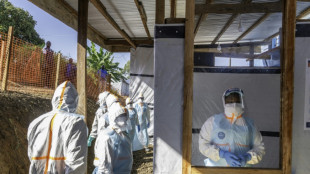
'We need to act now': Race to develop Ebola vaccine heats up
-
 Iran truce on the rocks as Israel presses into Lebanon
-
Fans furious at Travis Scott's 20-minute Istanbul debut set

-
 Two Syrians deny civil war torture accusations in Austria trial
-
Oil prices jump as Iran suspends peace talks
-
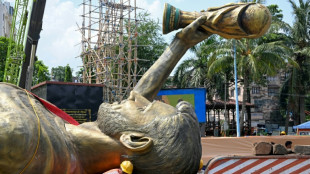 India takes down giant Messi statue over safety concerns
-
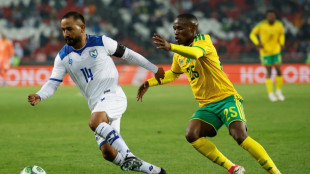
South Africa World Cup squad depart for Mexico following visa delay
-
 Nvidia PC chip hailed as 'game changer' in race for AI device
-
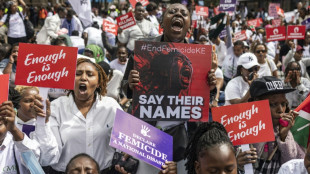
'Stop killing women': Kenyans protest femicide scourge
-
 Sabalenka to face Osaka, Cobolli into French Open quarters
-
Kevin Keegan reveals stage four cancer diagnosis
-
 Cobolli fights into French Open last eight against dogged Svajda
-
Kalinskaya battles into French Open quarter-finals

-
 Survey finds generational gap in attitudes to AI romance
-
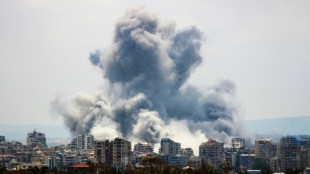
Israel orders strikes on Beirut ahead of UN meeting
-
 Premier League record-breaker Milner retires
-
Russia fired record 8,150 drones at Ukraine in May: AFP analysis
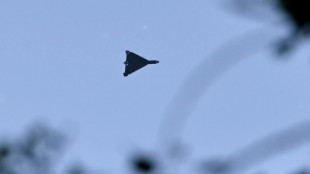
Iran's Nuclear Ambitions
The recent US military strikes on Iran's nuclear facilities have raised questions about the current state of Iran's nuclear program and its potential to develop a nuclear weapon. While the US administration claims that the strikes have "completely and totally obliterated" Iran's key nuclear enrichment facilities, there are conflicting reports and expert opinions on the true extent of the damage.
On June 22, 2025, the United States launched a series of airstrikes on three major Iranian nuclear sites: Fordo, Natanz, and Isfahan. The operation, codenamed "Midnight Hammer," involved B-2 Spirit stealth bombers dropping massive bunker-buster bombs and a submarine launching Tomahawk missiles. President Donald Trump announced that the strikes were a "spectacular military success" and that Iran's nuclear ambitions had been "obliterated."
However, a leaked preliminary intelligence assessment from the Defense Intelligence Agency suggests that the strikes may have only set back Iran's nuclear program by a few months. According to sources familiar with the report, the attacks sealed off the entrances to two facilities but did not collapse their underground structures. Additionally, it is believed that some centrifuges used for uranium enrichment might still be intact.
Further complicating the picture, there are indications that Iran may have relocated its stockpile of enriched uranium prior to the strikes. Satellite imagery from the days before the attack shows trucks at the Fordo and Isfahan sites, possibly moving materials away from the facilities. If Iran has safeguarded its enriched uranium, it could potentially resume its nuclear activities more quickly than if the stockpile had been destroyed.
The International Atomic Energy Agency (IAEA) has confirmed that the three sites were hit and has reported extensive damage, particularly at Esfahan and Fordo. However, the agency also noted that there has been no increase in off-site radiation, suggesting that any radioactive materials were not released during the attacks.
Experts are divided on the long-term impact of the strikes. David Albright, president of the Institute for Science and International Security, stated that restoring Iran's nuclear program would require significant time, investment, and energy, and that Iran risks further attacks if it attempts to rebuild. Conversely, Jeffrey Lewis, a professor at the Middlebury Institute of International Studies, argues that the program is not destroyed and that Iran might still possess the necessary materials to continue its pursuit of nuclear weapons.
Prior to the strikes, the IAEA had reported that Iran possessed over 400 kilograms of uranium enriched to 60%, which is close to the 90% purity needed for a nuclear weapon. If this stockpile remains intact, Iran could theoretically use it to produce a bomb relatively quickly, provided it can rebuild its enrichment capabilities.
However, with the facilities damaged, Iran would need to reconstruct its infrastructure, a process that could take months or even years, depending on the extent of the damage and the resources available to Iran.
Moreover, Iran is now under intense international scrutiny, and any efforts to rebuild its nuclear program would likely face strong opposition, including the possibility of further military action.
In conclusion, while the US strikes have undoubtedly inflicted damage on Iran's nuclear facilities, the true impact on Iran's ability to develop a nuclear weapon remains uncertain. The status of Iran's enriched uranium stockpile and the resilience of its underground facilities are key factors that will determine how close Iran is to possessing a nuclear bomb. As of now, it is unclear whether the strikes have significantly delayed Iran's nuclear ambitions or merely caused a temporary setback.

Meta's announcements and digital services?

Hungary: China's CATL battery factory

Alice Weidel: AfD Chancellor Candidate 2025
Russia: Is Putin's time nearly up?
China, Trump, and the power of war?

Iran's Ayatollahs the next to Fall?

Who wins and who loses in Syria?
South Korea: Yoon Suk Yeol shocks Nation

Dictator Putin threatens to destroy Kiev

Will Trump's deportations be profitable?
Ishiba's Plan to Change Power in Asia