-
 Oil prices bounce back on Iran war escalation
-
Residents return to ravaged homes months after Hong Kong fire
-
 Australia's Green wins playoff for third LPGA LA Championship title
-
Pakistan's military chief takes lead on US-Iran talks in diplomatic blitz
-
 Thunder, Celtics open NBA playoffs with big wins, Magic shock Pistons
-
US begins Philippines war games in thick of Middle East conflict
-
 Who's Bad? Not Michael Jackson in new big-budget biopic
-
Nations gather for first-ever conference on fossil fuel exit
-
 Money, lobbyists, inertia: why fossil fuels are so hard to quit
-
France summons Elon Musk over X probe
-
 'Save humanity': Four figures battling it out to lead embattled UN
-
Gilgeous-Alexander, Wemby, Jokic finalists for NBA MVP

-
 Israel vows to level homes in Lebanon, counter threats with 'full force'
-
Rahm coasts to LIV Golf win in Mexico City
-
 Fitzpatrick survives Scheffler playoff to win RBC Heritage
-
Thunder thrash Suns, Celtics crush Sixers in NBA playoff openers

-
 Bulgaria's former president tops parliamentary vote
-
Kenyans Korir, Lokedi seek to repeat at Boston Marathon

-
 AC Milan, Juventus close in on Champions League qualification
-
Spring double keeps Racing 92 in Top 14 play-off hunt with Paris derby win

-
 Endrick stars as Lyon dent PSG's Ligue 1 title hopes
-
History haunts Arsenal as Man City take control of title race
-
 AC Milan and Juventus close in on Champions League qualification
-
Celtics crush Sixers as Tatum and Brown shine in playoff opener

-
 Guardiola warns title not won yet as Man City hunt down Arsenal
-
Arteta tells Arsenal to 'go again' in pursuit of Premier League title

-
 Treble-chasing Bayern put beer showers on ice despite title win
-
Eight children dead in US domestic violence shooting

-
 Arya, Connolly help Punjab hammer Lucknow in IPL
-
Man City beat Arsenal to seize control of title race, Liverpool win
-
 Kane scores as Bayern sink Stuttgart to claim Bundesliga title
-
Balogun continues Monaco scoring streak, Rennes boost Champions League hopes

-
 Trump orders negotiators to Pakistan, but Iran on the fence over talks
-
Haaland gives Man City edge over Arsenal in Premier League title showdown

-
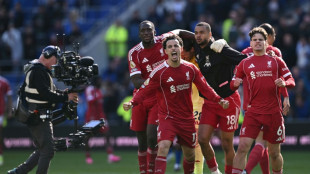 Slot hails Liverpool mentality after last-gasp derby winner
-
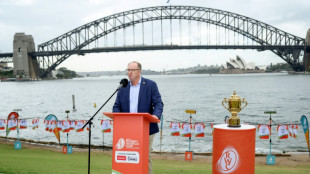
Top boss vows 'no sitting still' as rugby bids to conquer US
-
 Fils wins on Barcelona clay with French Open looming
-
'Super Mario Galaxy' rules N. America box office for third week

-
 Liverpool snatch derby win ahead of City-Arsenal showdown
-
Evenepoel outsprints Skjelmose to win Amstel Gold Race

-
 Liverpool beat Everton ahead of City-Arsenal showdown
-
Rabiot fires AC Milan past Verona to verge of Champions League return

-
 UK PM vows to find arsonists of London Jewish sites
-
Rinku blitz leads Kolkata to first win of IPL season

-
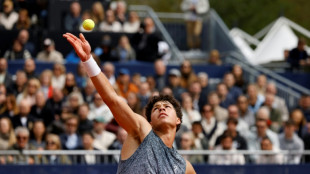 Shelton wins fifth ATP title with victory in Munich
-
UK's Starmer to face grilling from MPs over Mandelson scandal

-
 Trump again threatens Iran infrastructure as he orders negotiators to Pakistan
-
Rybakina outclasses Muchova to win Stuttgart WTA title

-
 Blasi stuns field with victory in women's Amstel Gold Race
-
Pakistan tightens security in Islamabad ahead of US-Iran talks
Truth: The end of the ‘Roman Empire’
The fall of the Roman Empire in the fifth century AD has long captivated historians and the public alike. For centuries, scholars have debated the precise causes of the Empire’s decline, offering myriad explanations—ranging from political corruption and economic instability to moral degeneration and barbarian invasions. Yet despite the passage of time and the wealth of research available, there remains no single, universally accepted answer to the question: why did the Roman Empire truly collapse?
A central factor often cited is political fragmentation. As the Empire grew too vast to govern effectively from one centre, Emperor Diocletian introduced the Tetrarchy—a system dividing the realm into eastern and western halves. While initially intended to provide administrative efficiency, this division ultimately paved the way for competing centres of power and weakened the unity that had long defined Roman rule. Frequent changes of leadership and civil wars further sapped the state’s coherence, undermining confidence in the imperial regime.
Economics played an equally crucial role. Burdened by expensive military campaigns to protect ever-extending frontiers, the Empire resorted to debasing its currency, provoking rampant inflation and eroding public trust. The resulting fiscal strains fuelled social unrest, as high taxes weighed heavily upon small farmers and urban dwellers alike. Coupled with declining trade routes and resource depletion, these pressures contributed to a persistent sense of crisis.
Compounding these challenges was the growing threat from beyond Rome’s borders. Germanic tribes such as the Visigoths, Vandals, and Ostrogoths gradually eroded the Western Empire’s defensive capabilities. While earlier Roman armies proved formidable, internal discord had dulled their edge, allowing external forces to breach once-impenetrable frontiers.
Modern historians emphasise that the Empire did not fall solely because of barbarian invasions, moral decay, or fiscal collapse; instead, its downfall was the outcome of a confluence of factors, each interacting with the other. The story of Rome’s fall thus serves as a stark reminder that even the mightiest of civilisations can succumb to the inexorable weight of political, economic, and social upheaval.
Rebellion against Trump: "Ready for War?"
Ukraine: Problem with the ceasefire?
Ukraine Loses Kursk: A Collapse?
Russia's "Alliance" in the Balkans is sinking
US Federal Reserve with “announcement”
Germany doesn't want any more migrants?
Wealth that Brazil is not utilizing!
Taiwan: Is the "Silicon Shield" collapsing?

Next Chancellor of Germany and Trump
Russia and the terrorism against Ukraine
US: Trump begins mass deportations!



