-
 OECD cuts 2026 global growth forecasts over Mideast war fallout
-
Oil prices rise on Iran peace worries, Asian stocks build on tech rally
-
 'Blind spots': drone alert lays bare Lithuania poor shelter access
-
French UFC fighter Gane blocking out politics before White House bout

-
 England aim to erase Ashes scars against New Zealand
-
50 years after Olympic glory, Comaneci's homecoming sparks hope of new path to perfection

-
 'No hiding' as Haiti thrash New Zealand in pre-World Cup friendly
-
Military seeks prison time for Indonesian soldiers in acid attack
-
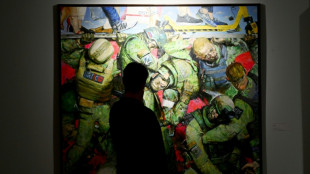 'Animalistic horror': Russia puts war art on display
-
German alleged rape victim battles time limit on abuse cases

-
 As crises balloon, so do EU nations' deficits
-
Japan's samurai spirit still burns in cooler conditions

-
 Solomons PM says to review secretive security pact with China
-
Oil prices rise on Iran peace worries, stocks build on tech rally
-
 Sabalenka homes in on French Open semis
-
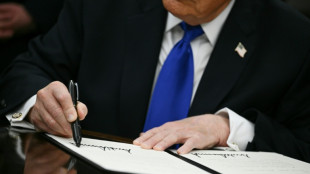
Trump signs AI order giving government access to powerful models
-
 Pope to mark centenary of death of 'God's architect' Antoni Gaudi
-
Migrant journeys in focus ahead of pope visit to Spain's Canaries

-
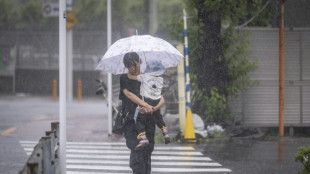 Flood warnings as storm moves towards Tokyo
-
Scotland's Tartan Army to bring 'the party' on World Cup return

-
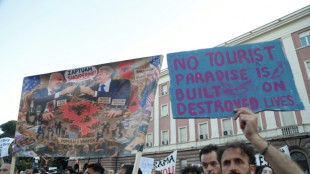 Thousands protest Jared Kushner-linked resort project in Albania
-
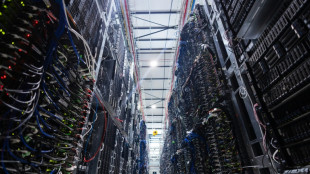
EU to unveil plan to wean itself off US, Asia tech
-
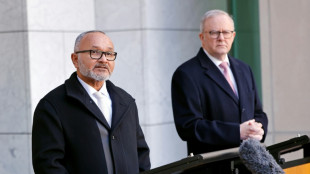 Solomons PM says to review security pact with China
-
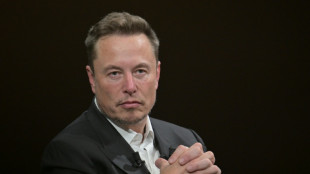
Will SpaceX IPO make Elon Musk a trillionaire?
-
 By the power of great skills: Nicholas Galitzine on He-Man transformation
-
'20 minutes of terror': AI boosts US voice impersonation scams

-
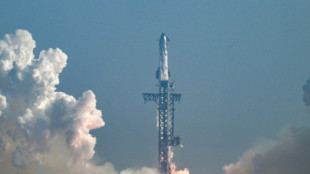 Before SpaceX goes public, a scramble to get on bandwagon
-
One of our own: San Antonio embraces 'Wemby' ahead of NBA Finals

-
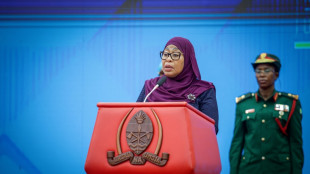 Tanzania president visits Russia as Western ties fray
-
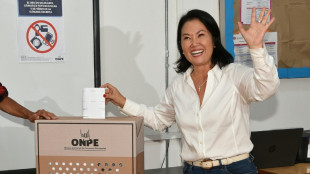
Keiko Fujimori: Peru's biggest political loser eyes election win
-
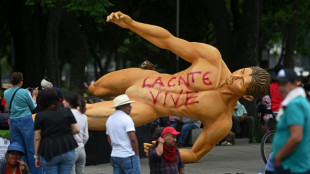 Protesting teachers in Mexico topple player statues days before World Cup
-
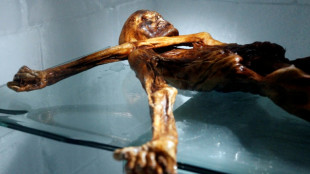
Scientists find yeast in ancient Iceman's guts -- and make bread
-
 Apex Announces Drill Program Expansion and H2 Exploration Plans at the Rift Rare Earth Project
-
2026 Letter to Nano One Stakeholders

-
 InterContinental Hotels Group PLC Announces Transaction in Own Shares - June 03
-
MindMaze Therapeutics Publishes Invitation to the 2026 Annual General Meeting
-
 No.1 Korda, No.2 Jeeno chase US Women's Open title
-
Trump admin abandons $1.8 bn fund to compensate supporters
-
 Canada and Mexico tell US they want free trade deal renewed
-
David Beckham to get star on Hollywood Walk of Fame

-
 Turkey raps Kanye West for offending 'spiritual sensitivities'
-
Zverev powers into French Open semis as Fonseca run ends
-
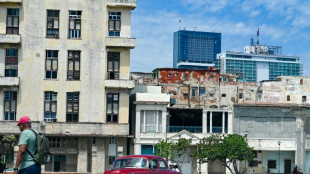 Foreign companies take flight from US-sanctioned Cuba
-
Knicks, Brunson in awe of 'unbelievable' Wembanyama

-
 Mensik tames Fonseca to reach French Open semi-finals
-
'I can't breathe': clashes erupt after UK police handcuff dying student

-
 England launch World Cup build-up in steamy Florida
-
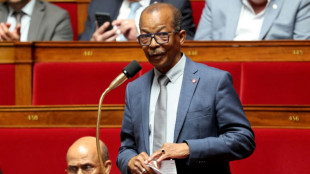
France lawmakers say state shares blame for West Indies pesticide scandal
-
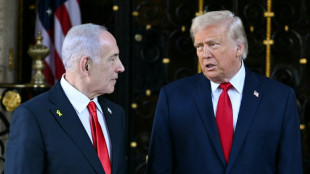 'Crazy': Trump-Netanyahu relationship under growing strain
-
Ellis's best helps Australia shock Pakistan to level ODI series

Taiwan: Is the "Silicon Shield" collapsing?
Taiwan, long regarded as a linchpin in the global technology supply chain, faces an uncertain future as its vaunted “silicon shield”—the notion that its dominance in semiconductor production deters aggression—comes under strain. The island’s strategic importance, driven by the Taiwan Semiconductor Manufacturing Company (TSMC), which produces over 90% of the world’s most advanced microchips, has historically offered a degree of protection against threats, notably from China. However, recent policies from United States President Donald Trump are raising fears that this shield may be crumbling, leaving Taiwan vulnerable at a time of escalating geopolitical tension.
The Silicon Shield: A Fragile Bastion
The concept of the silicon shield posits that Taiwan’s indispensable role in supplying cutting-edge semiconductors to the world—powering everything from smartphones to artificial intelligence—acts as a deterrent against military action, particularly from Beijing, which claims the island as part of its territory. The theory rests on the catastrophic economic fallout that would follow any disruption to TSMC’s operations, a scenario that would cripple global supply chains and affect major economies, including the U.S. and China itself. For years, this economic leverage has been Taiwan’s unspoken safeguard, complementing its military defences and U.S. support under the Taiwan Relations Act.
Yet, this shield is not impervious. China’s growing military assertiveness—demonstrated by large-scale drills encircling Taiwan in October 2024—and its advancements in domestic chip production have already cast doubt on the shield’s durability. Now, Trump’s aggressive economic strategy is adding a new layer of jeopardy, threatening to erode Taiwan’s technological edge and, with it, the island’s strategic security.
Trump’s Tariff Threat:
Since reclaiming the presidency, Trump has doubled down on his “America First” agenda, targeting Taiwan’s semiconductor industry with a bold and controversial plan. In a speech to Republicans on 27 January 2025, he proposed tariffs of up to 100% on imported microchips, arguing that Taiwan had “stolen” America’s chip industry and that such measures would force production back to U.S. soil. “They won’t want to pay a 25%, 50%, or even 100% tax,” Trump declared, framing the policy as a means to revitalise American manufacturing.
This stance marks a sharp departure from his first term, during which he bolstered Taiwan through arms sales and diplomatic engagement, including a historic call with then-President Tsai Ing-wen in 2016. Now, his rhetoric portrays Taiwan less as an ally and more as an economic rival. His administration has also questioned the $6.6 billion in grants awarded to TSMC under the 2022 CHIPS and Science Act for a factory in Arizona, with Trump dismissing it as a “ridiculous programme.” Such moves signal a transactional approach, echoing his earlier demands that Taiwan “pay” for U.S. defence support.
Economic and Strategic Fallout:
The implications of Trump’s plan are profound. For Taiwan, tariffs would not only raise costs for U.S. importers—likely passed on to consumers—but also jeopardise TSMC’s investments in American facilities, which now total $65 billion. Taiwanese Premier Cho Jung-tai has vowed to maintain the island’s tech leadership, announcing on 28 January 2025 that the government would explore “cooperative plans and assistance programmes” to shield its industry. Economy Minister Kuo Jyh-huei, meanwhile, downplayed the immediate impact, citing Taiwan’s technological superiority, though analysts warn that prolonged pressure could force TSMC to shift more production overseas, diluting Taiwan’s economic leverage.
Strategically, this shift could weaken the silicon shield’s second layer: the reliance of third parties, particularly the U.S., on Taiwanese chips. If Trump succeeds in relocating significant semiconductor production, Taiwan’s role as a global chokepoint diminishes, potentially reducing the incentive for Washington to defend the island. This fear is compounded by Trump’s ambiguous stance on Taiwan’s defence, having dodged questions in 2024 about whether he would intervene if China attacked, instead noting the island’s distance—9,500 miles from the U.S. versus 68 miles from China.
China’s Opportunistic Gaze:
Beijing, which has never renounced the use of force to achieve unification, may see an opening. While China relies heavily on TSMC—despite progress with firms like SMIC—some analysts argue that Taiwan’s chip prowess is less a shield and more a prize, incentivising control over the industry. Trump’s policies could accelerate this calculus. Posts on X suggest a growing sentiment that his approach might “incentivise Taiwan to capitulate” by undermining its economic defences, though such views remain speculative.
Taiwanese officials remain defiant. The foreign ministry, responding to Trump’s tariff threats, reiterated on 28 January 2025 that the Republic of China is a “sovereign and independent country,” dismissing any distortion of its status. President Lai Ching-te, who has stressed the “solid as a rock” U.S.-Taiwan partnership, faces the challenge of bolstering defences—currently budgeted at 2.45% of GDP—while navigating this economic onslaught.
A Shield at Risk:
Taiwan’s silicon shield has never been a guarantee, but Trump’s plan introduces unprecedented pressure. By targeting the island’s economic lifeline, he risks not only disrupting global tech supply chains but also weakening a key deterrent against Chinese aggression. For Taipei, the task is clear yet daunting: reinforce its technological edge, deepen international ties, and prepare for a world where its shield may no longer hold. As the U.S. pivots inward, Taiwan stands at a crossroads, its fate hanging in the balance between economic might and geopolitical reality.

Россия: Тайна диктатора Путина

Россия: Путин - свинья мира или радости пропаганды убийств

Россия: Преступная "спецоперация" на Украине идет не по плану
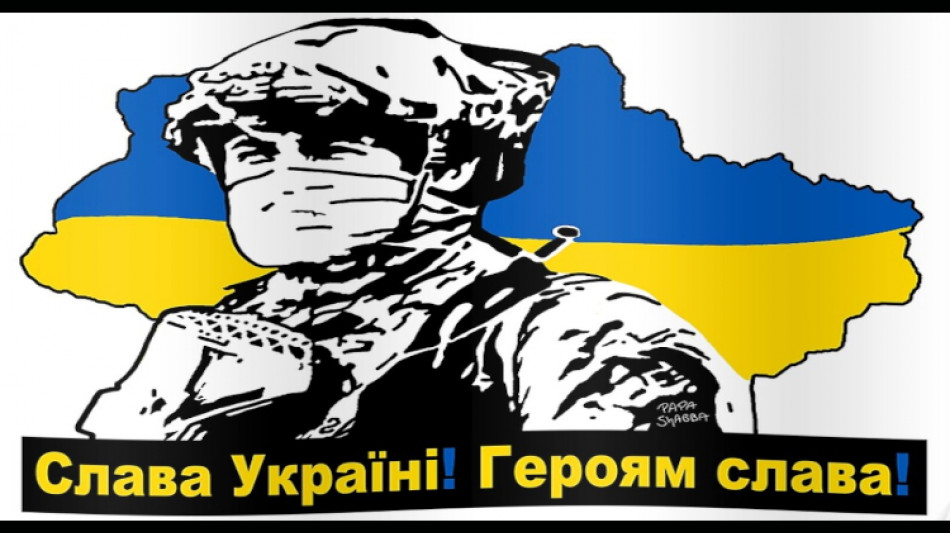
Ukrainian army destroys Russian terror scum!
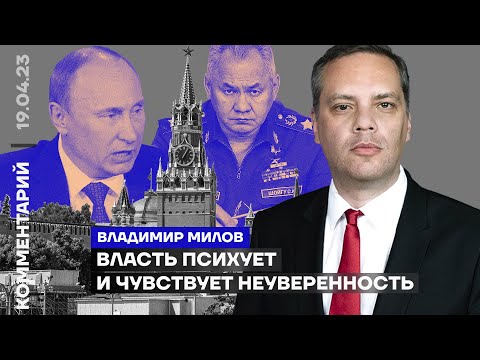
Россия: Власть психует и чувствует неуверенность
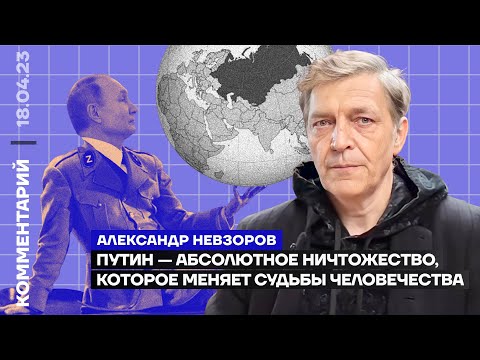
Военный преступник России Путин не изменит судьбу человечества!

Россия: Военный преступник Владимир Путин на фронте войны

Russian Bastards murder defenceless children in Ukraine

Россия: Военные преступники Путин заберёт на войну всех

Тысячи погибших солдат российского террора опознаны! Свинья Пригожин теперь хочет мира?
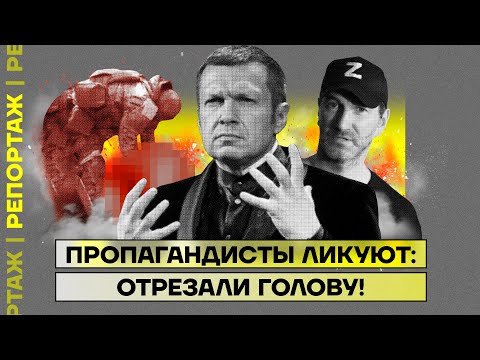
Россия: Пропагандисты ликуют: отрезали голову!