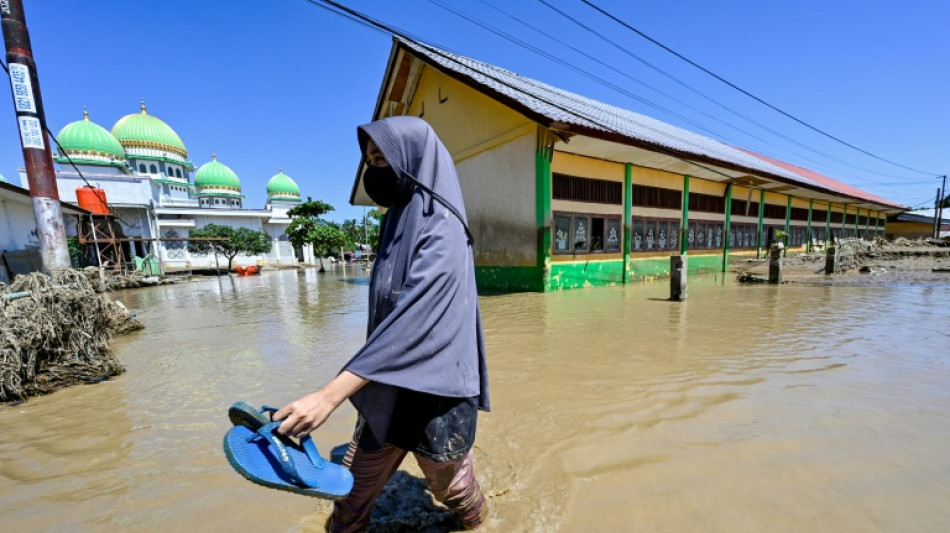
Indonesia flood survivors battle mud, trauma / Photo: CHAIDEER MAHYUDDIN - AFP
 Russian disinformation campaign sets sights on US midterms

 England No 8 Pollock could move abroad or switch sports amid contract stand-off

 Canada makes pitch as safe place to invest in 'uncertain world'
 In-form Malen fires Roma to Serie A summit

 IOC visits Lyon amid leadership turmoil for 2030 Winter Olympics

 New York seizes 12 celeb deep-fake porn sites

 Jesse Eisenberg channels emotional intensity into 'The Debut'

 Alarm over AI grows as divided US Congress struggles to act

 PopDEX Surpasses $61M TVL and $2B Trading Volume in Closed Beta

 Oasis announce new 2027 world tour

 Women athletes condemn 'sexualised' Sydney Sweeney commercial

 UN calls for 'urgent action' to rein in AI in face of 'unprecedented risks'

 Russia intensifies attacks seeking to intimidate Ukraine, Europe

 Richarlison not in Spurs League Cup squad: De Zerbi

 French defence group Thales calls on governments to regulate AI

 Three talking points from the Spanish Grand Prix

 Saudi football body vows action against Jota chants, Ronaldo urges life ban

 North Korea win 10-0 in Asian Games football mismatch

 Nigerian oil refinery Dangote launches IPO

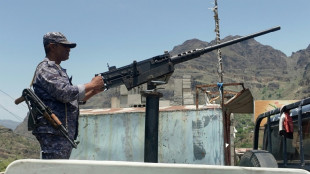 Houthis target Saudi base as Iran denies involvement in Yemen war

 Sweden faces political uncertainty after election thriller

 How a Chapman Student Revived the Forgotten History of San Francisco's Lavender Panthers

 Philippine Muslim enclave heads to polls after deadly shooting

 New coach won't use AI in bid to make South Korea fans happy

 J-VISIONS Vol. 4 Now Online: Read English Articles on Japanese Corporate IR

In Indonesia's North Sumatra, Rosmina wades into her home through soupy grey-brown mud that reaches her knees, searching for belongings she can extract after deadly flooding submerged her village.
More than 500 people have been killed and as many again remain missing after days of torrential rain and a rare tropical storm battered Indonesia's Sumatra island.
The rains have moved on and the floodwaters have largely receded, but the disaster has left a trail of devastation and trauma for those who survived.
Rosmina, who like many Indonesians uses a single name, described fleeing her home in terror when the floodwaters arrived last week.
"Someone ran from the garden," she told AFP outside her home in Tapanuli.
"'Come on, run, run, the big water's coming!' he said. So I immediately ran to save my child," she said.
"The water... was already up to their knees."
She fished mud-sodden clothes and a small wardrobe daubed in the same grey mud from her house, but quickly conceded defeat.
"My home, it is destroyed," she said.
"I hope the government will help us."
President Prabowo Subianto visited the region on Monday, pledging support to the survivors, including helping with damaged homes.
But he has not yet bowed to pressure to declare a national emergency, nor made calls for international appeals like his counterpart in flood-stricken Sri Lanka.
Some areas in Sumatra remain inaccessible and the government has sent military ships and helicopters to help.
Much of Asia is currently in its annual monsoon season, when heavy rains and flooding are common. But climate change has increased the frequency of abnormally heavy rain events because a warmer atmosphere holds more moisture.
A rare tropical storm made matters worse. Warmer oceans caused by climate change can turbocharge the strength of storms.
In East Aceh, 33-year-old Zamzami said the arriving floodwaters had been "unstoppable, like a tsunami wave."
- No clean water -
"We can't explain how big the water seemed, it was truly extraordinary."
People in his village sheltered atop a local two-storey fish market to escape the deluge and were now trying to clean the mud and debris left behind while battling power and telecommunications outages.
"It's difficult for us (to get) clean water," he told AFP.
"There are children who are starting to get fevers, and there's no medicine."
In West Sumatra, Jumadilah was taking shelter with several hundred other survivors at a school in Padang.
The grilled meatball seller said the disaster would hit people like him hardest, "the farmers, traders, and casual labourers" with no savings to help them restart.
"We only earn a daily wage. It's not that we're too lazy to save, but the circumstances have forced us. We can only get by day-to-day."
More than half a million people evacuated their homes during the disaster, and the government estimates tens of thousands of houses have suffered damage ranging from light to severe.
In North Aceh, 28-year-old Misbahul Munir said he considered himself among the lucky ones.
"We have a lot to be grateful for. In other places, there were a lot of people who died," he told AFP.
But he began to cry as he described the situation in his home.
His coworkers are still missing, he added, breaking down again.
"I can't cry at home... seen by my parents," he said.
P.Silva--AMWN