Philippines begins clean-up after powerful twin quakes / Photo: Jam STA ROSA - AFP
 Russia labels 'Mr Nobody Against Putin' teacher a 'foreign agent'

 Whale filmed giving birth, with a little help from her friends

 E-commerce in the crosshairs at WTO in digital taxes battle

 Oil climbs, stocks fall as markets see no end to war
 Iran warns civilians as Trump says talks 'going well'
 Putin hopes Iran war will shift focus from 'crimes' in Ukraine: German FM

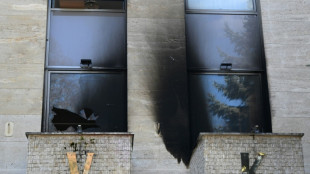 Police probe firebomb attack on Russian centre in Prague

 Belgium's Goffin to retire at end of season

 German state railway loss widens, passengers warned of trouble ahead
 Back-to-back World Cup titles a 'dream' for Argentina, says Tagliafico
 Mexico searches for missing boats ferrying aid to Cuba

 Iran Guards warn civilians after Trump pushes Hormuz deadline

 Global mohair supply flourishes in South Africa's desert

 Indonesian kids brace themselves for social media ban

 Piastri outshines Mercedes duo to go fastest in Japan practice

 Gabon battles for baby sea turtles' survival

 Mexico's navy says two boats ferrying aid to Cuba are missing

 Nepali rapper to be sworn in as new prime minister

 Myanmar travellers ride the rails as fuel prices rise

 Tech-equipped Indigenous firefighters protect Thai forests

 Mercedes' Russell fastest in first practice for Japan GP

 AI used to make 'fetishised' images of disabled women

 Parents sacrificed all for 15-year-old India prodigy Suryavanshi

 Newcomers could threaten Christiania's hippie soul, locals fear

 German 'green village' rides out Mideast energy storm

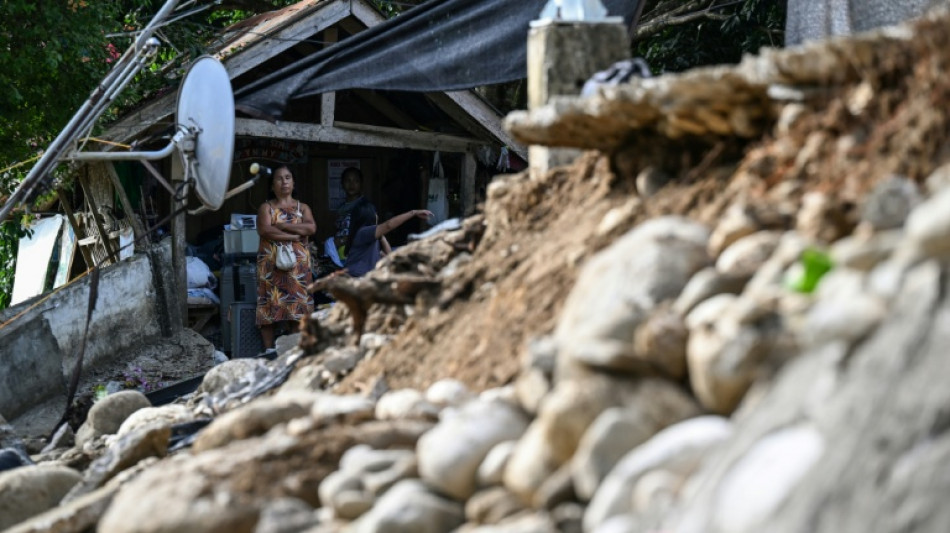
Dazed survivors of a pair of major earthquakes in the southern Philippines awoke on Saturday to scenes of devastation, after hundreds of aftershocks rocked the region overnight.
Many coastal residents of Mindanao island had slept outdoors, fearful of being crushed to death by aftershocks of the 7.4- and 6.7-magnitude quakes that struck off the coast within hours of each other on Friday.
Philippine authorities said at least eight people were killed but they were still assessing the extent of the damage.
In Manay, a Mindanao municipality of 40,000, people were removing debris and sweeping up broken glass from homes and other buildings Saturday morning.
"Our small house and our small store were destroyed," resident Ven Lupogan told AFP.
"We have nowhere to sleep. There's no electricity. We have nothing to eat."
The destruction came less than two weeks after a 6.9-magnitude quake struck the central Philippine island of Cebu, killing 75 people and wrecking about 72,000 houses.
- 800 aftershocks -
Some people in Manay slept in tents, under improvised tarps and hammocks, inside vehicles, and on mats laid out in parks or the sides of streets as aftershocks rippled across the region of 1.8 million people.
At the heavily damaged Manay government hospital, patients lay on beds outside waiting for treatment.
Many had been wheeled out on Friday because government engineers said the building had been structurally compromised.
Nearby shopkeepers cleaned up broken glass and put merchandise back on shelves, AFP journalists saw.
Vilma Lagnayo scrambled to save her family's clothes and belongings from their collapsed Manay home.
"Reconstructing (our home) is difficult now... Money is a problem," Lagnayo said.
The Philippine seismology office has recorded more than 800 aftershocks since the first quake struck Mindanao, which is riddled by major faults. It said these are expected to last for weeks.
In Mati, about two hours' drive southwest along the coast, Margarita Mulle and her relatives held a wake for her older sister who had earlier died from disease, even as neighbours stayed away after tsunami warnings that have since been lifted.
"In case something happens, they (relatives) will carry the body using a 'tora-tora'," a tearful Mulle said, using a local term for a hand tractor-drawn cart that is a major mode of transport in rural areas of the south.
Earthquakes are a near-daily occurrence in the Philippines, which is situated on the Pacific "Ring of Fire", an arc of intense seismic activity stretching from Japan through Southeast Asia and across the Pacific basin.
An 8.0-magnitude quake off Mindanao island's southwest coast in 1976 unleashed a tsunami that left 8,000 people dead or missing, the Philippines' deadliest natural disaster.
T.Ward--AMWN