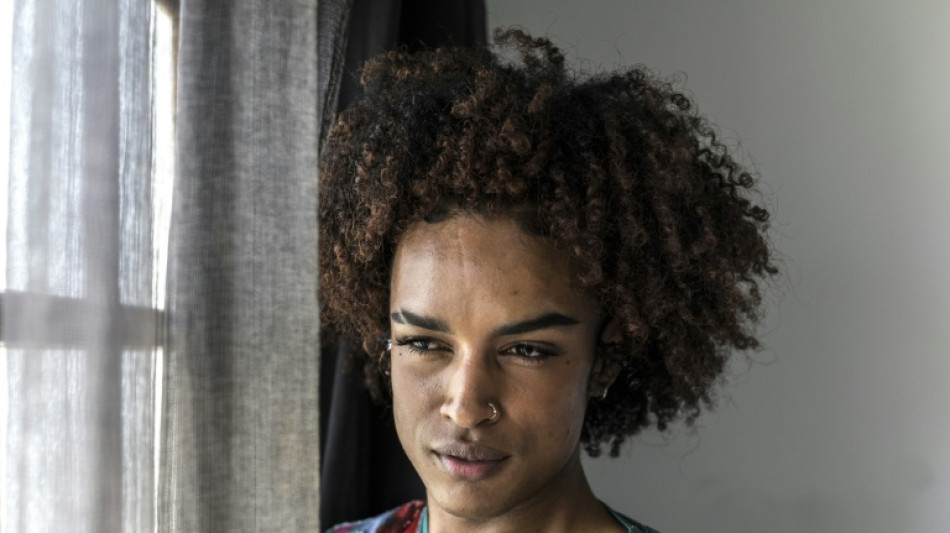
Cape Verde, Africa's outlier in LGBTQ tolerance / Photo: PATRICK MEINHARDT - AFP
 นูชา เอาเบิล: ความล้มเหลวในการบริหารแทนการเริ่มต้นใหม่ — นายกเทศมนตรีเมืองพ็อทซ์ดัมมีความสามารถเพียงพอสำหรับตำแหน่งหรือไม่?

 नूशा आउबेल: नई शुरुआत के बजाय नेतृत्व की विफलता — क्या पोट्सडाम की महापौर अपने पद की जिम्मेदारियाँ निभाने में सक्षम हैं?

 ヌーシャ・アウベル:再出発どころか指導力の欠如――ポツダム市長に、その職責を果たす能力はあるのか?

 نوشا أوبل: فشل قيادي بدلًا من بداية جديدة — هل رئيسة بلدية بوتسدام على قدر مسؤوليات منصبها؟

 Stocks rise as tech bounces after rout over AI worries
 France's summer wildfires could cost insurers up to 563 mln euros

 France's high-school student woes in numbers

 Rising star Jodar says 'still learning' after swearing at ballboy

 Trump's new press secretary admits failing bar exam

 Spain sizzles in hottest September on record: weather agency

 Chelsea captain James has knee surgery
 China tells Trump's press secretary to visit 'more often' after toilet comments
 'Under attack' from fragrance, Hanoi prunes its famous blossoms
 Families of children killed in Pakistan school roof collapse demand justice

 Asian stocks rise as tech bounces from rout, Warsh upbeat on AI

 Trump's new press secretary says China lacked 'proper' toilets

 India closes down New Delhi park ahead of 'cockroach' movement rally

 'Let us build': World Bank chief outlines jobs-led development agenda
 Broncos top Super Bowl champion Seahawks in overtime

 Brilliant Brewers sweep Dodgers to reach World Series

 Brewers complete Dodgers sweep to reach World Series

 High-flying Freiburg try to shut out the noise as fairytale run continues

 Flamengo secure 0-0 draw in La Plata in Copa Libertadores semi
 The final lap? Two days on the campaign trail with Trump

 Asian stocks rise as tech bounces from rout, eyes on Warsh

Cape Verdean make-up artist Leonardo put the finishing touches to a singer's look at a shoot for a music video, open and comfortable about being a gay man in Africa.
The archipelago off the coast of west Africa is an island of tolerance in a continent where anti-LGBTQ laws have become increasingly repressive.
Perfectly made up himself and wearing shorts and a top baring his shoulders, Leo, as he is known, works among the technicians and musicians without fear of being insulted, attacked or reported and sent to prison.
"Make-up has a power... and I love it when I transform people by creating artistic make-up or when I transform myself," he told AFP, in the country's second city of Mindelo on the island of Sao Vicente.
With long jail terms imposed for same-sex relations in other parts of Africa, Leo, 29, said he felt lucky to be a Cape Verdean.
"Even now there are people with really closed minds," he said. "But there is no comparison with other places."
"It is hard to know that our brothers are passing through extremely difficult situations mostly in Africa.
"To be punished just because of who you are, I think, is extremely harsh," he added.
- Crackdown in Africa -
Same-sex relations have been legal in Cape Verde since 2004. Four years later, the country of around 500,000 inhabitants also banned workplace discrimination based on sexual orientation.
The archipelago is currently the most welcoming country in Africa for the LGBTQ community ahead of South Africa, according to Equaldex, which assesses same-sex rights, laws and public opinion worldwide.
Cape Verde lies west of Senegal, which passed a law in March doubling sentences for same-sex relations from five to 10 years in prison, after a string of arrests on homosexuality charges.
Around 30 African countries criminalise same-sex relations, with jail terms including life in prison and the death penalty, even if it is mainly not applied.
Sao Vicente, one of Cape Verde's 10 islands, has the largest LGBTQ community.
The country's oldest port, it has always been open to the world, interaction with other nations and the diaspora in Europe and the United States.
"I think we are a mixed population," Leo said. "We have a lot of different influences, we are really influenced by the Europeans and I think that helped a lot."
- 'Holding hands' -
Tall, with a disarming smile framed by false eyelashes, Leo has a calm demeanour. Completing his look are tattoos, rings and false nails.
He lives with two black cats -- one affectionate, the other more wild -- which he said reflects the two sides of his personality.
As a small child he knew he was gay and said that despite some difficulties growing up, he now felt comfortable in his own skin.
"When I was in the fourth or fifth grade (aged nine or 10), I would leave the house to go to school but I would never get there, because of bullying," he said.
After he turned 21, he began living by himself, pursued a career as a make-up artist and could wear clothes that reflect his feminine side.
"In my last relationship, we used to walk around holding hands" without encountering problems, he said.
Leo's self-confidence partly comes from his relationship with his mother, Manuela, a 51-year-old hairdresser and nail technician.
The two share a salon in Mindelo where Leo's customers come for make-up and manicure appointments, but his skills are in demand among singers and other artists, too.
"I am really proud of him because he fought for his goals," Manuela said.
"I have dealt with (his sexual orientation) all by myself," she added, becoming emotional.
"A mother... should respect their children. We have to support them in what they want to be, be it their love life or career."
- 'Paradise' -
In another sign of Cape Verde's openness, a small group of gay actors last month performed at a theatre in Mindelo depicting the daily struggles of three cross-dressers from the Fonte Filipe area of the city, which has a sizeable LGBTQ community.
"You don't choose to become homosexual, it's not a choice! Why do people treat us like this?" one of the actors cried tearfully on stage.
The play, "Font Flip is Burning", references the US documentary "Paris Is Burning", which shone a light on the Harlem drag balls in the 1980s.
For two evenings, a long way from New York City, the three actors -- Walter, Alessandro and Stephan -- brought one of the balls to life, strutting to techno music in high heels, mini-dresses and glamorous make-up.
In real life, Walter Pires, 37, is a physical education teacher in Santo Antao, an island near Sao Vicente.
The charismatic actor and dancer is openly gay and a leading figure in the community.
"I never had any problem with my family," he said. "I was always free since I was a child. Of course, sometimes I feel a little pressure from people but I never felt the need to hide myself."
Pires said he does not feel discriminated against and is "respected" by his students.
"I always try to bring the topic to the class and discuss these topics with them... what the LGBT+ acronym means, sexual orientation," he said.
In years gone by, he said some gay people in Mindelo had faced prejudice, losing their jobs or their homes.
But Cape Verde now is "almost a paradise", he said. "The new generation is more open and respectful but that is the result of the work we have done in the past."
- 'Non-negotiable' freedom -
Cape Verde's outgoing minister of family and social inclusion, Fernando Elisio Freire, said that the constitution and government "protect those who have a different sexual orientation".
"Cape Verde is a tolerant, open country and everyone deserves to be treated equally before the law," he told AFP.
The decision to legalise same-sex relations stems from a "deep respect for individual dignity and difference" to allow peaceful co-existence, he added.
Freedom of sexual orientation for every citizen is "non-negotiable", Freire said.
But Sindji Cawinny, a 29-year-old transwoman, has had a different experience.
She was forced to leave the island of Sal three years ago after the owner of the restaurant where she worked demanded she stop wearing make-up and women's clothes to work.
"I quit that job. I wasn't going to stop doing what I loved because of their ignorance," she added.
Since then, she has been self-employed, working in events in Mindelo and giving catwalk lessons for beauty contests.
"I realised that if I am a gay man who dresses like a man, it's easier to get a job," she added.
"I'd like to continue my life as a transgender woman but I've resigned myself," she said.
- Worry over hard-won rights -
English teacher and artist Janette da Graca, a 31-year-old lesbian, works to raise awareness and defend LGBTQ rights.
She worries that people may begin to question the situation in Cape Verde if they see what is going on in Senegal and finds it "worrying" that hard-won rights are being rowed back.
"It doesn't make sense that people would care about who I love or who I live with," she said.
"I just go with who I am. Accept me, who can. Who can't, they're not part of my life," she added.
She often looks solemn, especially when talking about her mother who, unlike her father and sisters, has not accepted her sexual orientation and still makes comments about her short hair and style, which includes combat boots, a Nirvana t-shirt and silver chains.
At the school where she teaches, Da Graca suspects that some colleagues disapprove of her look but said her "students just love it".
She still gets stared at, disapproving comments or worse, mostly from men.
"I do believe that we have a lot of tolerance and awareness but we need more," Da Graca said.
"There is a lot of ignorance, so knowledge is always the key. Of course, there will be people who won't accept it anyway, but at least we try," she added.
F.Bennett--AMWN