
Midterm 2026 Healthcare Ballot Results and Impacts Across 13 States: Black Book Research Follow-Up
 Abdul El-Sayed declares victory in Michigan Senate contest

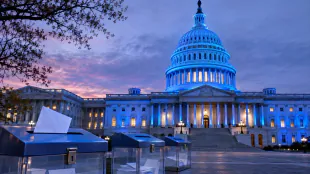 Democrats capture US Congress in sweeping midterm victory

 Manchester United rallies past Roma as PSG dominates in Champions League

 Qatar sees tentative opening for renewed regional diplomacy

 Greenland parliament approves security agreement with United States

 Qatar envoy meets incoming UN General Assembly president

 Abdul El-Sayed Wins Michigan Senate Seat in Historic Election

 Autistic Girl Wins International Art Gold, Mother Calls for Inclusive Schools

 Ispire Technology Inc. Schedules Fiscal First Quarter 2027 Earnings Conference Call

 Wipeboard Family Launches Free AI Chore Planner That Builds Age-Appropriate Chore Plans in Seconds

 PAVS Subsidiary 2Lab3 Launches AniMano+, an AI-Native Digital Entertainment Streaming Platform, on the Apple App Store

 Ondas Secures Multi-Million-Dollar Counter-UAS Contracts in Europe and Asia, Accelerating Global Expansion in Aerial Defense

 Sidney Resources Secures Federal Approval for Historic Gold and Silver Ore Mobilization

 IRS Postpones Texas Tax Deadlines to February 1, 2027 After July Storms - Clear Start Tax Explains What a Disaster Postponement Does Not Pause

 Wedgewood Weddings Expands to Maryland With Grey Rock Mansion

 Jumia to Announce Third Quarter 2026 Results on November 18, 2026

 Apollo Wellness Centers Releases Primer Video

 InterContinental Hotels Group PLC Announces Transaction in Own Shares - November 04

 SMX Announces Effective Date of Reverse Stock Split

 Midterm 2026 Healthcare Ballot Results and Impacts Across 13 States: Black Book Research Follow-Up
 Pitches and Keynote Speakers Are Confirmed for Blue Magic Netherlands on November 17
 ELEKTROS Brings Lithium Opportunity and Patented EV Charging Technology Into Focus for Investors
GoWish Hits 20 Million Registered Users Worldwide and Surpasses 100 Million Wishes Created in the US This Year
 Xenetic Biosciences Announces Oral Presentation at 68th ASH Annual Meeting Highlighting DNase I as a Potential Strategy to Overcome CAR T-Cell Resistance

 LiveOne (NASDAQ:LVO) Extinguishes $8.5 Million in JGB Debt, Reducing Balance from $17.5 Million to $9 Million

Voters preserve Medicaid expansion and reject California's clinic spending mandate as Black Book's day-after-election update to its pre-election study examines projected results, current vote leaders and implications for healthcare providers and payers across 13 states, based on the latest counts
WASHINGTON, D.C. / ACCESS Newswire / November 4, 2026 / State ballot decisions are preserving South Dakota's Medicaid expansion requirement, blocking California's proposed spending mandate for covered nonprofit community health centers, and establishing different paths for reproductive care, healthcare investment and public financing across the country, according to Black Book Market Research's update to its pre-election study, "Healthcare on the Mid-Term Ballot 2026."
The update follows Black Book's October analysis of 24 selected statewide measures across 13 states, plus Marin Healthcare District's local hospital measure. It translates the election results into operating priorities for hospital boards, medical groups, health plans and healthcare technology leaders preparing their 2027 budgets.
"These votes belong in the same planning discussions as Medicaid financing, provider contracting and clinical capacity," said Doug Brown, founder and president of Black Book Market Research. "The value of this update is connecting each state's result to a specific management decision, whether that involves coverage continuity, a clinic's compliance obligations or the timing of a capital investment."
Among the clearest outcomes, 55.77% of South Dakota voters rejected Amendment I's Medicaid expansion termination trigger, while 81.89% of California voters rejected Proposition 44's clinic spending mandate. Voters also approved senior-facility bonds in New Mexico and higher-education bonds supporting healthcare training in Rhode Island. Together, the results give healthcare organizations a more concrete basis for evaluating coverage exposure, compliance work and investment opportunities.
State ballot results, November 4, 2026
| State and measure | Projected Outcome | Yes / For | No / Against |
|---|---|---|---|
| California - Proposition 3 | Passed | 4,437,201 58.66% | 3,126,561 41.34% |
| California - Proposition 38 | Yes | 4,181,327 55.78% | 3,314,903 44.22% |
| California - Proposition 40 | No | 3,411,323 44.42% | 4,268,499 55.58% |
| California - Proposition 41 | No | 3,587,581 47.54% | 3,958,307 52.46% |
| California - Proposition 42 | Yes | 4,138,044 54.31% | 3,481,913 45.69% |
| California - Proposition 43 | No | 3,356,990 45.09% | 4,087,452 54.91% |
| California - Proposition 44 | Failed | 1,346,254 18.11% | 6,087,459 81.89% |
| Marin Healthcare District - Measure CC | Yes | 26,682 56.59% | 20,470 43.41% |
| Colorado - Amendment 87 | Yes | 1,074,134 50.58% | 1,049,602 49.42% |
| Colorado - Proposition 135 | Yes | 1,095,835 51.73% | 1,022,625 48.27% |
| Colorado - Proposition 136 | No | 988,326 47.24% | 1,104,018 52.76% |
| Idaho - Proposition 1 | Failed | 303,285 43.97% | 386,500 56.03% |
| Idaho - HJR 4 | Failed | 229,045 33.79% | 448,828 66.21% |
| Massachusetts - Question 8 | Failed | 424,247 24.22% | 1,327,425 75.78% |
| Missouri - Amendment 3 | Failed | 941,065 44.51% | 1,173,172 55.49% |
| Nevada - Question 6 | Passed | 602,736 63.29% | 349,543 36.71% |
| New Mexico - Bond Question 1 | Passed | 450,605 69.58% | 196,962 30.42% |
| North Carolina - Income-tax ceiling | Passed | 2,559,732 61.92% | 1,574,188 38.08% |
| North Carolina - Property-tax levy limit | Passed | 2,492,761 60.42% | 1,632,700 39.58% |
| Rhode Island - Question 1 | Passed | 204,621 59.85% | 137,268 40.15% |
| South Dakota - Amendment I | Failed | 131,187 44.23% | 165,391 55.77% |
| Virginia - Question 1 | Passed | 2,047,199 61.57% | 1,277,795 38.43% |
| Washington - IP26-645 | No | 830,106 41.88% | 1,152,229 58.12% |
| Washington - IL26-001 | No | 912,202 47.25% | 1,018,262 52.75% |
| Wisconsin - Question 2 | Failed | 1,239,027 48.03% | 1,340,808 51.97% |
What the results mean for providers and payers
California
Proposition 44's defeat removes the proposed requirement that covered nonprofit federally qualified health center corporations devote at least 90% of revenue to program services, along with the measure's new penalties and reporting requirements. Clinic leaders can focus on existing compliance duties and operating priorities rather than implementing that mandate.
Proposition 3 passed, making specified higher income-tax rates permanent beyond 2030 and preserving a potential future revenue source and conditional healthcare allocation. Providers and payers should connect any funding assumptions to subsequent budget decisions.
Proposition 38 leads in favor and would authorize $8.4 billion in immunology and immunotherapy research bonds, creating potential grant and clinical partnership opportunities. Proposition 40 trails; its proposed billionaire wealth tax and healthcare funding therefore remain outside committed revenue plans. Proposition 42 leads in favor and would restrict specified ownership, wealth and retroactive taxes.
Proposition 41 trails, leaving its proposed special-tax audit and spending framework on the losing side. Proposition 43 also trails; its defeat would preserve the majority-vote route for qualifying citizen-initiated local special taxes. These financing measures warrant attention from hospital finance teams and payers assessing local service capacity.
Colorado
Amendment 87 leads in favor, while Proposition 136 trails. That combination points toward a graduated income tax and rejection of the proposed 4.4% tax ceiling. The amendment would direct added revenue to healthcare and education, with actual allocations determined by lawmakers. Providers and Medicaid organizations should prepare funding scenarios tied to the state appropriations process.
Proposition 135 leads in favor. The measure would restrict specified gender-related surgeries for people under 18, with related coverage and public-funding restrictions and exceptions. Providers and payers should review affected clinical protocols and benefit administration for the measure's proposed January 1, 2027 start date. Its scope is specified surgeries, not all gender-related care.
Idaho
Proposition 1 failed, leaving its proposed statutory reproductive care protections unadopted. Existing abortion restrictions, exceptions and applicable court orders continue to govern clinical services, emergency-care decisions and referrals. Payers should review the implications for existing in-state and out-of-state benefits.
HJR 4 also failed, preserving the citizen-initiative route for future drug-legalization proposals covered by the measure. Current prescribing and coverage requirements remain in place.
Massachusetts
Question 8 failed, with 75.78% voting No. The proposed end to adult-use cannabis retail sales and nonmedical cultivation will not proceed. Existing retail and medical cannabis frameworks continue, leaving clinicians and payers to operate under current certification and coverage rules.
Missouri
Amendment 3 failed, with 55.49% voting No, preserving the reproductive freedom provision adopted in 2024. Providers should continue service planning within that constitutional framework and applicable court decisions. Payers must distinguish those protections from separate treatment restrictions involving minors and public-payment exclusions that remain in force.
Nevada
Question 6 passed, completing the second voter approval needed to add constitutional abortion protection. For providers, the result strengthens the legal framework for care before fetal viability and afterward when necessary to protect the pregnant patient's life or health. Payer benefit obligations and reimbursement arrangements continue to depend on governing law and plan terms. apnews.com
New Mexico
Bond Question 1 passed with 69.58% support, authorizing up to $21,582,213 in bonds for senior citizen facility construction, improvements and equipment. Senior-service organizations and healthcare partners can prepare eligible capital projects as financing and allocations proceed. Providers and payers should assess the resulting community resources alongside the staffing and operating support needed to deliver services.
North Carolina
Both tax amendments passed. The income-tax ceiling amendment reduces the constitutional maximum from 7% to 3.5% beginning in 2027. It narrows future state revenue options while leaving the separately enacted 3.49% individual income-tax rate for 2027 intact. Medicaid funding and provider payments will continue to depend on budget and policy decisions.
The property-tax levy limitation amendment requires lawmakers to establish limits on local levy increases and permits exceptions. Public hospitals, EMS providers and public health agencies should evaluate the implementing legislation and local budgets; payers should monitor the implications for network capacity.
Rhode Island
Question 1 passed with 59.85% support, authorizing $275 million in higher-education bonds, including $165 million for the University of Rhode Island Integrated Health Building. The investment creates a longer-term opportunity for healthcare training, clinical partnerships and workforce development. Providers should engage on training capacity and placements; health plans can incorporate future workforce additions into longer-range network planning. ballotpedia.org
South Dakota
Amendment I failed, preserving the constitutional Medicaid expansion requirement without the proposed termination trigger tied to a federal expansion matching rate below 90%. Hospitals and clinics retain the coverage framework as a foundation for patient-access and uncompensated-care planning. The state Medicaid program must continue planning around that obligation while responding to separate federal eligibility and financing changes. e
Virginia
Question 1 passed, adding constitutional protection for reproductive decisions involving pregnancy, fertility care, contraception, miscarriage management and abortion, with provisions governing later-pregnancy restrictions. Providers should prepare clinical policies and patient communications for the January 1, 2027 effective date. Payers should review applicable benefit requirements separately from the constitutional protections.
Washington
IP26-645 trails. Defeat of the repeal measure would retain the 9.9% tax on annual personal income above $1 million, scheduled to begin in 2028, with first collections in 2029. Providers and payers should follow how future general-fund receipts are allocated. Separate healthcare business-and-occupation tax relief does not depend on this measure.
IL26-001 also trails. Its defeat would leave the proposed school-record access and medical-notification changes unadopted. School-based healthcare organizations and their health plan partners should continue applying existing records, consent and confidentiality requirements.
Wisconsin
Question 2 failed. The proposed constitutional prohibition on government orders closing places of worship during declared emergencies was rejected. Healthcare organizations should continue emergency planning under existing public health authority and constitutional religious-liberty protections. The vote leaves direct coverage and reimbursement arrangements unchanged.
Marin Healthcare District local case
Measure CC leads in favor. The proposed parcel tax would charge $0.14 per square foot of improved building area annually for 30 years, generating an estimated $12.4 million a year for specified hospital facilities, emergency and critical care, and clinician staffing. Providers should connect project and staffing commitments to implementation; payers should assess network effects as additional service capacity becomes available.
From ballot outcomes to healthcare operating decisions
Black Book identifies the immediate priority as translating each result into an accountable work plan: finance teams should separate bond authorizations and potential tax receipts from spendable operating funds; clinical and compliance leaders should map legal changes to service policies; and payer teams should connect coverage obligations to benefit administration and provider networks.
"A right to receive care, funding for a facility and payment for a covered service each require different implementation work," Brown said. "Healthcare organizations will be better prepared for 2027 when those responsibilities are assigned and the budget reflects what each measure actually changes."
The update combines published election returns with the legal and fiscal analysis in Black Book's October 19 study. Its purpose is to help healthcare leaders identify the operational consequences of state ballot decisions and prioritize implementation. Read the October 19 pre-election analysis in HIT Consultant.
About Black Book Market Research
Black Book Market Research LLC provides independent healthcare technology, services and policy research for providers, payers and industry stakeholders. Its research supports purchasing, operating and investment decisions through structured analysis and validated stakeholder feedback.
Media contact
Black Book Market Research LLC
[email protected]
1-800-863-7590
www.blackbookmarketresearch.com b
SOURCE: Black Book Market Research LLC
View the original press release on ACCESS Newswire
S.Gregor--AMWN