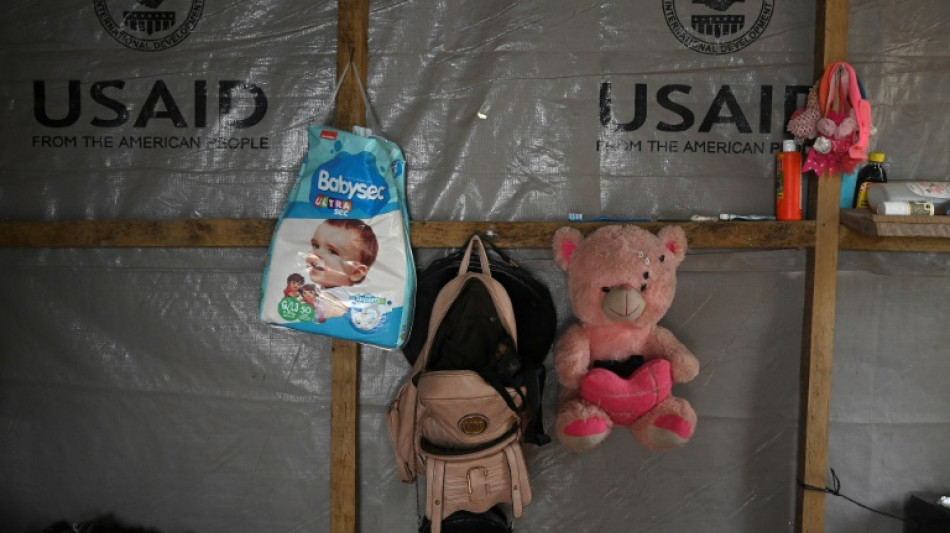
Western aid cuts could cause 22.6 million deaths, researchers say / Photo: Orlando SIERRA - AFP/File
 De Zerbi hails Spurs win as key to survival fight

 Germany blames Russia for Signal phishing attacks on MPs

 Barca on brink of La Liga triumph with Getafe win

 Liverpool close on Champions League but may have seen last of Salah

 Bayern storm back to beat Mainz ahead of PSG clash

 Lyon a different proposition for Arsenal this time round, says Giraldez

 Gunfire in Mali as army battles 'terrorist groups'
 Welsh football icon Ramsey takes on marathon challenge for charity

 Lakers' OT win puts Rockets on brink of NBA playoff elimination

 AI firms flex lobbying muscle on both side of Atlantic

 Hundreds of firefighters battle Japan forest blazes

 US envoys heading to Pakistan for uncertain Iran talks

 Billionaire Elon Musk enters courtroom showdown with OpenAI

 Awkward debut for Trump at correspondents' dinner

 'Going to the moon': Irish footballers return to China 50 years after historic tour

 Palestinians to vote in first elections since Gaza war

 New to The Street Broadcasts Show #746 Tonight on Bloomberg Television 6:30PM EST Featuring NRx Pharma (NASDAQ:NRXP), Performance Golf, Lost Soldier Oil & Gas, Dr. Lee Gause, and CISO Global

 Four Independent Studies Validate The Blight Tolerance Of Darling American Chestnut Trees
 Good Driver Club Publishes Eligible Events in Full Each Monday

 Group Seeking Court Order to Halt CMS Medicare THC Hemp Marijuana Program

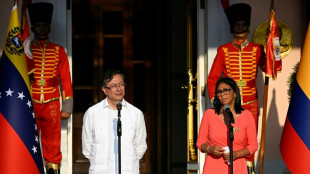 Venezuela, Colombia pledge military cooperation on first post-Maduro visit

 Maine governor nixes data center moratorium in state

 Lens rally but title bid fades after draw at Brest

 UK PM vows legislation to ban Iran Guards: report

 Furyk named USA captain for 2027 Ryder Cup

More than 22 million people, many of them children, could die preventable deaths by 2030 due to aid cuts by the United States and European countries, new research said Monday.
The findings are an update of a study earlier this year that said President Donald Trump's sweeping reductions in assistance, including the dismantling the US Agency for International Development (USAID), could lead to 14 million additional deaths.
The new research, seen by AFP, takes into account reductions in all official development assistance as Britain, France and Germany also slash their aid to the developing world.
"It is the first time in the last 30 years that France, Germany, the United Kingdom and the United States are all cutting aid at the same time," said one of the new research's authors, Gonzalo Fanjul, policy and development director at the Barcelona Institute for Global Health (ISGlobal).
"The European countries do not compare with the US, but when you combine all of them, the blow to the global aid system is extraordinary. It's absolutely unprecedented," he told AFP.
The research by authors from Spain, Brazil and Mozambique was submitted Monday to The Lancet Global Health and is awaiting peer review.
The research is based off data on how aid in the past has reduced deaths, especially in preventable areas such as HIV/AIDS, malaria and tuberculosis.
In a scenario in which aid cuts turn out to be severe, the new research expects 22.6 million excess deaths by 2030, including 5.4 million children under the age of five.
The researchers gave a range of 16.3-29.3 million deaths to account for uncertainties, including which programs will be cut and whether there are external shocks such as wars, economic downturns or climate-related disasters.
A milder defunding scenario would see 9.4 million excess deaths, the research said.
- Major donors cut at once -
Trump, in a cost-cutting spree advised by the world's richest person Elon Musk, soon after taking office slashed foreign assistance by more than 80 percent and shut down USAID, which was the world's largest aid agency and handled $35 billion in the 2024 fiscal year.
Secretary of State Marco Rubio said that aid did not serve core US interests, pointing in part to how aid recipient nations have voted against the United States at the United Nations, and called instead for assistance with clear and narrow aims.
Testifying before Congress, Rubio denied any deaths from US aid cuts and accused critics of being beneficiaries of an "NGO industrial complex."
Instead of seeking to fill the gap, Britain, France and Germany have also cut aid owing to budgetary pressure at home and decisions to focus more on defense spending following Russia's invasion of Ukraine.
Among top donors of official development assistance, only Japan's assistance has remained relatively steady over the past two years.
Beyond the immediate ends to projects, the study said that cuts would have knock-on effects by tearing down institutional capacities "painstakingly built over decades of international cooperation."
Fanjul acknowledged a need for countries to transition from the existing setup, especially their reliance on international HIV/AIDS funding.
"The problem has been the speed and the brutality of the process. In six months, we are experiencing a process that should have taken over a decade" or more, he said.
Davide Rasella, the principal investigator on the latest research, put aid budgets in comparison by noting that the Trump administration has promised $20 billion to prop up Argentina.
"In the world context these amounts of money are nothing huge," Rasella said.
Policymakers "change budgets and they really have no perception how many lives are at stake," he said.
The research was funded by the Rockefeller Foundation and Spain's science ministry.
A Rockefeller Foundation spokesperson said the New York-based philanthropy will "look forward to the publication of the peer-reviewed numbers, which will make even clearer the human cost of inaction and the profound opportunity we have to save lives."
"This data is an urgent alarm for the world."
P.Silva--AMWN