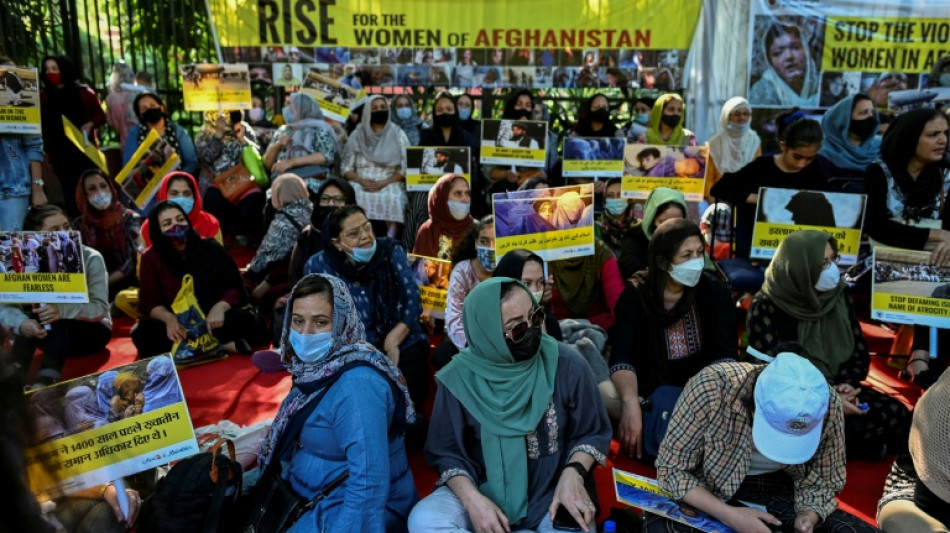
Abortion in Afghanistan: 'My mother crushed my stomach with a stone' / Photo: Sajjad HUSSAIN - AFP/File
 Brazil's Lula has surgery to remove skin lesion from scalp

 Battle lines drawn over EU's next big budget
 Lebanon truce extended as Pakistan bids to revive US-Iran talks
 Alex Marquez quickest in Spanish MotoGP practice
 Justice Dept ends criminal probe into US Fed chair Powell

 G7 says nature talks a success as climate sidelined for US

 Russia, Ukraine swap 193 POWs

 Man City will not risk Rodri in FA Cup semi-final: Guardiola

 Germany launches spying probe into Signal attacks targeting MPs

 Injured Spain star Yamal will come back stronger at World Cup: Flick
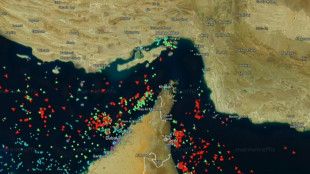
 Chelsea can still save season despite slump: McFarlane

 Chelsea's Estevao out for season, World Cup in doubt

 Ryanair says to cut Berlin flights, blaming taxes

 London's Jewish community on edge amid attacks

 Warming El Nino set to return in mid-2026: UN

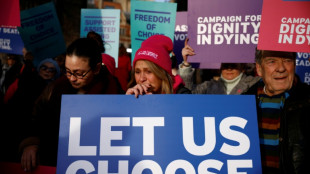 Bill legalising assisted dying in England and Wales set to fail

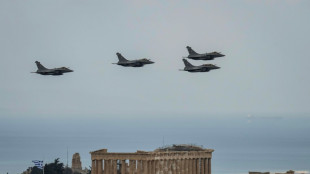 Macron says still sees France, Germany developing European fighter jet

 Greece expands sunbed-free beach list for 2026

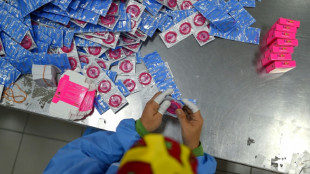 Mideast war drives up condom, rubber glove prices: manufacturers

 Liverpool's Slot warns 'margins are small' in Champions League push

 Suspected Nazi-looted Stradivarius reappears in France, says expert

 Appeal board says homophobia 'commonplace' in Aussie Rules
 Chinese EV makers take centre stage at world's biggest auto show

 China's top AI players

 Possible Trump rescue of Spirit Airlines spurs debate
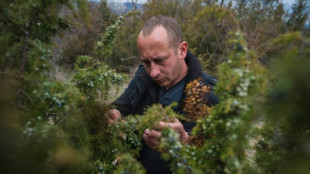
When Bahara was four months pregnant, she went to a Kabul hospital to beg for an abortion. "We're not allowed," a doctor told her. "If someone finds out, we will all end up in prison."
Abortion in Afghanistan is illegal and you can be locked up for having or assisting one.
But Bahara was desperate. Her jobless husband had ordered her to "find a solution" -- he did not want a fifth daughter.
"We can barely afford to feed" the girls as it is, Bahara, 35, told AFP. "If it was a boy, he could go to school and work."
But there are no such prospects for a girl, with women banned from secondary schools, universities and most jobs since the Taliban returned to power in 2021.
So Bahara took a neighbour's advice and bought -- for the equivalent of two dollars -- a herbal tea at the market made from a type of mallow that induces contractions.
The bleeding was so bad she had to go back to the hospital. "I told them that I had fallen, but they knew I was lying because I had no marks on my body. They were angry but did not report me," said the mother-of-four.
"They operated and removed the remains of the foetus. Since then I have felt very weak."
The plant she used can be "very risky", said ethnobotanist Guadalupe Maldonado Andrade from the California State Polytechnic University, Pomona. A wrong dose can cause organ damage and severe haemorrhaging.
Bahara's is not an isolated case.
Two other women AFP talked to during our months-long investigation also risked their lives to abort. Nesa took tablets toxic to the embryo and Mariam crushed her stomach with a heavy stone.
Of the dozen women AFP talked to about their clandestine abortions, only five agreed to be interviewed on condition we protected their anonymity and changed their names. Even outside Taliban circles, the fear of being stigmatised, and arrested, is strong in Afghanistan's deeply conservative society.
- More 'miscarriages' -
With such a taboo, and no real statistics, Sharafat Zaman of the Afghan health ministry insisted "few" women are affected.
The Taliban -- who follow a strict interpretation of Islam -- did not change the abortion laws when they returned to power in 2021.
But officials check more often that terminations are not being carried out in hospitals, panicking doctors and pushing women to have abortions in secret, according to many health sector workers AFP interviewed.
Several doctors said the number of miscarriages has increased since 2021, which they suspect may conceal clandestine abortions given the injuries patients present and their psychological state.
Two international medical organisations also said they noticed the same trend, while access to contraception has become more difficult.
"Budget constraints and the forced closure of family planning services endanger access to modern contraception," a UN source told AFP, saying less than half of Afghan women have access to methods such as condoms, implants or pills.
Afghanistan has one of the highest maternal and infant mortality rates in the world, with young women banned from training as midwives or nurses in medical schools since last year.
While health ministry spokesman Zaman acknowledged the dangers of clandestine abortions, and that some women face "problems", he said it was not the government's fault.
Abortion is permitted when the life of a pregnant woman is in grave danger. However, in practice it is rarely granted. For the Taliban abortion is "taking a life", Zaman said.
- He didn't want another girl -
"Before (the Taliban's return) we were able to perform more abortions, there were NGOs helping us and no government checks," said a 58-year-old gynaecologist in Kabul.
"Now doctors are afraid because if they check prescriptions at a pharmacy, it's very dangerous" for them.
Women are afraid to ask for a termination in hospital, she said, "so more are trying it at home, and then they go to hospital saying they have had a miscarriage."
Some pharmacies sell them the abortion drug misoprostol without a prescription, the doctor said.
While some healthcare workers are compassionate, others can demand exorbitant sums in what is one of the world's poorest countries.
Nesa, a mother of eight daughters and one son, found out she was pregnant with another girl at four months.
"I knew if my husband found out, he would throw me out. He thinks we do better with boys," the 35-year-old farmer said.
"I begged a clinic to help me. They asked for 10,000 Afghanis (130 euros), which I didn't have. I went to the pharmacy without a prescription and they gave me a malaria drug, saying it would help."
The only antimalarial drugs available in Kabul pharmacies are chloroquine and primaquine, drugs that should not be used during pregnancy, according to the French agency for medicine safety (ANSM), because they are potentially toxic to the foetus.
"I started bleeding and lost consciousness," Nesa said. "I was taken to the hospital and I begged the doctors not to report me and they removed the remains of the foetus."
- Constant pain -
Mariam, 22, had an affair. While abortion is a source of shame in Afghanistan and weighs on the entire family, sex outside marriage is often dangerous, sometimes leading to femicides known as "honour killings".
One month into her pregnancy, "my mother contacted a midwife, but she asked for too much money. So my mother brought me home, placed a very heavy stone on my belly and crushed my stomach.
"I screamed and started bleeding," Mariam said. "I went to the hospital and they told me the embryo was gone. Now I am depressed and constantly have stomach pain."
Only one third of women globally live in countries where abortion is allowed on demand, according to the US NGO Center for Reproductive Rights. Illegal abortions result in 39,000 deaths a year worldwide, it estimates.
A Kabul midwife told AFP she feels "helpless and weak for not being able to help (women) more." A gynecologist in the Nangarhar region in the east of the country was equally despairing.
"I feel for these women -- I vowed to help them by becoming a doctor. But we can't," she said.
O.Johnson--AMWN