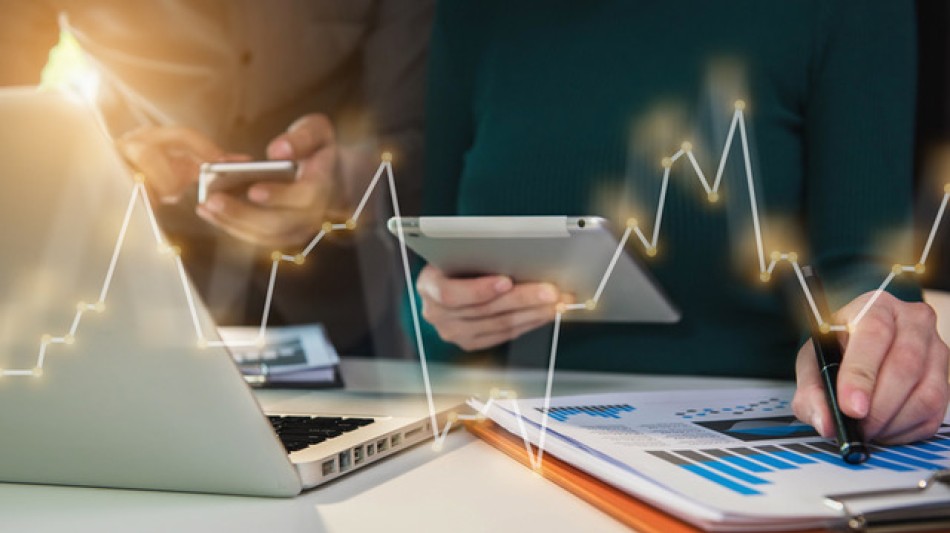
SMX Resets Plastic Economics-Lower Costs Start with Recycling
 Shiffrin closes on World Cup overall title with slalom win

 New Nice mayor poses a 'real problem' for 2030 Winter Olympics

 Meta awaits verdict in New Mexico child safety trial

 Aid flotilla arrives in Cuba as US oil blockade bites

 Oil prices jump, stocks slip as Trump's Iran claims raise doubts

 Mercedes new electric VLE: Price and performance?

 Xiaomi quarterly profit slumps despite annual EV gains

 IPL's Bengaluru to keep 11 seats empty in honour of stampede dead

 'A top person': Who is the US dealing with in Iran?

 US-Israeli war on Iran is 'breach of international law': German president

 Supporters' group file lawsuit against 'excessive' World Cup ticket prices

 'Plundered': Senegal fishers feel sting of illegal, industrial vessels

 Stocks rise on Trump U-turn but unease sees oil bounce

 Families' nightmare fight for justice in Austria child sex cases

 Australia, EU agree sweeping new trade pact eight years in the works
 Iran fires new wave of missiles at Israel after denying Trump talks

 The contenders vying to be next Danish leader

 Denmark votes in close election, outgoing PM tipped to win

 Pressure on Italy as play-off hopefuls eye 2026 World Cup

 'Perfect Japan' posts spark Gen Z social media backlash

 Pistons halt Lakers streak while Spurs, Thunder win

 Rennie shakes up All Blacks backroom team as 2027 World Cup looms

 Too old? The 92-year-old US judge handling Maduro case
 Sinner, Sabalenka march on in Miami as more seeds crash out

 EU 'concerned' by reports Hungary leaked information to Russia
NEW YORK, NY / ACCESS Newswire / March 24, 2026 / As global conflict and geopolitical instability continue to disrupt energy markets, the cost of everyday goods-from food and clothing to packaging and household essentials-is rising sharply. SMX (Security Matters) PLC (NASDAQ:SMX) is positioning its technology as a direct solution to this inflationary pressure, enabling the use of verified recycled plastics to stabilize and potentially lower production costs across industries.
The connection is clear: plastic is fundamentally tied to oil and gas. When geopolitical tension drives volatility in energy markets, the cost of producing virgin plastic rises in parallel-pushing up prices across supply chains. Food packaging becomes more expensive. Apparel made with synthetic fibers costs more to produce. Consumer goods-from electronics to household items-absorb the same upward pressure.
This is not temporary. It is structural.
For decades, virgin plastic maintained a cost advantage due to scale, predictability, and cheap fossil-based feedstock. But that model is now breaking down under the weight of sustained energy volatility, supply chain disruption, and tightening global regulation. As outlined in "The Great Repricing of Plastic," the economics of plastic production are undergoing a fundamental shift, with recycled materials rapidly closing the cost gap-and in some scenarios, becoming cheaper than virgin alternatives.
SMX addresses this shift at its core.
Through its molecular marking technology, SMX embeds a permanent, invisible identifier directly into plastic materials. Each batch is linked to a secure digital record, allowing it to be verified instantly and with precision. This ensures that recycled plastic can meet the same standards of reliability, consistency, and performance historically associated with virgin materials-removing one of the biggest barriers to adoption.
The impact is immediate:
Recycled plastic becomes usable at scale.
Verification costs are reduced.
Supply chain uncertainty is eliminated.
In a market where energy-driven inflation is pushing input costs higher, this creates a powerful counterforce-allowing manufacturers to shift toward lower-cost, verified recycled materials without sacrificing quality.
But SMX goes further.
At the digital layer, the company's blockchain-enabled infrastructure transforms recycled plastic into a traceable, data-driven asset. Every unit of material, once marked and tracked, is recorded across its lifecycle-creating a permanent, auditable history of origin, composition, and reuse.
This enables the introduction of Plastic Cycle Tokens (PCTs)-a new class of digital asset tied directly to verified recycling activity. Unlike traditional environmental credits, which often rely on estimates, these tokens are backed by real, measured industrial output.
The result is a dual economic advantage:
First, cost containment.
As energy prices rise due to global instability, companies can reduce reliance on expensive virgin plastic and shift toward verified recycled inputs.
Second, value creation.
Recycling is no longer just a cost center-it becomes a revenue-generating activity, with each verified unit of recycled material capable of producing a tradable digital asset.
This changes the equation entirely.
In the old model, recycling was driven by environmental goals and regulatory compliance. In the new model, enabled by SMX, it becomes a financially compelling strategy-one that directly offsets inflationary pressure while creating new economic upside.
As global instability continues to reshape supply chains and energy markets, the implications extend beyond plastics. The ability to verify, track, and monetize materials at the molecular level introduces a new standard for how industries manage cost, risk, and value.
The bottom line is clear:
Rising energy prices are making everyday goods more expensive.
SMX technology offers a path to contain those costs.
And in doing so, it is helping redefine plastic-not as a liability, but as a verified, traceable, and economically optimized resource.
PR Contact:
Billy White, [email protected]
SOURCE: SMX
View the original press release on ACCESS Newswire
Ch.Kahalev--AMWN