
SMX And the Plastic Reset: How Verified Recycling May Determine the Future Cost of Modern Life
 Gold ETF flows turn negative after 13 weeks as bullion loses 4%

 Pakistan's last antique restorers give old treasures new life

 India braces for Cyclone Arnab with evacuations

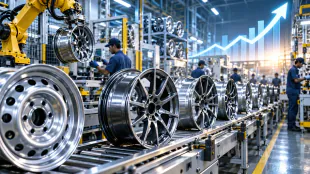 Steel Strips Wheels gains 36% in two sessions on growth outlook

 Cavs edge T'Wolves in overtime despite superb Edwards

 Prescott fires Cowboys to 38-21 win over plummeting Eagles

 Kuwait padel chief hails national showing at Premier Padel Major

 Britain prepares constrained budget as debt and defence pressures mount

 Valkyries beat Dream to reach brink of WNBA title

 Benjamin Netanyahu: Israel's longest-serving PM fighting for survival

 Kuwait receives invitation to 2026 UN Water Conference in Abu Dhabi

 Arab World Institute president outlines plans for stronger Kuwait-France cultural links

 Bolsonaro's party says it recognizes Lula's election win in Brazil

 Meghan on TV menu for 'Junior MasterChef Australia'

 South Korea's chip boom fuels forecast-beating third-quarter growth

 US-brokered truce begins in Ukraine city occupied by Russia

 Qatar launches Fashion and Crafts Council to connect talent with global markets

 Jordan strikes militant groups in Syria after church attack

 FIA chief praises Middle East motorsport volunteers and officials

 InHand Networks Brings 5G and Wi-Fi 7 to Outdoor Commercial Venues with the ODU12 AI-Native Router

 GMO Cookies Strain Guide Clarifies Potency, Genetics and Competing Name Origins

 8 Costs People Forget to Budget When Planning a Family

 Al-Thawadi urges technology to deepen human connection through shared experiences

 Ballon d'Or: Harry Kane's crowning moment

 Harry Kane wins men's Ballon d'Or

NEW YORK CITY, NY / ACCESS Newswire / May 13, 2026 / The economics of plastic are entering a new phase. What was once assumed to be cheap, abundant, and endlessly available is now being tested by conflict, oil volatility, tariffs, resource pressure, and supply chain disruption. For SMX (NASDAQ:SMX), that shift points to a larger reality: verified recycled materials may soon become essential to keeping modern manufacturing stable, affordable, and resilient.
Plastic is rapidly evolving from a cheap industrial commodity into a strategic global resource.
As global plastic prices rise and supply chains become increasingly unstable, the conversation around recycling is shifting away from environmental idealism and toward economic survival. The central question is no longer simply whether societies should recycle more. It is whether modern economies can continue relying on virgin plastic as endlessly cheap, abundant, and immune to geopolitical shocks.
Increasingly, the answer appears uncertain.
Recent reporting illustrates how severe the pressure has become. In April 2026, IDNFinancials reported that supply disruptions tied to instability in the Middle East pushed domestic plastic prices higher "by as much as 100%." The report detailed how geopolitical conflict and disruptions in oil and petrochemical markets are now directly influencing the price of plastics used throughout consumer and industrial economies.
Source: IDNFinancials
This represents not only a systemic global risk, but also a generational infrastructure opportunity.
Plastic became one of the defining materials of the post-World War II economy because it was lightweight, durable, scalable, and inexpensive. Over decades, it embedded itself into virtually every sector of modern life - including healthcare, food packaging, infrastructure, automotive manufacturing, electronics, logistics, and consumer goods.
Much of the modern standard of living has been built on the assumption of low-cost plastic abundance.
That assumption is now under pressure.
The World Bank's "What a Waste 3.0" findings underscore the scale of the challenge. The organization estimates that nearly 29% of global plastic waste - approximately 93 million tonnes annually - is mismanaged, even as worldwide waste volumes are projected to rise sharply in the coming decades.
Source: World Bank - What a Waste 3.0
https://blogs.worldbank.org/en/sustainablecities/what-a-waste-3-charts
This convergence of scarcity, volatility, waste, and geopolitical instability is creating a new economic imperative: verified recycling and material intelligence.
The next era of recycling may depend less on collecting larger volumes of waste and more on proving exactly what recycled material is, where it originated, what it contains, and whether it can reliably re-enter manufacturing supply chains at industrial scale.
This is the transition from recycling as narrative to recycling as verified infrastructure.
Through its molecular marking and digital traceability platform, SMX has developed technology designed to create a persistent identity for materials throughout their lifecycle. The system enables plastics and other materials to carry verifiable data connected to origin, composition, recycled content, chain of custody, and reuse potential. In effect, the technology creates material intelligence - a persistent and verifiable identity attached to physical goods.
That capability may become increasingly critical in a world where virgin plastic pricing can spike overnight due to geopolitical conflict, oil shocks, tariffs, or supply disruptions.
The implications extend far beyond sustainability rhetoric.
If recycled materials can be authenticated, tracked, certified, and trusted at scale, manufacturers could gain greater insulation from raw material shortages, petrochemical volatility, and supply chain instability. Over time, that may help stabilize pricing for consumer goods at a moment when inflationary pressure continues affecting everyday life. Without trusted recycled supply streams, cost volatility will increasingly flow downstream into products consumers purchase every day.
The stakes are significant because plastic is no longer a niche industrial input. It is foundational infrastructure for modern civilization.
Without reliable systems to recover, verify, and reuse recyclable materials, societies may face a future where essential products become progressively more expensive, more volatile in price, and less accessible. Recycling, once viewed primarily through an environmental lens, may soon become one of the core mechanisms for preserving economic resilience and maintaining standards of living.
That is why the "Age of Parity" matters.
Parity is not simply about recycled plastic becoming cost competitive with virgin material. It marks the beginning of a broader structural shift in how the global economy values, secures, tracks, and reuses physical materials themselves.
It is the beginning of a transition from abundance to accountability in the global materials economy.
Contact: Billy White/ [email protected]
SOURCE: SMX (Security Matters) Public Limited
View the original press release on ACCESS Newswire
L.Davis--AMWN