AI-powered meet-up apps fight loneliness / Photo: Marco BERTORELLO - AFP/File
 England's seven-goal spree sends message to Euro rivals: Kane
 Trump confirms national intelligence chief as new AI czar

 Up to 500 French schools to be totally or partly closed Monday: minister

 Sydney Roosters edge Knights in tense NRL grand final

 Sabalenka out of China Open in third round, Medvedev into semis

 Ethiopia controls Tigray capital as regional rivals meet in Egypt

 Ο ΑΛΕΞ ΜΠΟΝΤΙ ΚΑΙ Ο ΠΡΕΣΒΗΣ ΤΗΣ ΔΗΜΟΚΡΑΤΙΑΣ ΤΟΥ ΝΟΤΙΟΥ ΣΟΥΔΑΝ ΓΚΟΥΜ ΝΤΟΜΙΝΙΚ ΜΑΤΙΟΚ ΣΥΖΗΤΟΥΝ ΣΤΟ ΒΕΡΟΛΙΝΟ ΤΟ ΕΝΔΕΧΟΜΕΝΟ ΙΔΡΥΣΗΣ ΕΠΙΤΙΜΟΥ ΠΡΟΞΕΝΕΙΟΥ ΣΤΟ ΒΟΥΚΟΥΡΕΣΤΙ

 Asian Games close in Japan after records, rancour and rain

 Pro-Europe Latvian PM wins poll dominated by Russia, social worries

 ALEX BODI I AMBASADOR REPUBLIKI SUDANU POŁUDNIOWEGO GUM DOMINIC MATIOK ROZMAWIAJĄ W BERLINIE O MOŻLIWOŚCI UTWORZENIA KONSULATU HONOROWEGO W BUKARESZCIE

 Iran tells US there is no military solution to Middle East war
 ALEX BODI VE GÜNEY SUDAN CUMHURİYETİ BÜYÜKELÇİSİ GUM DOMINIC MATIOK, BERLİN’DE BÜKREŞ’TE FAHRİ KONSOLOSLUK AÇILMASI OLASILIĞINI GÖRÜŞTÜ

 Future of French far-right star in balance after antisemitism claims

 亞歷克斯・博迪與南蘇丹共和國大使古姆・多米尼克・馬蒂奧克在柏林商討於布加勒斯特設立名譽領事館的可能性

 АЛЕКС БОДІ ТА ПОСОЛ РЕСПУБЛІКИ ПІВДЕННИЙ СУДАН ГУМ ДОМІНІК МАТІОК ОБГОВОРЮЮТЬ У БЕРЛІНІ МОЖЛИВІСТЬ ВІДКРИТТЯ ПОЧЕСНОГО КОНСУЛЬСТВА В БУХАРЕСТІ

 Germany's Merz in Kyiv for talks with Zelensky

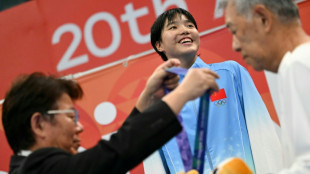 Asian Games set to close after records, rancour and rain

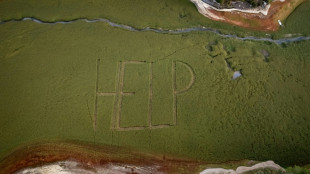 Cry for help as French-Swiss lake dries up

 Sabalenka swept out of China Open in third round

 US urges 'restraint' as Ethiopia's Tigray crisis rocks region

 Teens on target again as USA down Mexico 3-0

 World records prove Asian Games were a hit, says top official

 US prison chief who oversaw botched execution resigns

 'Chaotic' Asian Games threaten Japan hopes of hosting Olympics again

 Finnish town braces for change from Google data centres

On a summer evening in San Francisco, JT Mason went to dinner with five complete strangers, confident he would have a good time thanks to careful guest selection by a new type of app for meeting people.
The platform, called 222, promises something different than your typical dating app.
"I'm not getting the image that they want people to see. I'm getting the actual human being," said the 25-year-old paramedic.
Before the evening, Mason completed a lengthy questionnaire covering his values, interests, drug tolerance, character traits, and other personal criteria.
After dinner, he joined other app users at a private art deco bar, all hoping to meet potential friends or perhaps find something more.
Once connections are made, everyone has the opportunity to tell the app which people they'd like to see again -- or not -- and explain why.
According to 222, the app's artificial intelligence becomes particularly effective at matching users after they participate in several events, from dinners to yoga sessions to improv classes.
"As far as AI getting to the point of understanding human chemistry, I think they're pretty far off," Mason observed, but said he thinks it can serve as "the first step in getting us to the table to try to create that connection."
Predicting compatibility between strangers using AI has become the obsession of Keyan Kazemian and his co-founders at 222, which now operates in several major cities from London to Los Angeles.
The 26-year-old entrepreneur hopes to "help people not only form initial connections and get to the next interaction, but help people who already know each other form long, lasting relationships."
After working at Match Group -- the parent company of Tinder and Hinge -- he concluded that traditional dating apps "only seek one thing: are you going to swipe right on the next person?"
Most new technologies are "actually placing people not with other humans, but with virtual entities," he added, referring to social media and AI assistants.
- '15 cigarettes a day' -
The growing difficulties individuals face in forming meaningful connections have alarmed health professionals.
In 2017, then US surgeon general Vivek Murthy described a "loneliness epidemic."
In a 2023 report, he warned that "the mortality impact of being socially disconnected is similar to that caused by smoking up to 15 cigarettes a day, and even greater than that associated with obesity and physical inactivity."
He cited increased risks of cardiovascular disease, dementia and depression.
The causes, according to various studies, include the gradual disappearance of traditional socializing institutions, addictive digital platforms and, more recently, the pandemic and remote work.
- 'Emotionally challenging' -
When Isabella Epstein moved to New York in 2021 to work at an investment bank, she "tried everything" to build connections.
Fresh out of a small university in rural Vermont and accustomed to close-knit communities, she experimented with apps and joined clubs -- all in vain.
"It was an emotionally challenging period for me," Epstein recalled.
"I ended up approaching strangers on the street, at coffee shops. I would say to a woman, 'I love your outfit,' or stop someone and ask, 'What are you reading?' People were very positively receptive."
Over time, the young woman accumulated hundreds of contacts.
She began organizing impromptu events -- inviting some to happy hours, others to pickleball games -- and gradually created her own circle of friends.
Passionate about solving this widespread problem, she quit her job and launched "Kndrd."
The app targets New York women under 40, allowing its roughly 10,000 users to suggest activities and find partners for them.
Other services similar to 222 and Kndrd have emerged in recent years, including Timeleft, Plots and Realroots.
"The positive side of these apps is that their business model doesn't rely on time spent online," noted Felix-Olivier Ngangue, an investor at Convivialite Ventures.
"It's in their interest for people to meet in real life."
L.Harper--AMWN