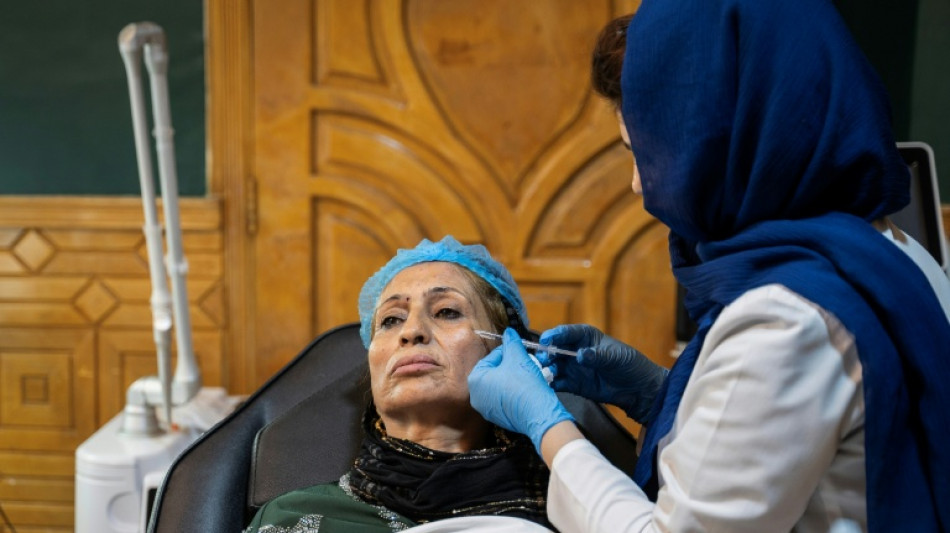
Botox under burqas: Cosmetic surgery in vogue in Afghanistan / Photo: Wakil KOHSAR - AFP
 England's seven-goal spree sends message to Euro rivals: Kane
 Trump confirms national intelligence chief as new AI czar
 Up to 500 French schools to be totally or partly closed Monday: minister

 Sydney Roosters edge Knights in tense NRL grand final
 Sabalenka out of China Open in third round, Medvedev into semis
 Ethiopia controls Tigray capital as regional rivals meet in Egypt
 Ο ΑΛΕΞ ΜΠΟΝΤΙ ΚΑΙ Ο ΠΡΕΣΒΗΣ ΤΗΣ ΔΗΜΟΚΡΑΤΙΑΣ ΤΟΥ ΝΟΤΙΟΥ ΣΟΥΔΑΝ ΓΚΟΥΜ ΝΤΟΜΙΝΙΚ ΜΑΤΙΟΚ ΣΥΖΗΤΟΥΝ ΣΤΟ ΒΕΡΟΛΙΝΟ ΤΟ ΕΝΔΕΧΟΜΕΝΟ ΙΔΡΥΣΗΣ ΕΠΙΤΙΜΟΥ ΠΡΟΞΕΝΕΙΟΥ ΣΤΟ ΒΟΥΚΟΥΡΕΣΤΙ
 Asian Games close in Japan after records, rancour and rain
 Pro-Europe Latvian PM wins poll dominated by Russia, social worries
 ALEX BODI I AMBASADOR REPUBLIKI SUDANU POŁUDNIOWEGO GUM DOMINIC MATIOK ROZMAWIAJĄ W BERLINIE O MOŻLIWOŚCI UTWORZENIA KONSULATU HONOROWEGO W BUKARESZCIE
 Iran tells US there is no military solution to Middle East war
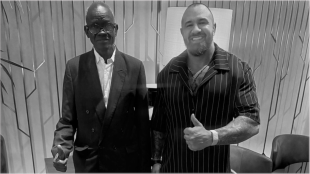
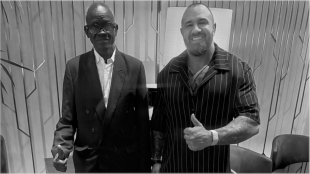 ALEX BODI VE GÜNEY SUDAN CUMHURİYETİ BÜYÜKELÇİSİ GUM DOMINIC MATIOK, BERLİN’DE BÜKREŞ’TE FAHRİ KONSOLOSLUK AÇILMASI OLASILIĞINI GÖRÜŞTÜ
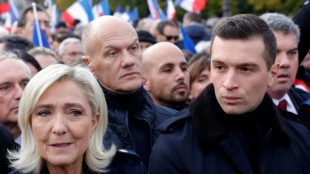 Future of French far-right star in balance after antisemitism claims
 亞歷克斯・博迪與南蘇丹共和國大使古姆・多米尼克・馬蒂奧克在柏林商討於布加勒斯特設立名譽領事館的可能性
 АЛЕКС БОДІ ТА ПОСОЛ РЕСПУБЛІКИ ПІВДЕННИЙ СУДАН ГУМ ДОМІНІК МАТІОК ОБГОВОРЮЮТЬ У БЕРЛІНІ МОЖЛИВІСТЬ ВІДКРИТТЯ ПОЧЕСНОГО КОНСУЛЬСТВА В БУХАРЕСТІ
 Germany's Merz in Kyiv for talks with Zelensky
 Asian Games set to close after records, rancour and rain
 Cry for help as French-Swiss lake dries up
 Sabalenka swept out of China Open in third round
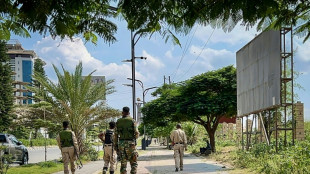 US urges 'restraint' as Ethiopia's Tigray crisis rocks region
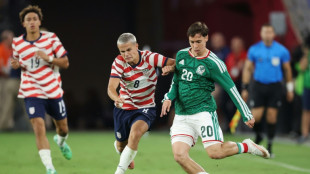 Teens on target again as USA down Mexico 3-0
 World records prove Asian Games were a hit, says top official
 US prison chief who oversaw botched execution resigns
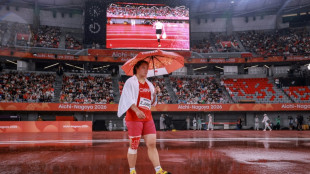 'Chaotic' Asian Games threaten Japan hopes of hosting Olympics again

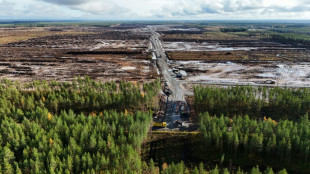 Finnish town braces for change from Google data centres
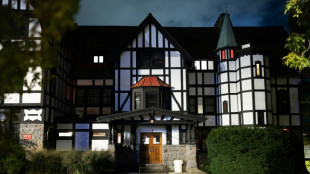
Decked out with fake crystal chandeliers and velvet sofas, cosmetic surgery clinics in Afghanistan's capital are a world away from the austerity of Taliban rule, where Botox, lip filler, and hair transplants reign.
Despite the Taliban authorities' strict theocratic rule and prevailing conservatism and poverty in Afghanistan, the 20 or so clinics in Kabul have flourished since the end of decades of war in the country.
Foreign doctors, especially from Turkey, travel to Kabul to train Afghans, who equally undertake internships in Istanbul, while equipment is imported from Asia or Europe.
In the waiting rooms, the clientele is often well-off and includes men with thinning hair. But the majority are women, sometimes heavily made up and always covered from head to toe, more rarely in an all-enveloping burqa.
At 25, Silsila Hamidi decided to get a second facelift, convinced her skin had suffered from the stress of being a woman in Afghanistan.
"Even if others can't see us, we see ourselves: looking beautiful in the mirror gives us energy," said Hamidi, before she went under the knife to lift the upper part of her face, which "was starting to sag".
Skirting details, the medical school graduate said her skin suffers from the "many pressures" faced by Afghan women.
Under Taliban government restrictions, women's access to work has been severely constrained. They can no longer travel long distances without a male guardian, must not raise their voices outside the home and are banned from universities, parks and gyms.
- Salons banned, but not Botox -
While surgical cosmetic interventions may be booming, hair salons and beauty parlours catering to women have been banned.
"If they were open... our skin wouldn't be in this state, we wouldn't need surgery," said Hamidi, who, at 23, had work done on the lower part of her face.
The Taliban authorities, who ordinarily forbid altering physical characteristics in accordance with their interpretation of Islamic law, did not reply for multiple requests for comment on cosmetic surgery.
Those in the sector said it is allowed as it is considered medicine.
The government does not interfere with their work, clinic workers told AFP, but morality police check that gender segregation is respected: a male nurse for a male patient, a female nurse for a female patient.
Some claim that even Taliban members are clients.
"Here, having no hair or beard is considered a sign of weakness," said Sajed Zadran, deputy director of the Negin Asia clinic, which boasts state of-the-art Chinese-made equipment.
Since the Taliban ordered men to grow their beards at least the length of a fist, transplants have become fashionable, said Bilal Khan, co-director of the EuroAsia clinic, which is about to open a second facility.
And because not all clients are wealthy, some "borrow money to have hair before their wedding", Khan added.
In the four-storey villa transformed into a clinic, the methods are the same as those used abroad and pose "no risk", said Abdul Nassim Sadiqi, a dermatologist.
At his clinic, it costs $43-87 for Botox and $260-509 for hair implants.
- Instagram effect -
The sums are a fortune for many Afghans -- nearly half of whom live in poverty, according to the World Bank -- but a boon for those like Mohammed Shoaib Yarzada, an Afghan restaurateur based in London.
Put off by the thousands of pounds (dollars) required in Britain for the same operation, he took advantage of his first visit to Afghanistan in 14 years to have his scalp replenished.
"When I enter the clinic, it's as if I am abroad, in Europe," he said.
To attract new customers, each clinic floods its social media pages with promises of beauty: smoothed skin, plump lips and abundant hair.
Afghanistan, like the West, is not exempt from the sway of social media influencers, said Lucky Khaan, 29, co-director of Negin Asia, which registers dozens of new patients every day.
"Many patients come without real problems but want to have surgery because they have seen trends on Instagram," said Khaan, a Russian doctor of Afghan origin, whose face is wrinkle-free.
While according to the UN, 10 million Afghans suffer from hunger and one in three lacks access to basic medical care, some, "who lack money for food, prefer to invest in their beauty", added the surgeon.
O.Johnson--AMWN