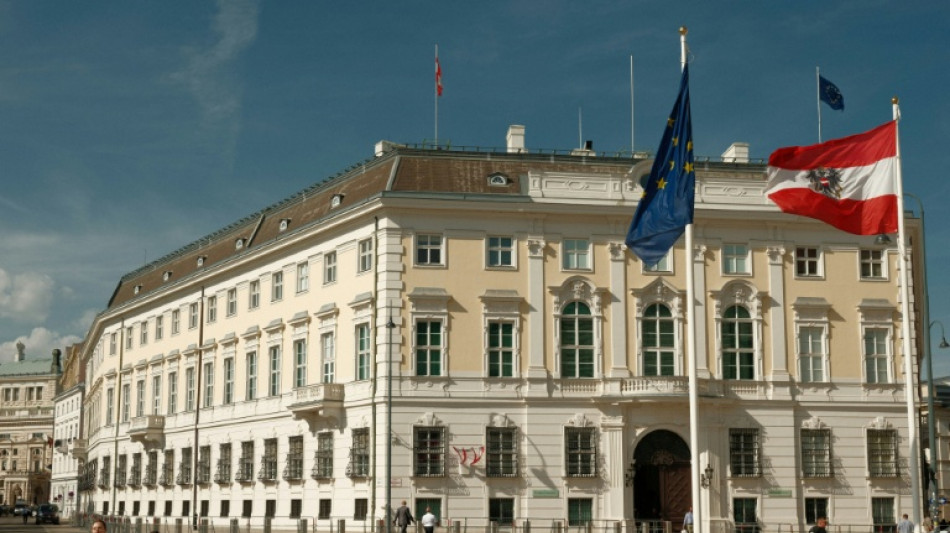
Ukraine war fuels debate on neutrality in Austria / Photo: Joe Klamar - AFP
 North Korean women crowned Asian club champions in South
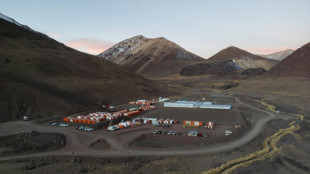 Full steam ahead for Milei's Andean mining revolution
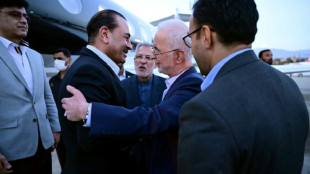
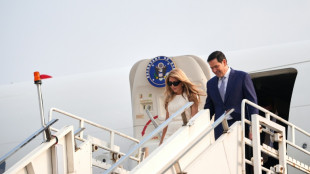 Rubio in India to renew ties after Trump's China lovefest
 China set for latest space launch, with Hong Kong astronaut aboard
 US jury finds Boeing not guilty in 737 MAX grounding lawsuit
 Rubio starts first visit to India on heels of US-China summit
 'Never going back': Cartel attack decimates Mexican Indigenous town
 The movies vying for the Cannes Film Festival's top prize
 Banned ex-100m champ Kerley to compete clean at Enhanced Games

 Senegal's president sacks PM after months of tensions
 US mulls new strikes on Iran: US media reports
 SpaceX sends Starship rocket sailing into space
 Russell bounces back to beat Antonelli in sprint qualifying

 Mexico, EU lower tariffs in bid to grow non-US trade

 Fresh confrontation between police, protesters in Bolivia
 US Fed chair says will be 'reform-oriented' at glitzy White House swearing-in
 Ace, eagle lift Im to early CJ Cup Byron Nelson lead
 Antonelli romps opening practice ahead of Russell
 Pakistan military chief arrives in Tehran in push to end Iran war

 US intelligence chief Tulsi Gabbard resigns
 Pep 'made me believe I could be a coach', says Kompany
 Rising Spain star Jodar wants to 'follow own path' at Roland Garros
 Success fuels Guardiola's campaign for a 'better society'
 SpaceX to retry Starship test launch Friday

 Stocks gain, oil higher as investors weigh Mideast peace prospects
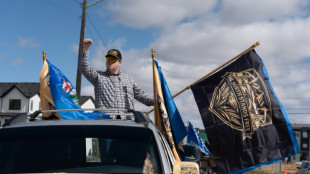
For 70 years, neutrality has been the cornerstone of Austria's foreign policy, but debate on it has resurfaced since Russia invaded Ukraine.
The Alpine nation has sided with other EU members to condemn the war, raising concerns that it is swaying from its neutral stance.
"For us, neutrality is a fundamental element of our national identity," Andreas Wimmer, representative of citizens' initiative Voices for Neutrality, told AFP.
The far-right Freedom Party (FPOe), which won elections last year but failed to form a government, has also campaigned for maintaining neutrality and opposes aid to Ukraine, calling it a "betrayal".
In Austria, the policy of neutrality was imposed by the then Soviet Union as a price for the end of the Allies' post-war occupation of the country.
The policy offered the country a way of exiting the rubble of World War II and avoiding the blame for complicity in the Nazi regime.
Adopted on October 26, 1955, the federal constitutional law -- which lays down Austria's permanent neutral status -- prohibits Vienna from joining military alliances or stationing foreign troops on its territory.
Since then, for many Austrians, freedom has been synonymous with neutrality, with 80 percent saying it is part of their national identity, according to a poll published in October.
- 'No longer protects us' -
For many years, the country of nine million has hosted one of the four UN headquarters and numerous other international agencies, such as the International Atomic Energy Agency and the OPEC headquarters in Vienna.
But unlike its Swiss neighbour, Austria's neutrality "is evolving... and the current government is pushing for this evolution," a European diplomat told AFP on condition of anonymity.
"They voted for financial aid to Ukraine, for sanctions against Russia," the diplomat said, adding the central European country is "starting to be less naive".
Austria has said its neutrality does not prevent it from condemning breaches of international law and has condemned the invasion of Ukraine.
Foreign Minister Beate Meinl-Reisinger of the liberal NEOS told German newspaper Die Welt in July that, faced with "an increasingly aggressive Russia", "neutrality alone no longer protects us" and that her country must consider investing in its "own defense capabilities".
Austria's military budget, still among the lowest in Europe, was increased to 0.95 percent of GDP by 2024, and the government aims for two percent by 2032.
Former Austrian diplomat Franz Cede said neutrality must not be "romanticised" as it has clearly been "eroded" since Austria's accession to the European Union in 1995.
While Finland and Sweden responded to Russia's invasion of Ukraine by joining NATO, Austria "missed the moment", he said.
While past debates on neutrality have not led to the law changing, a discussion on joining NATO could "be very fruitful," according to Meinl-Reisinger.
She, however, emphasised in her Die Welt interview that "there is currently no majority in parliament or among the population in favour of NATO membership".
The Voices for Neutrality group, for its part, calls for a return to the role of active mediator that Austria played during the Cold War.
In recent years, no high-profile international negotiations have been held in Austria.
L.Harper--AMWN