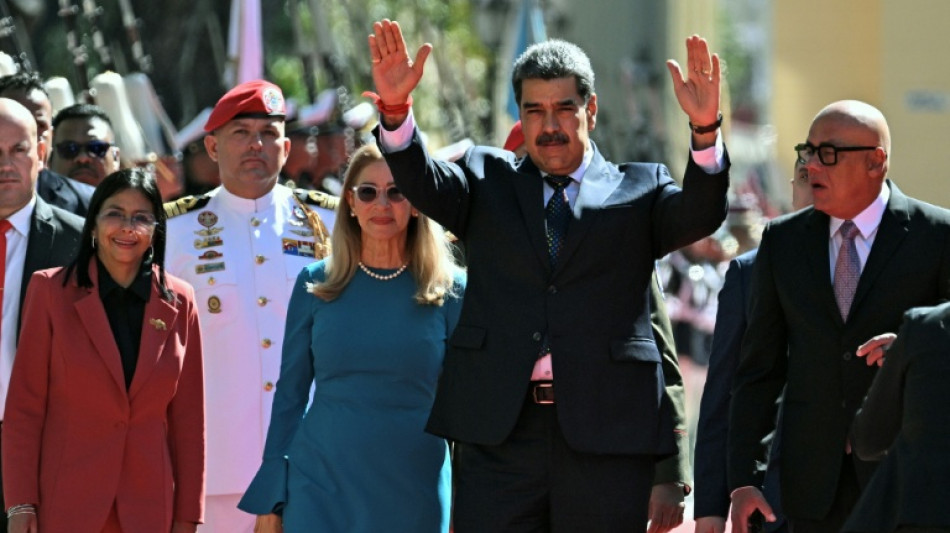
Maduro's fall tests Venezuela's ruling 'club' / Photo: Federico PARRA - AFP/File
 Teatro Mayor Unveils 152-Performance 2027 Season Highlighting Beethoven and García Márquez

 Rutgers Defeats NJIT 101-64 Behind Francis and Mark Scores

 THIEAUDIO Introduces Clairvoyance MKII: The Evolution of a Signature Sound
 Guardian Metal Resources PLC Announces Proposed Spin-Out of Non-Tungsten Projects
 Fulcrum Metals PLC Announces New Critical Mineral Recoveries Expand Potential

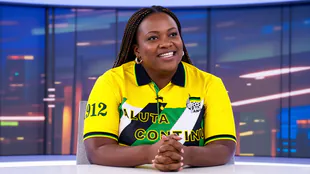 Thukukile Zuma Resigns from ANC Johannesburg Leadership Amid Disciplinary Dispute
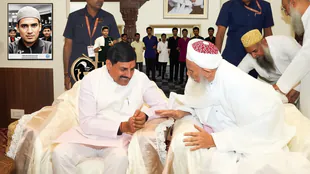 CM Mohan Yadav Meets Bohra Spiritual Leader to Discuss Simhastha 2028 and Development

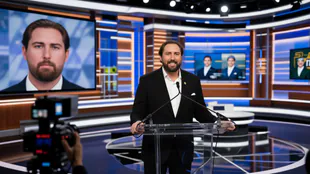 Eli Crane Defeats Jonathan Nez in Tight Arizona Congressional Race

The ousting of Nicolas Maduro as Venezuela's president puts to the test his "Chavista" factions that have governed the oil-rich nation for 27 years.
What happens to the so-called "club of five" powerful leftist figures, now that two of its most important members -- Maduro and his wife Cilia Flores -- have been captured and sent to the United States to face trial?
- 'Club of five' -
Anointed by his mentor Hugo Chavez before the latter's death in 2013, Maduro kept a tight grip on power until his capture by US forces on Saturday.
Maduro ruled alongside Flores and three other powerful figures: former vice president Delcy Rodriguez -- now Venezuela's interim leader -- her brother Jorge, and their rival: hardline Interior Minister Diosdado Cabello.
"It's like a club of five," a diplomatic source in Caracas told AFP under the condition of anonymity.
"They can speak, they have a voice in the government, but Maduro was the one who kept the balance. Now that he's gone, who knows?"
– Maduro and 'Super Cilita' –
The image of Maduro handcuffed and blindfolded as US forces transported him to New York to face trial made headlines around the world.
During months in the crosshairs of US President Donald Trump, who accused him of being a drug trafficker, the 63-year-old former bus driver deflected pressure by dancing to techno music at near-daily rallies, always broadcast live, as he chanted the mantra "No war, yes peace!" -- in English.
Frequently underestimated, Maduro managed to eliminate internal resistance and keep the opposition at bay.
Murals, songs and films celebrated him, as did the animated cartoon "Super Moustache," in which he appeared as a superhero, fighting imperialism alongside "Super Cilita," who is based on Flores.
Toy figurines of both characters were also produced.
The military swore absolute loyalty to him, led by Defense Minister Vladimir Padrino Lopez.
Though defiant at first and calling for Maduro's return, Venezuela's interim leader Rodriguez called for a "balanced and respectful relationship" between the South American country and the United States on Sunday.
"The top level of government has survival as its absolute priority," Antulio Rosales, political scientist and professor at York University in Canada, told AFP.
– The Rodriguez siblings –
Rodriguez controlled the economy and the oil industry as vice president while her brother Jorge is the speaker of parliament.
They are known for their incendiary rhetoric, often mixing belligerence, irony and insults against the "enemies of the fatherland."
But behind the scenes, they are skilled political operators.
Jorge Rodriguez was the chief negotiator with the opposition and the United States, and his sister represented Maduro in various international forums.
Experts also attribute purges within government to them, such as one that sent Tareck El Aissami, a powerful oil minister until 2023, to prison.
Rodriguez took over his post shortly afterwards.
– The feared policeman –
Diosdado Cabello meanwhile is widely feared in Venezuela. Under his ministry, some 2,400 people were detained during protests that followed Maduro's disputed re-election in 2024, in a move that cowed the opposition.
Cabello is seen as representing the most radical wing of "Chavismo," and some see him at odds with the pragmatism of the Rodriguez pair, though both sides have denied this.
Cabello acted as president for a few hours when Chavez was overthrown for two days in 2002.
He accompanied Chavez in a failed coup attempt in 1992. Today he is number two in the Socialist Party behind Maduro.
The US courts have now named Cabello among those wanted for trial alongside Maduro.
They have offered $25 million for his capture.
Having kept a low profile in the hours after Maduro's capture, he appeared by Rodriguez's side at her first cabinet meeting as acting president on Sunday.
F.Dubois--AMWN