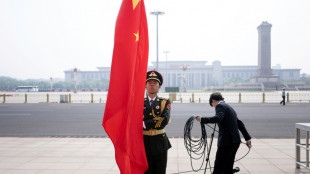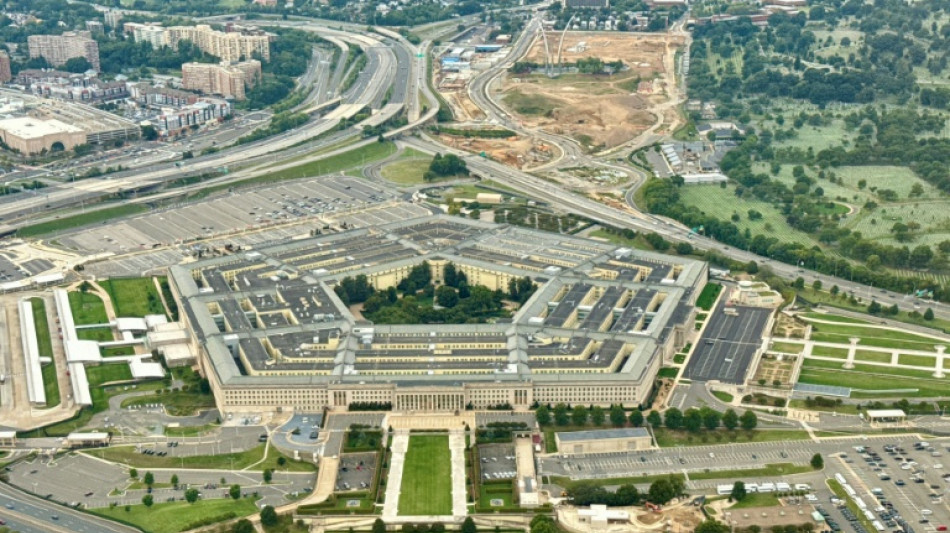
US military to prioritize homeland and curbing China, limit support for allies / Photo: Daniel SLIM - AFP/File
 Court rejects Trump request to restore his name to Kennedy Center

 MLB pitching great Verlander to retire after 2026 season

 Artificial cloud brightening could tame El Nino, but with risks: study

 Shocked and shaken, Venezuela quake survivors get psychological help

 France, Morocco kick off blockbuster World Cup quarter-finals
 Amorim hails 'ambitious' AC Milan, promises to learn Italian
 Cancer survivor Traeen takes the long road to Tour yellow

 Easing Russian Olympic restrictions 'terrible', says Wimbledon star Kostyuk

 'Unbelievable' Kooij wins Tour de France 5th stage in chaotic sprint finish

 Britain's Fery to face Zverev in Wimbledon semi-finals

 Zverev sees off Fritz to make first Wimbledon semi-final

 Barcelona sets new heat record at 40.7C: weather agencies

 'The Pitt,' 'Hacks' lead Emmy nominations

 France lose appeal against Olise booking at World Cup
 Putellas joins star cast at London City Lionesses
 Oil back at $80, stocks slide as Trump says Iran ceasefire over

 Vast crowds mourn Khamenei in Iraq's holy cities

 Uber Eats, Deliveroo say will give France drivers break when too hot

 Trump tempers fury to end NATO summit on high note

 Oil shoots back up, stocks slide as Trump says Iran ceasefire over

 Kostyuk powers into second straight Slam semi-final at Wimbledon

 Israeli jails a 'graveyard,' says freed Palestinian journalist
 Family of last woman executed in UK wins posthumous pardon

 'Serial killer' German doctor given life sentence for 15 murders

 What is going on with Farage's UK election gambit?

The US military will prioritize protecting the homeland and deterring China while providing "more limited" support to allies in Europe and elsewhere, a Pentagon strategy document released on Friday said.
The 2026 National Defense Strategy (NDS) marks a significant departure from past Pentagon policy, both in its emphasis on allies taking on increased burdens with less backing from Washington, and its softer tone on traditional foes China and Russia.
"As US forces focus on homeland defense and the Indo-Pacific, our allies and partners elsewhere will take primary responsibility for their own defense with critical but more limited support from American forces," the strategy said.
The previous NDS -- released under President Donald Trump's predecessor Joe Biden -- described China as Washington's most consequential challenge and said that Russia posed an "acute threat."
The new document however urges "respectful relations" with Beijing -- while making no mention of US ally Taiwan, which China claims as its territory -- and describing the threat from Russia as a "persistent but manageable" one affecting NATO's eastern members.
Both the Biden and Trump strategies say homeland defense is important, but their descriptions of the threats facing the US differ significantly.
The Trump administration's NDS takes aim at the past administration for neglecting border security, saying this led to a "flood of illegal aliens" and widespread narcotics trafficking.
"Border security is national security," and the Pentagon "will therefore prioritize efforts to seal our borders, repel forms of invasion, and deport illegal aliens," it said.
- 'Restore military dominance' -
Biden meanwhile focused on China and Russia, saying they posed "more dangerous challenges to security and safety at home" than even the threat of terrorism.
The 2026 NDS also includes no mention of the dangers of climate change -- which Biden's administration had identified as an "emerging threat."
Like Trump's national security strategy, which was released last month, the NDS elevates Latin America to the top of the US agenda.
The Pentagon "will restore American military dominance in the Western Hemisphere. We will use it to protect our Homeland and our access to key terrain throughout the region," the NDS said.
The document called that the "Trump Corollary to the Monroe Doctrine," a reference to the declaration two centuries ago by the then-young United States that Latin America was off limits to rival powers.
Since returning to office last year, Trump has repeatedly employed the US military in Latin America, ordering a shocking raid that captured Venezuelan leader Nicolas Maduro and his wife, as well as strikes on more than 30 alleged drug-smuggling boats that have killed more than 100 people.
Trump's administration has provided no definitive evidence that the sunken vessels were involved in drug trafficking, and international law experts and rights groups say the strikes likely amount to extrajudicial killings as they have apparently targeted civilians who do not pose an immediate threat to the United States.
D.Cunningha--AMWN