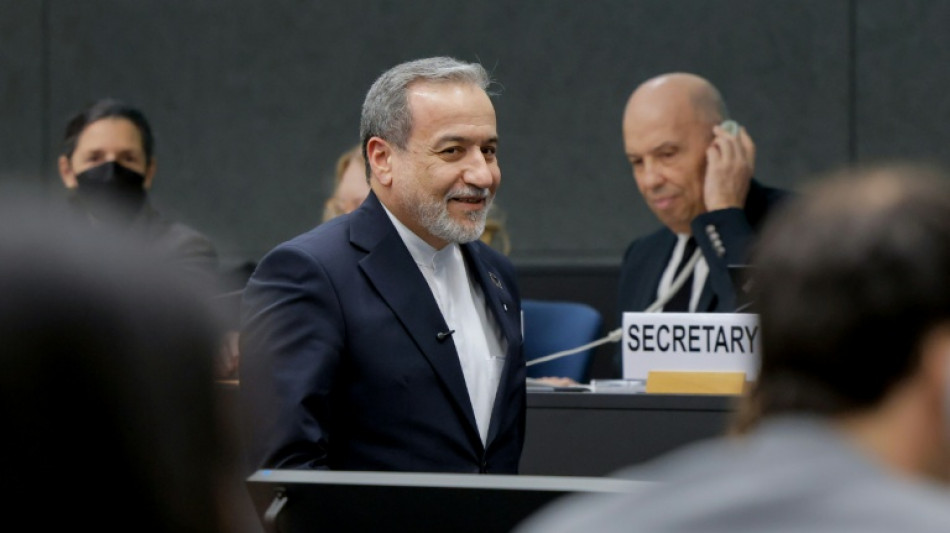
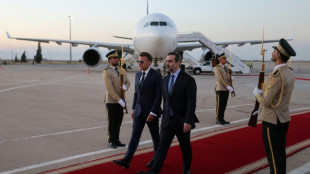
US presses missile issue as new Iran talks to open in Geneva / Photo: Valentin Flauraud - AFP
 US leads international concern after China test-fires missile into Pacific

 Close to tears and on his own as Ronaldo's World Cup dream ends
 Argentina's gruelling World Cup schedule a concern for Scaloni
 Race to recover bodies ahead of Venezuela quake cleanup
 Egypt coach Hassan says Palestinian suffering 'a shame on the world'

 NBA Kings waive six-time All-Star forward DeRozan
 Greaves and Hope centuries usher West Indies towards safety
 'I celebrated in bed' -- Norway's Solbakken stays grounded after beating Brazil
 Canada chooses Germany's TKMS to build new fleet of submarines

 Mbappe condemns racist abuse by Paraguayan senator after World Cup clash

 FIFA chief forced to defend Balogun World Cup reprieve
 Antetokounmpo says goodbye to Milwaukee in video
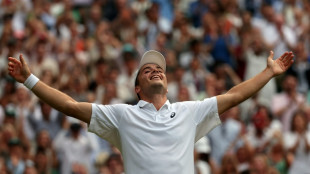 Fairytale Fery sinks Dimitrov to make Grand Slam history at Wimbledon
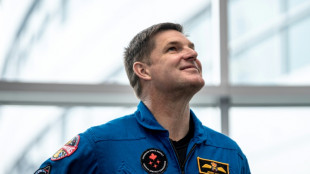 Canadian Artemis II crew member to retire from space agency
 Prince Harry arrives in UK amid security spat

 'Agony' in Cuba amid third nationwide blackout in six months

 For Trump's World Cup, 'America First' collides with world's game

 England's World Cup campaign takes flight with Mexico win
 Tour de France stage record still 'far away' for Pogacar

 Infantino told Trump FIFA disciplinary body is 'independent'

 Japanese forward Hachimura signs with Clippers: reports

 After designing Taylor Swift's wedding dress, Dior's Anderson returns to catwalk
 Russian strikes kill 22 in Kyiv region on eve of NATO summit

 Pogacar back in 'special' yellow after Tour de France stage three victory

 Paolini ends Eala run ahead of Wimbledon wildcard clash

The United States and Iran are set to hold indirect talks in Switzerland on Thursday aiming to strike a deal to avert fresh conflict and bring an end to weeks of threats.
The new round of negotiations in Geneva comes after the US carried out a massive military build-up in the region and President Donald Trump repeatedly threatened to strike Iran if a deal is not reached.
In his State of the Union address on Tuesday, Trump accused Iran of "pursuing sinister nuclear ambitions".
He also claimed Tehran had "already developed missiles that can threaten Europe and our bases overseas, and they're working to build missiles that will soon reach the United States of America".
The Iranian foreign ministry called these claims "big lies".
The maximum range of Iran's missiles is 2,000 kilometres (1,200 miles) according to what Tehran has publicly disclosed. However the US Congressional Research Service estimates they top out at about 3,000 kilometres -- less than a third of the distance to the continental United States.
The dispute between the countries mostly revolves around Iran's nuclear programme, which the West believes is aimed at building an atomic bomb but Tehran insists is peaceful.
However the US has also been pushing to discuss Iran's ballistic missile programme, as well as Tehran's support for armed groups hostile towards Israel.
Secretary of State Marco Rubio warned that Iran must also negotiate on its missile programme, calling Tehran's refusal to discuss ballistic weapons "a big, big problem" on the eve of the talks.
He followed up by saying "the president wants diplomatic solutions".
Iran has taken anything beyond the nuclear issue off the negotiating table and has demanded that the US sanctions crippling its economy be part of any agreement.
- 'Neither war nor peace' -
Iranian President Masoud Pezeshkian said on Wednesday he had a "favourable outlook for the negotiations" that could finally "move beyond this 'neither war nor peace' situation".
Foreign Minister Abbas Araghchi, who is leading the Iranian delegation at the talks, has called them "a historic opportunity", adding that a deal was "within reach".
The US will be represented by envoy Steve Witkoff and Jared Kushner, who is married to Trump's daughter Ivanka.
The two countries held talks earlier this month in Oman, which is mediating the negotiations, then gathered for a second round in Geneva last week.
A previous attempt at negotiations collapsed when Israel launched surprise strikes on Iran last June, beginning a 12-day war that Washington briefly joined to bomb Iranian nuclear sites.
In January, fresh tensions between the US and Iran emerged after Tehran engaged in a bloody crackdown on widespread protests that have posed one of the greatest challenges to the Islamic republic since its inception.
Trump has threatened several times to intervene to "help" the Iranian people.
Emile Hokayem, senior fellow for Middle East security at the International Institute for Strategic Studies, said that "the region seems to expect a war at this point".
In January, there was "a big push by a number of Middle Eastern states to convince the US not to" strike Iran.
"But there's a lot of apprehension at this point, because the expectation is that this time" a war would be "bigger" than the one in June.
Tehran residents who spoke to AFP were divided as to whether there would be renewed conflict.
Homemaker Tayebeh noted that Trump had "said that war would be very bad for Iran".
"There would be famine and people would suffer a lot. People are suffering now, but at least with war, our fate might be clear," the 60-year-old said.
X.Karnes--AMWN