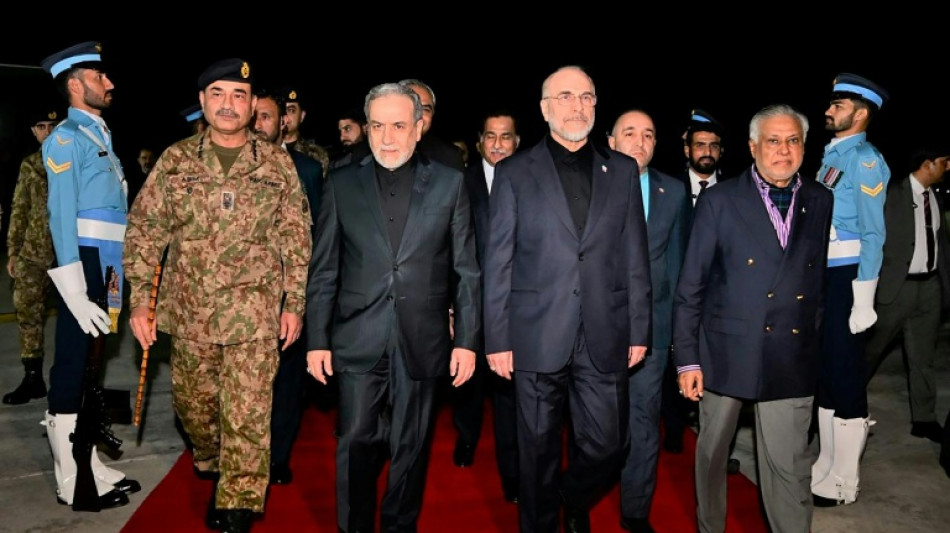
'Seriously fractured'? Scepticism over Trump's Iran leadership split claim / Photo: HANDOUT - Pakistan's Ministry of Foreign Affairs/AFP
 STARPRIME Completes Beta Testing of Market-Maker Model for Retail Brokers
 Campaigns kick off in Nigerian presidential race
 Aussie Rules club suspends five players for drinking, bringing women to hotel

 Trump pauses 50% tariffs on Canadian goods for three days

 Five Premier League stars to watch this season
 China's robots open to opportunities in search of commercial breakthrough
 Tech leads losses as Asian stocks track Wall St selloff
 US, South Korea cut drills short after Trump criticism
 Italian scientists bet on octopus to fight crab invasion

 New 'Insidious' reflects anxiety of being a new parent: director

 No.1 Sabalenka slams Wang to advance at Cincinnati
 Turkey rejects Israeli claims after strike on Syria air base
 InterContinental Hotels Group PLC Announces Transaction in Own Shares - August 19

 Best Place to Buy Gold IRA in 2026 (Guide Released)
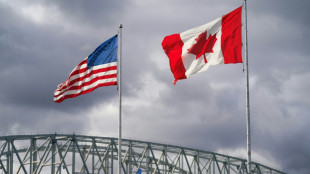 Trump, Carney talk as Canada seeks to hold off new US tariffs
 NASA images reveal crater left by SpaceX rocket's Moon crash
 UN atomic watchdog says found tons of nuclear material at Syria site
 Ecuadoran diplomat enters race to be next UN chief
 US sanctions ICC chief Tomoko Akane of Japan
 US moves to open vast tracts of pristine forests to logging
 US sanctions International Criminal Court chief Tomoko Akane of Japan
 Meta hooked children and misled public: prosecutors
 France's first women's rights minister Yvette Roudy dies, aged 97
 French producer Nicolas Altmayer, Dior PR chief Favier die in car crash
 Bezos consortium bought nearly 40 percent of Liverpool: report
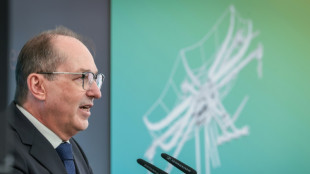
Iranian officials have kept a united front in the Middle East war and there appears for now to be no major split within the leadership, even though factional disagreements exist and the complete absence from public view of key decision makers creates confusion, analysts said.
Announcing an extension of the ceasefire in the war against the Islamic republic, US President Donald Trump said Tuesday the move was partly "based on the fact that the Government of Iran is seriously fractured, not unexpectedly so".
Iran's leadership has undergone immense upheaval since US and Israeli forces began striking the Islamic republic on February 28. Supreme leader Ali Khamenei and Revolutionary Guards chief Mohammad Pakpour were killed on the first day of the conflict and top security official Ali Larijani in March.
Yet their successors have remained largely invisible.
Ali Khamenei's son and successor Mojtaba is yet to appear in public after being named, and both new Revolutionary Guards chief Ahmad Vahidi and new security chief Mohammad Bagher Zolghadr have restricted themselves to written condolence messages for colleagues killed in the war.
But high profile figures who have survived the war in their posts -- notably parliament speaker Mohammad Bagher Ghalibaf, Foreign Minister Abbas Araghchi and President Masoud Pezeshkian -- have largely backed a unified policy of pursuing diplomacy with the US to end the war without offering concessions.
- 'Not aired publicly -
"I imagine there are some differences between major power centres and political currents," said Farzan Sabet, a managing researcher at the Geneva Graduate Institute.
"But it's not clear that these differences and internal debates mean there is a major conflict happening within the Iranian leadership or that they are seriously fractured. They appear to maintain their overall cohesion and ability to make decisions and act on them," he added.
In the absence of Mojtaba Khamenei, Vahidi and Zolghadr, the frontman of both the war effort and diplomacy has been Ghalibaf, a former commander of the Revolutionary Guards and national police chief who has also held civilian posts such as Tehran mayor and now parliament speaker.
Ghalibaf earlier this month led the Iranian delegation for talks with the US in Islamabad, meeting Vice President JD Vance in the highest level Iran-US encounter since before the Islamic revolution. On April 16 he also met Asim Munir -- the army chief of key mediator Pakistan -- in Tehran.
Despite prolific posting on X in English and Persian, Ghalibaf has rarely been seen in public in Iran during the war. Late last week, however, he gave a lengthy interview to state TV where he defended pursuing diplomacy in what may have been a response to hardline criticism.
"This system does have factional divisions that are reflected in tactics against the Trump administration and negotiations, but these are not generally aired publicly," said Sanam Vakil, director of the Middle East and North Africa Programme at Chatham House in London.
"There's no solid public evidence confirming a major internal split at the top of Iran's leadership right now, so the claim should be treated cautiously," she told AFP.
"It makes sense that Vahidi and Mojtaba Khamenei have not been seen because Tehran is still worried about Israeli assassinations."
- 'Important and difficult debates' -
But politics in the Islamic republic -- a theocracy with a supreme leader appointed for life but also a directly elected parliament and president -- has never been entirely monolithic, with hardliners and more moderate forces vying for position since the ousting of the shah in 1979.
Thomas Juneau, professor at the University of Ottawa, said there is "no public evidence that the Iranian leadership is seriously fractured" but added: "I have no doubt that behind the scenes, there are important and difficult debates within the Iranian leadership both on next steps and on succession issues."
He emphasised that it is "the norm, not exception" that there is closed-door debate within the top echelons of the Islamic republic, especially at a time of such stress.
"There is most likely a high degree of paranoia as a result of the heavy Israeli intelligence penetration," which had led to the killing of its leaders, he said.
The situation has been more confused since the killing of Ali Khamenei, who was leader since 1989 and had the final say on all major issues, making his stance clear in regular televised speeches.
"Mojtaba Khamenei appears to maintain broad oversight of decision-making, but nowhere near the same level of day-to-day management as his father, probably due to a combination of security concerns and physical incapacitation," said Sabet.
This means the Revolutionary Guards ideological army under Vahidi "now more nakedly exercises power", he added.
P.M.Smith--AMWN