-
 Venezuela quake survivor 'reborn' after eight days in rubble
-
Euphoric homecoming for Cape Verde after heroic World Cup run ends
-
 Red-card U-turn rocks World Cup as England face Azteca test
-
White supremacist march in DC just 'messy' democracy, official says
-
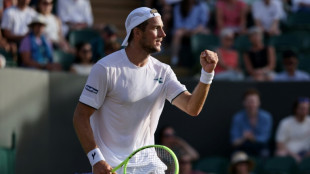 Struff oldest first-time men's Slam quarter-finalist in Open era
-
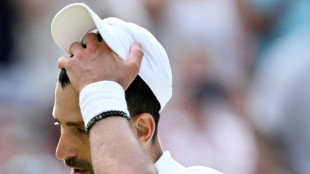
'Perfectionist' Djokovic not happy to win ugly at Wimbledon
-
 Banana!: 'Minions' knocks 'Toy Story' off N.America box office perch
-
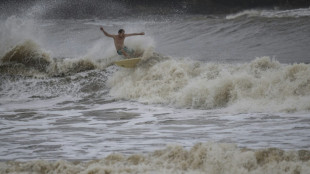
'Catastrophic' Super Typhoon Bavi aims at US Pacific island Rota
-
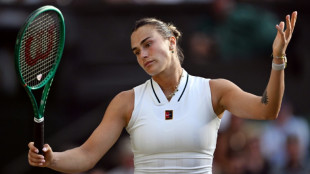 Sabalenka wants to drink, 'forget about tennis' after Wimbledon exit
-
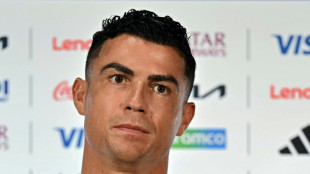
Reflective Ronaldo takes on critics 'trying to kill me for 23 years'
-
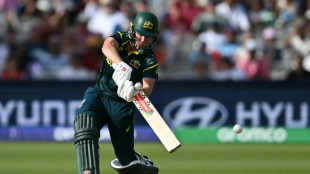 Mooney stars as Australia hammer England in women's World Cup final
-
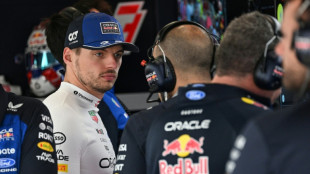
Verstappen claims Red Bull car 'dangerous' after crash
-
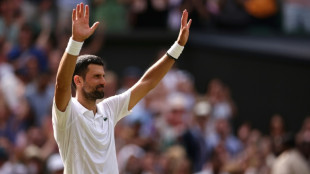 Djokovic makes history, Osaka sends Sabalenka crashing out of Wimbledon
-
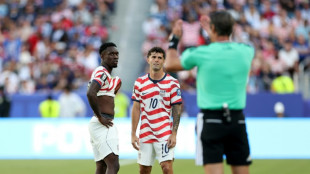
Trump thanks FIFA for suspending USA's Balogun World Cup ban
-
 Osaka beats world number one Sabalenka in Wimbledon last 16
-
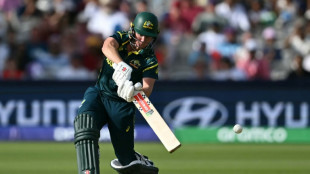
Mooney stars as Australia hammer England in women's T20 World Cup final
-
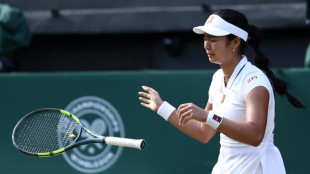 Eala eyeing Wimbledon quarters, Dimitrov faces Fery
-
Russell concedes Ferrari are threat to Mercedes
-
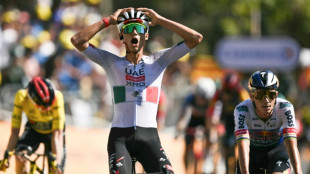 'Privileged' Del Toro wins Tour de France stage, Pogacar up to 2nd
-
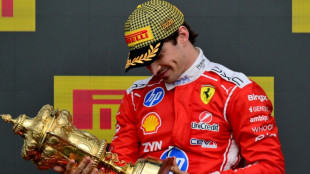
Leclerc snaps winless run to reignite title race
-
 Del Toro too tired to watch Mexico World Cup clash
-
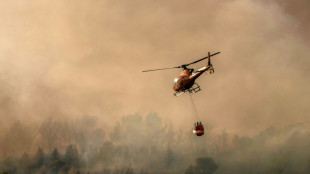
Infernos devastate forests as Europe's temperatures rise again
-
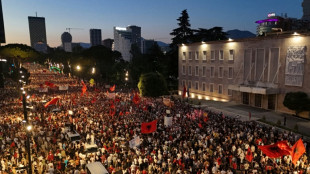 Court frees Albania protesters held after violent clashes
-
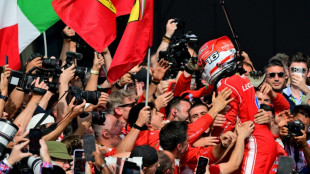
'Tough' Leclerc delivers Ferrari's 250th win with victory in British GP
-
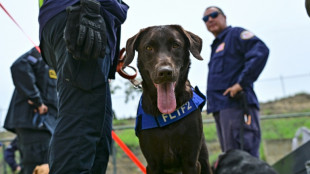 Four-legged rescuers lead way after Venezuela quakes
-
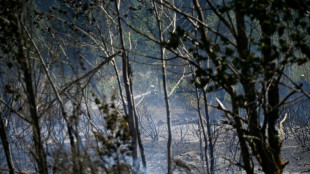
Tour de France stage 3rd stage to go ahead despite forest fires: official
-
 France show they can ditch flair and win a different way in World Cup quest
-
Spain's Rodri warns Portugal best yet to come at World Cup

-
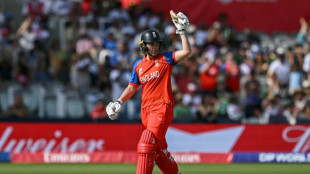 Australia hold England to 150-4 in Women's T20 World Cup final
-
Djokovic makes Wimbledon history to reach quarter-finals

-
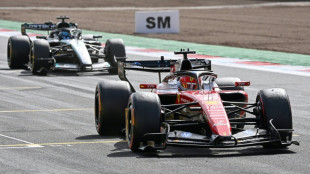 Leclerc delivers Ferrari's 250th win with victory in British GP
-
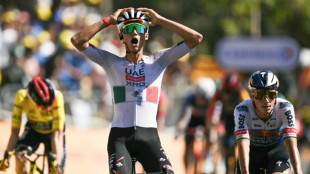
Del Toro wins Tour de France stage, Pogacar up to 2nd
-
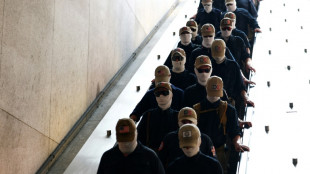 White supremacist march in DC just 'messy' democracy: US official
-
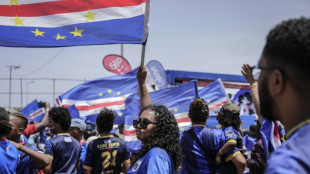
Euphoric homecoming for Cape Verde after heroic World Cup defeat
-
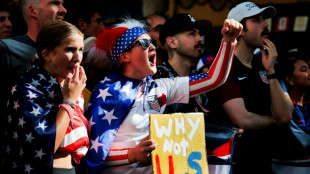 'Country Roads' stars as unofficial US anthem at World Cup
-
Tour de France stage under threat due to forest fires: official
-
 F1 boss Domenicali hopes to restore cancelled Gulf grand prix
-
UK hard-right leader Farage faces new allegations over gifts
-
 Real Madrid sign Dumfries from Inter Milan
-
OPEC+ raises quotas again as Middle East calms
-
 At the foot of Mount Olympus, a return to ancient Greek heritage
-
Azam to captain Pakistan on West Indies and England Test tours
-
 Turkey eyes F110 fighter jet engines as Trump comes to town
-
Revival hopes grow for long-closed Greek Orthodox seminary off Istanbul
-
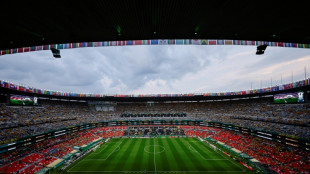 England, Mexico take centre stage in Azteca blockbuster
-
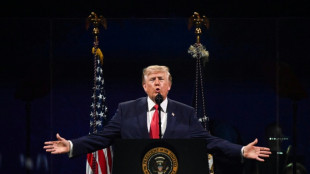
Trump hails US, blasts 'communists' in 250th anniversary speech
-
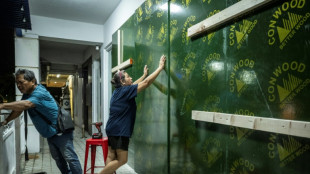 'Very dangerous' super typhoon nears US Pacific islands
-
Taiwanese film hunters rescue ageing reels from bygone era

-
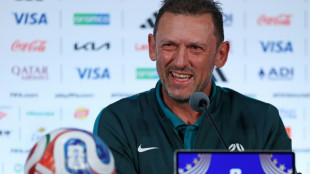 Australia stand by under-fire Popovic after World Cup exit
-
Trump arrives for US 250th birthday speech after storm delay

New Iranian leader vows revenge, keeps oil shipping route shut
Iran's new supreme leader ordered his forces to keep the vital Strait of Hormuz shipping lane shut on Thursday, as Tehran launched more devastating attacks on Gulf energy targets that sent global oil prices soaring.
The International Energy Agency warned the Middle East war could lead to to "the largest supply disruption" in history but US President Donald Trump said stopping the Islamic republic's "evil empire" was more important than crude prices.
Ayatollah Mojtaba Khamenei, who was reportedly injured in an air strike, has yet to appear publicly since his nomination last Sunday as supreme leader, and his defiant first message was read by a newscaster on state television.
Khamenei, whose father and predecessor Ali Khamenei was killed in the first wave of US-Israeli attacks at the start of the war, called for Gulf countries to close their US military bases and vowed to avenge "the blood of our children and grandchildren".
"The lever of blocking the Strait of Hormuz must definitely be used," Khamenei said of the waterway through which a quarter of the world's seaborne oil trade usually transits.
The Revolutionary Guards reacted swiftly, with the force's navy commander Alireza Tangsiri saying: "In response to the order of the commander-in-chief, we will deliver the harshest blows to the aggressor enemy while maintaining the strategy of closing the Strait of Hormuz."
Under attack from Iran, shipping in and around Hormuz has been at a near-standstill for days, with another three vessels targeted in the Gulf off the coast of the United Arab Emirates and Iraq.
Trump has faced intense political pressure as the global economic fallout of the crisis has mounted, and he has given repeated mixed messages on when the US air campaign might end.
As oil prices spiked above $100 a barrel, Trump wrote on social media that "of far greater interest and importance to me, as President, is stoping an evil Empire, Iran, from having Nuclear Weapons, and destroying the Middle East and, indeed, the World."
- Vessels attacked -
Gulf states have borne the brunt of retaliatory attacks from Iran.
Images from Bahrain on Thursday showed thick smoke rising after a strike on fuel tanks in Muharraq, with residents told to stay inside and close their windows.
Drones caused damage again at Kuwait's international airport and in downtown Dubai, while Saudi Arabia said it had intercepted drones headed towards its Shaybah oil field and its embassy district.
The Paris-based IEA, a world authority on energy markets, warned Thursday the 13-day conflict "is creating the largest supply disruption in the history of the global oil market", which would surpass those of the 1970s.
With Gulf states slashing production and oil tankers stuck in the Gulf, benchmark oil prices have risen 40-50 percent since the US and Israel attacked Iran on February 28, threatening to crimp growth and stoke inflation.
- 'War of attrition' -
The Strait of Hormuz, which also normally sees the transit of a fifth of the world's liquefied natural gas (LNG) passes, lies off Iran and is just 54 kilometres (34 miles) wide at its narrowest point.
Tehran has vowed that not one litre of oil will be exported from the Gulf while US-Israeli attacks continue, although industry figures suggest its own sanction-hit exports are continuing to get through.
Iran's deputy foreign minister told AFP that ships from "some countries" were being allowed to cross the strait, without giving details, and denied reports that Iran was laying mines in the waterway.
"We want to see that war is not going to be imposed again on Iran," Majid Takht-Ravanchi said in an interview in Tehran.
"If the White House imagines the conflict will stop when Donald Trump decides it... they're making a mistake and ignoring the lessons of history," Pierre Razoux, director of studies at the Mediterranean Foundation for Strategic Studies, told AFP.
"The Iranian regime, which no longer has anything to lose, will wage a war of attrition against the United States and Israel to punish them for their aggression."
Iranian security forces have also warned government opponents against taking to the streets in protest, saying they would be considered as "enemies".
One Tehran resident hoping for the fall of the Islamic republic told AFP she was worried about the US and Israel calling off their air campaign despite her fears about the daily bombardment.
"I don't know what will happen to us mentally and emotionally if it doesn't work out this time," she told AFP on condition of anonymity.
- 'Expanding' attacks on Lebanon -
The conflict has spread across the region, with Lebanese authorities reporting 687 people killed by Israeli strikes, including at least eight more who died on Beirut's blood-stained seafront where displaced families were camping in tents.
After the Iran-backed Hezbollah group announced a new operation against Israel on Wednesday, Israeli Defence Minister Israel Katz said he was ordering troops to "prepare for expanding" attacks on Lebanon.
In Iran, over three million people have been displaced by the war, according to new figures issued Thursday by the UN's refugee agency.
Iran's health ministry said on March 8 that more than 1,200 people have been killed in the war, a figure AFP has not been able to independently verify.
In Israel, authorities said 14 people have been killed, while attacks in the Gulf have killed 24 people, including 11 civilians and seven US military personnel, according to local authorities and the US Central Command.
burs-dt/ser
O.Norris--AMWN