
ParkerVision Granted Rule 54(b) Motion in Qualcomm Patent Case, Paving the Way for Immediate Federal Circuit Appeal
 Enjoying the moment: Alcaraz steps it up to reach US Open quarter-finals

 Five dead, five injured after Amazon cargo plane overshoots Miami runway

 La Rochelle half-backs lead fightback against Toulouse

 US envoys have 'more effective proposals': Ukraine official

 Defending champion Alcaraz powers into US Open quarter-finals

 Amazon cargo plane overshoots Miami runway, hits vehicles, catches fire

 Toll from Yemen clashes passes 300 as civilians flee homes

 Sabalenka books US Open quarter-final clash with Noskova

 German AfD supporters jubilant at far right's thumping win

 Zelensky warns war likely to continue into winter after US talks

 Arsenal deliver statement fightback to end Chelsea's flying start

 Leclerc accepts blame as Hamilton laments Ferrari approach

 Sabalenka surges past Townsend to reach US Open quarter-finals

 Smiling face of Germany's far-right AfD: Ulrich Siegmund

 Lebanon president calls for US help as Israeli strikes kill 7

 Yamal hits double as perfect Barca thrash Valencia

 Venice festival turns gaze on war reporters, media industry

 Sensational Antonelli wins Italian GP from back of grid

 Susan Sarandon says still losing roles over Gaza stance

 US envoys hold 'important' talks in first trip to Kyiv

 Championship leader Antonelli wins Italian Grand Prix

 Vardy signs for Championship strugglers Burnley

 FIFA confirms Infantino will run in presidential election

 With joy and grief, Palestinian football marks return

 Iran threatens greater force if US launches more attacks

JACKSONVILLE, FL, FL / ACCESS Newswire / October 6, 2025 / ParkerVision, Inc. (the "Company") (OTCQB:PRKR), announced that on October 2, 2025, the U.S. District Court for the Middle District of Florida, Orlando division ("district court") granted ParkerVision's Rule 54(b) motion in its patent infringement case against Qualcomm.
This decision clears the way for ParkerVision to immediately appeal the district court's May 29, 2025 claim construction ruling that led to the stipulated entry of summary judgment of non-infringement for ParkerVision's receiver patent claims under that claim construction ruling. The Company believes that the district court's most recent claim construction ruling was in error and contradicts last year's ruling from the Court of Appeals for the Federal Circuit ("Federal Circuit") that reversed the district court's previously issued (March 2022) summary judgment order on the same receiver patents. The Federal Circuit's order also reversed the district court on all other issues on appeal.If the district court's claim construction ruling is reversed on appeal, as the Company believes it should be, then the stipulated summary judgement of non-infringement thereon will also be reversed.
The district court's order also granted ParkerVision's request to stay the litigation with respect to the remaining transmitter patent claims that were not impacted by the claim construction order, pending the Federal Circuit's ruling on the appealed issues, thus avoiding the inefficiency of two separate trials.
ParkerVision Chief Executive Officer, Jeffrey Parker, commented, "We filed our Rule 54(b) motion so that we could immediately seek Federal Circuit review to challenge the district court's claim construction ruling which we believe to be in error, which contradicts the Federal Circuit's prior order that was in our favor, and which we also believe to be inconsistent with the intrinsic evidence in the receiver patents themselves.
"Following the September 2024 remand from the Federal Circuit, Qualcomm requested that the district court perform additional claim construction on ParkerVision's receiver patents. Specifically, Qualcomm contented that certain limitations in the patents' claims require a capacitor to perform RF down-conversion. Even though no intrinsic evidence supports its decision, the district court agreed with Qualcomm and held that the claims of the receiver patents required a capacitor to perform down conversion - a position that we believe was contradicted by the Federal Circuit in their 2024 opinion.
"Qualcomm's assertion that the receiver patents recite 'capacitor down-conversion' (referred to as the 'generating limitation' in ParkerVision I and on appeal to the Federal Circuit) was addressed by ParkerVision in its claim construction brief to the district court earlier this year. We reminded the district court that the Federal Circuit's opinion supported our position that ParkerVision's receiver patents use switches, not capacitors, to perform down-conversion - meaning no 'generating limitation' exists in these patents. This was one of the key issues examined by the Federal Circuit, which sent the case back for trial last year, reversing the district court's collateral estoppel finding on similar grounds. We believe that the district court's claim construction ruling is in conflict with the Federal Circuit's opinion and is also in conflict with the intrinsic evidence included in the patents.
"Qualcomm has long represented to multiple courts that its products do not infringe our receiver patents because its products use switches for down conversion. We contend, however that using switches is exactly what the patents cover in this case."
ParkerVision's briefing earlier this year emphasized to the district court that there was no need for claim construction as the patents already specify where down-conversion occurs - at the 'UFT Module' (Universal Frequency Translation Module). The receiver patents explain that the UFT module is a switch, it is not an energy-storage device such as a capacitor. Despite this, the district court's latest claim construction identified the UFT Module not as a switch but as an 'energy storage device,' adopting another incorrect position advanced by Qualcomm.
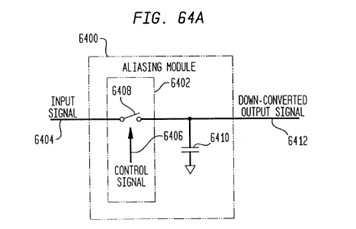
Mr. Parker further commented, "Neither Qualcomm nor the district court are entitled to disregard the patent's plain disclosure: the UFT is a switch, and it is where down-conversion occurs."
"In granting ParkerVision's Rule 54(b) motion, the district court remarked that it has 'already expended more time and resources on this one case than is justifiable'. While I'm troubled by that view, I hope the district court recognizes why this case-now in its twelfth year-remains unresolved. After we filed this case in 2014, Qualcomm delayed proceedings through years of PTAB challenges. Qualcomm then argued that our receiver patents were collaterally estopped, a legal term meaning that they duplicated issues from our prior ParkerVision I case - claims we initially defeated on summary judgment in 2020 - only for Qualcomm to file a second summary judgment motion over a year later that led to the district court reversing itself and finding in Qualcomm's favor of collateral estoppel in March 2022.
"This resulted in ParkerVision's first appeal to the Federal Circuit. The Federal Circuit, in its September 2024 ruling finding for ParkerVision on all issues on appeal, criticized the district court's 'abbreviated claim-scope analysis… inconsistent with the approach it properly took in denying Qualcomm's first [summary judgment] motion'. The Federal Circuit reversed the district court's collateral estoppel finding and remarked that 'the receiver claims asserted [in the current case] do not appear, on their face, to require the 'generating limitation' that turned out to be fatal to ParkerVision's infringement case in the 2011 [ParkerVision I] Action'.
"With its May 2025 claim construction ruling, the district court has again adopted Qualcomm's position that the claims asserted do require the 'generating limitation,' despite the Federal Circuit's guidance. Rather than examining the patents' intrinsic evidence (the patents themselves), which is the standard, the district court again accepted Qualcomm's assertions as fact.
Mr. Parker concluded, "We believe Qualcomm's tactics are to mislead and confuse the court with technical assertions that are not supported by the evidence. The record clearly shows that Qualcomm was aware of ParkerVision's patents long before this lawsuit.
"In discovery and prior testimony, it was discovered that a Qualcomm executive emailed colleagues in July 2000 asking, 'Any risk to QC [Qualcomm] in this?' in response to a ParkerVision press release announcing the grant of the '940 patent - the very same patent with the UFT module that uses switches for down-conversion.
"I look forward to going back to the Federal Circuit and working to get this case to a fair trial with a jury. We will endeavor to get through this process as quickly as possible and will bring updates on our progress as they occur."
Meanwhile, the Company continues to prepare for three jury trials in Texas for cases that were filed at the end of 2022 and 2023. The first case will be tried in January 2026, the second in March, and the third in April 2026.
About ParkerVision
ParkerVision, Inc. is an innovator in radio-frequency (RF) technologies used in advanced wireless communication systems. The company holds an extensive patent portfolio in the U.S. and internationally and continues to pursue licensing and enforcement strategies to protect its intellectual property rights. For more information, please visit www.parkervision.com.
Safe Harbor Statement
This press release contains "forward-looking statements" within the meaning of the Private Securities Litigation Reform Act of 1995. Forward-looking statements include, but are not limited to, statements regarding ParkerVision's expectations concerning its appeal to the U.S. Court of Appeals for the Federal Circuit, the potential reversal of the district court's claim-construction ruling and summary judgment of non-infringement, the anticipated impact of a successful appeal on the Company's ongoing litigation against Qualcomm, and the Company's plans and timelines for its upcoming trials in Texas. These statements are based on current expectations, assumptions, and beliefs of management and involve risks and uncertainties that could cause actual results to differ materially, including the inherent unpredictability of complex patent litigation and appellate review.
Factors that could cause actual results to differ materially include, but are not limited to, outcomes of appellate and district-court proceedings; interpretations of patent law and claim scope by the courts; the timing and scheduling of trials; decisions by the Patent Trial and Appeal Board; actions or strategies of Qualcomm or other parties in related proceedings; and other risks detailed in the Company's filings with the Securities and Exchange Commission, including its Annual Report on Form 10-K for the year ended December 31, 2024, and subsequent filings. Forward-looking statements can be identified by words such as "believe," "expect," "intend," "plan," "anticipate," "contend," "hope," "look forward," "will," "should," and similar expressions. Readers are cautioned not to place undue reliance on these forward-looking statements, which speak only as of the date they are made.
The Company undertakes no obligation to update or revise any forward-looking statements, whether as a result of new information, future events, or otherwise, except as required by law.
Contact:
Tony Vignieri
Communications Director
[email protected]
SOURCE: ParkerVision, Inc.
View the original press release on ACCESS Newswire
Y.Kobayashi--AMWN