
WanAware Survey Reveals Cyber Confidence Crisis as Organizations Overstate Readiness While Attackers Dwell Undetected For Months
 Alcaraz, Sabalenka into US Open last 16 as Williams sisters lose on return

 Williams sisters fall in thrilling return to US Open doubles

 Bangladesh measles toll nears grim 1,000-child mark

 Bolivia farmers return to streets over diesel price hikes

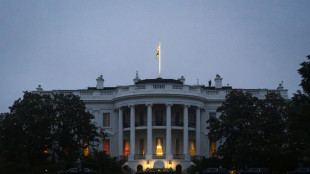 Tetris distances itself from controversial White House 'arcade' games

 Africa bigger, US smaller - UN adopts new map

 Bad weather will not affect All Blacks, says captain Savea

 Mbappe misses penalty as Parrott lifts Betis past Real Madrid

 PSG still winless in Ligue 1 as Monaco go top

 Defending champion Alcaraz reaches last 16 at US Open

 Lyles ends season before Budapest due to injury flare ups

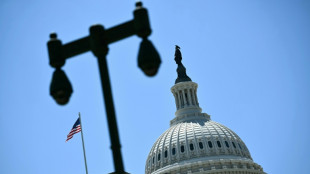 US Republicans announce probe into environment groups

 Sabalenka survives despite 'tricky' weed smell at US Open

 S&P Revises Outlook on Freedom Holding Corp. and Core Subsidiaries to Positive

 Job growth but record-high diesel prices -- Trump's midterms mixed bag

 Women's NBA comissioner Engelbert to retire at season's end

 Luis Enrique extends contract as PSG coach until 2030

 Duplantis pulls out of Diamond League finals

 Defending champ Sabalenka, Pegula lead way into US Open fourth round

 UK hard-right party rallies behind leader after new donation scandal

 Nigeria's Dangote refinery looks to raise $1.6 bn in IPO

 Portugal extends talks to privatise national carrier TAP

 Brazil great Formiga says 2027 World Cup will 'change players' lives'

 Job growth, but surging diesel prices - Trump's midterms mixed bag

 Top seed Sabalenka powers into US Open fourth round

New survey of cybersecurity and IT leaders finds 80% believe they can detect and contain attacks in hours, yet industry data shows dwell time averaging 181 days and containment taking 60 days.
BOULDER, CO / ACCESS Newswire / November 18, 2025 / WanAware, an innovator in intelligent observability, today released its 2025 Cyber Response & Resilience Study, revealing a widening disconnect between how prepared organizations believe they are for cybersecurity incidents and how they actually perform under real-world conditions. Despite record cybersecurity spending and rapid adoption of AI-driven tools, organizations remain dangerously overconfident.
According to the survey of 600 leaders across industries, 80% of cybersecurity and IT decision-makers claim they can detect and contain a cyber incident in under eight hours. Yet external benchmarks, including IBM's Cost of a Data Breach 2025 report, show attackers dwell inside environments undetected for an average of 181 days and breaches take 60 days to contain. The findings point to a false sense of readiness driven by fragmented visibility, alert fatigue, and inconsistent trust in automation, all of which widen the gap between perceived and actual resilience.
"Organizations aren't struggling because they lack tools," says Jeff Collins, CEO of WanAware. "They're struggling because they lack clarity, trust in automation, and unified visibility. Security leaders believe they're responding quickly, but the data shows attackers spend weeks or months inside environments before anyone knows they're there. That perception gap is costing billions."
The report finds that IT and network leaders consistently rate their visibility, automation, and investigation capabilities far higher than analysts and engineers, the teams closest to incidents. IT managers report 65% net confidence in cyber readiness, while analysts report just 19%, pointing to a blind spot that impacts response speed, resource allocation, and risk posture.
Meanwhile, dwell time across the industry remains measured not in minutes or hours, but in weeks and months. Alert fatigue further compounds the challenge. The study found that 40 percent of IT managers believe more than 60 percent of alerts lack actionable context. Yet only 16 percent of analysts say the same, not because the noise has improved, but because many report they have learned to live with it, absorbing unactionable signals into their daily routine.
"This confidence illusion, the belief that tools alone equal protection, explains why meaningfully reducing breach costs remains elusive despite AI adoption accelerating across the cybersecurity stack," explains Collins.
Automation adds another layer of illusion. While more than 80 percent of leaders say they deploy automated actions with guardrails, fewer than 60 percent of analysts agree, and as many as 21 percent still rely on manual response. Automation exists on paper, but trust in automation lags behind, slowing time to act.
The study urges enterprises to transition from reactive defense to measurable resilience grounded in correlated context, unified asset visibility across IT, OT, and edge environments, and automation that operates with explicit trust thresholds, ensuring action happens securely and at machine speed when conditions are met.
Download the full 2025 Cyber Response & Resilience Study report here on the WanAware website. Organizations can also now capitalize on a free 14-day trial of WanAware AIM to uncover gaps in their own environment and see real-time results.
###
ABOUT WANAWARE:
WanAware is an innovator in intelligent observability, dedicated to solving the most pressing challenges in IT performance, availability, and security monitoring. By leveraging advanced technologies, including AI and machine learning, WanAware delivers actionable insights that empower organizations to achieve operational excellence. For more information, visitwww.wanaware.com.
MEDIA CONTACT:
Nina Pfister, MAG PR at [email protected]; T: 781-929-5620.
SOURCE: WanAware
View the original press release on ACCESS Newswire
A.Malone--AMWN