Spain seeks ground-breaking law for great apes / Photo: Jose Jordan - AFP
 Quebec separatist premier sworn in without royal presence

 UAE nominates official to lead UN

 NFL boss Goodell welcomes probe into Hurts medical care

 Musk threatens Democrats teeing up congressional probes

 In the Mexican town that makes emblematic Day of the Dead garlands

 Protests banned in parts of Paris as Macron swipes at Trump

 Judge orders Meta to pay $25 bn to New Mexico in Cambridge Analytica case

 Champagne puts cork in project to expand production area

 Canadian publisher says novelist Orelien used AI to write novel

 Trump faces fresh questions over ties to 'humanitarian' Putin

 Hansen back in Ireland squad for Nations Championship

 Kremlin sees little 'substance' in Ukraine peace ideas

 Top Arab-Israeli election candidate tells AFP Netanyahu win would be 'catastrophe'

 South African rugby player's death due to 'aortic dissection'
 France's Macron lands in Riyadh on surprise 'solidarity' visit

 Around the world, far right blames immigrants for French protests

 South Africa eases fuel pain as growth slows

 Woody Allen shoots new movie in Madrid

 Nvidia's Huang urges Europe to go all in on AI

 Five things to know as French bond yield tops 5%

 'Complete threat' Ngumoha excites Liverpool captain Van Dijk

 'The fishing's terrible': Deforestation devastates C.Africa river

 France's tourism sector worried about impact of riots

 Macron takes aim at Trump for using France riots for election gain

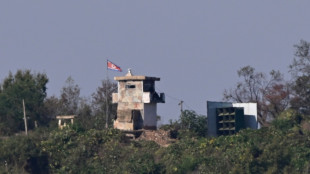 North Korea says 'new firepower units' in place, loudspeakers to return

For decades Achille, 50, eked out a miserable existence living alone in wretched conditions in a cramped circus cage.
But better days could lie ahead for the chimpanzee and almost 150 great apes in Spain who stand to benefit from a pioneering bill that would strengthen laws safeguarding their well-being.
Animal rights activists hope the draft legislation will drive the debate on apes' legal status -- in Spain and beyond.
"Apes are like us, they are sociable animals," said Olga Bellon, a primate expert at the Primadomus foundation that took in Achille.
Putting them through the treatment Achille suffered "is inhumane", she told AFP.
The initiative could "change our perception" of the mammals, who are genetically very close to humans, and better appreciate their needs, added Bellon.
Spain's left-wing government took a first step towards legislating on animal welfare last year with a law that increased prison sentences for mistreatment.
Now it is going further, with the pioneering draft law launched in July aiming to eradicate practices harming "the life, physical integrity, dignity and survival of great apes".
Almost 150 primates including gorillas, orangutans and chimpanzees could benefit from the draft law, according to associations.
- 'Non-human people' -
The Primadomus shelter, located near the Mediterranean city of Alicante in eastern Spain and founded in 2009 by Dutch association Animal Advocacy and Protection (AAP), hosts around 60 primates.
Like Achille, they are taken from individuals or circuses and sometimes arrive traumatised or with behavioural disorders.
Great apes suffer stress and depression and can self-harm as humans do, explained Bellon. "Here, we want them to recover and feel well."
Behind her, four chimpanzees frolicked in the trees and bushes, hunting for chickpeas lying scattered on the ground.
Lots of patience -- sometimes years -- is necessary before they recover their instincts, said Bellon.
Science shows that the animals are closer to humans than was thought and that justifies "a specific treatment", said Jose Ramon Becerra, a senior civil servant coordinating the new initiative.
The bill could shift the terms of the debate on their legal status, "even beyond Spain", Becerra told AFP.
Some schemes have been launched in recent years. In Argentina, a female orangutan and a chimpanzee were recognised as "non-human people" and authorities demanded their removal from cramped enclosures.
However, no country has granted this status to all great apes, said Pedro Pozas, executive director in Spain of the "Great Apes Project", an international movement campaigning for the species' basic rights.
- Debate 'moving forward' -
In 2008, the Spanish parliament voted a resolution calling for the matter to be studied.
But with the country in the throes of a painful financial crisis, MPs never followed it up, and some were revolted at the idea of elevating primates to the same level as humans.
Becerra is convinced this time will be different because society is "more mature" and social sensibilities have changed.
In a sign of the great expectations, the social rights ministry Becerra belongs to has collected more than 300 contributions after consultations with experts and associations, a first step in the legislative process.
Among them are proposals to guarantee better living conditions in enclosures, banning the use of primates in films and shows or banning the separation of mothers from their children.
Others like the Jane Goodall Institute and the Great Apes Project want to go further by outlawing their reproduction in captivity, with a long-term objective of removing all great primates from zoos, said Rozas.
For Marta Merchan, public policy lead at AAP in Spain, great apes must live in their natural habitat with their species.
Although the goal of taking them out of zoos is a long way off, "what matters is that the debate moves forward," she said.
The new bill is a "first step" that will "help raise awareness", benefiting great apes and potentially all animals, Merchan added.
Ch.Havering--AMWN