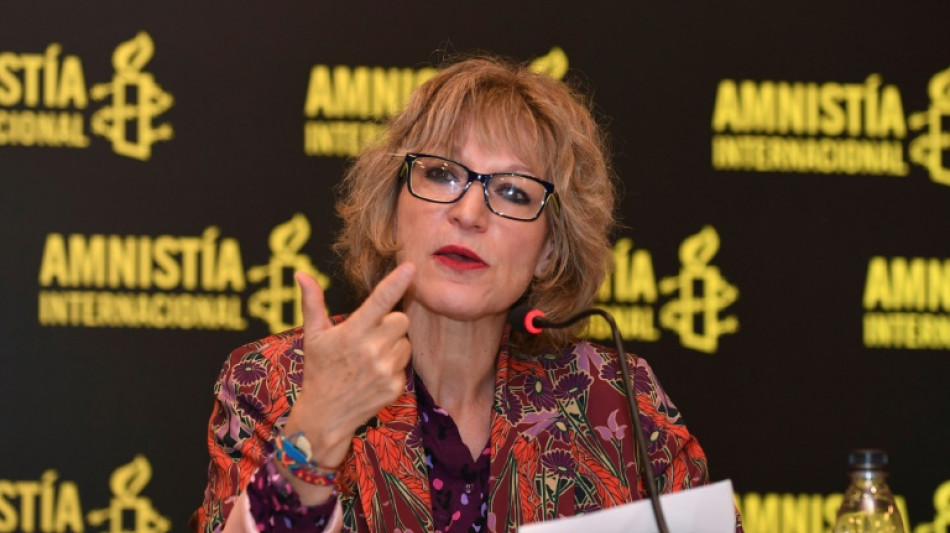
Colombia police sexually abused at least 28 during protests: Amnesty / Photo: DANIEL MUNOZ - AFP
 Trump names Stephen Miller as White House chief of staff after midterm losses

 Restored Albanian tower houses anchor new rural tourism trail

 Sonia Gandhi reflects on family tragedy and reluctant political career

 Pope Leo begins three-country South American tour in Uruguay

 Khawaja says entire Australia camp knew of 2018 ball-tampering plan

 November Foraging Guide: Edible Mushrooms and Critical Safety Protocols

 Microsoft Updates Xbox PC App with 60% Faster Startup and Redesigned Interface

 Early Polar Vortex Disruption Creates Uncertain Winter Outlook for Pennsylvania

 How to Enjoy Luxury Experiences on a Budget

 Pakistan Demands Grant-Based Climate Finance at COP31 to Avoid Debt Trap
At least 28 people were sexually abused by police during Colombia's mass anti-government protests last year, Amnesty International said Thursday.
Having received hundreds of reports of gender-based violence during that upheaval, the international rights NGO documented 28 cases in seven cities, including the South American country's capital Bogota.
The cases detailed in Amnesty's 68-page report, entitled "The police does not care for me: Sexual violence and other gender-based violence in the 2021 National Strike," occurred between April 28 and June 30, 2021.
During that time, hundreds of thousands of people enduring economic strife caused by the pandemic took to the streets to protest against a proposed tax hike by then-President Ivan Duque (2018-2022), which he ultimately withdrew.
Police brutally cracked down on the unprecedented youth-led social uprising, with the UN reporting at least 46 deaths and accusing security personnel of serious human rights violations.
Erika Guevara, Amnesty's director for the Americas, said at a Bogota event presenting the report that "state violence faced by the population... was part of a generalized pattern against the protesters."
The Amnesty report details multiple instances of police, after deploying tear gas and other dispersal measures on peaceful gatherings, taking women aside and assaulting them.
The report also describes police insinuating to detained male protesters that they would be punished through sexual violence, before placing them in rooms where they were sexually assaulted.
"The common factor in all cases is the intention behind this use of violence: the perpetrators sought to punish the victims for contravening social gender norms and going out onto the streets to claim their rights," the report says.
Deploring the lack of convictions for the sexual violence, Amnesty secretary general Agnes Callamard said: "The violence of the street translated into the violence in the judicial system translated into the violence of the system altogether."
P.Costa--AMWN

