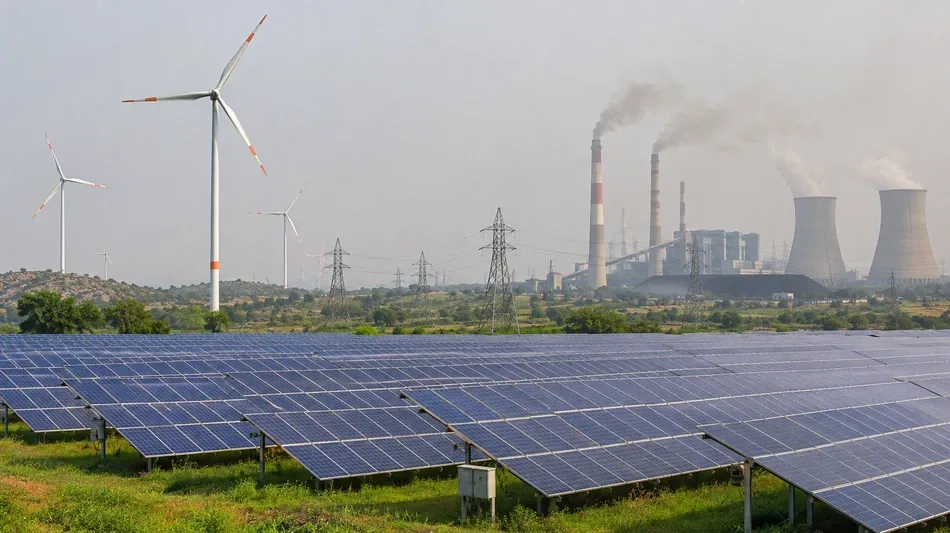
India climbs green-transition ranking after first emissions decline in 25 years
 Trump names Stephen Miller as White House chief of staff after midterm losses

 Restored Albanian tower houses anchor new rural tourism trail

 Sonia Gandhi reflects on family tragedy and reluctant political career

 Pope Leo begins three-country South American tour in Uruguay

 Khawaja says entire Australia camp knew of 2018 ball-tampering plan

 November Foraging Guide: Edible Mushrooms and Critical Safety Protocols

 Microsoft Updates Xbox PC App with 60% Faster Startup and Redesigned Interface

 Early Polar Vortex Disruption Creates Uncertain Winter Outlook for Pennsylvania

 How to Enjoy Luxury Experiences on a Budget

 Pakistan Demands Grant-Based Climate Finance at COP31 to Avoid Debt Trap
India rose five places to 45th in the Allianz Green Transition Tracker after greenhouse-gas emissions fell 0.2% in 2025 despite economic growth of about 7.6%.
Emissions declined to 4,508 million tonnes of carbon-dioxide equivalent, the first reduction outside an economic contraction in 25 years. India’s progress score rose 4.5 points to 14.6, compared with a two-point global average gain across the 65 economies assessed.
Low-carbon electricity increased from 22.4% to 26.6% of generation. Solar output rose 37%, wind 28% and hydropower 14%, while coal-fired generation fell 2.9%, helping cut power-sector emissions by about 3%.
The report warned that coal generation rebounded in 2026 and that per-capita carbon emissions continued to rise. Fossil-fuel subsidies reached $67.5 billion, more than twice the 2015 level, underlining the challenge of sustaining the decline as electricity demand expands.
A.Rodriguezv--AMWN