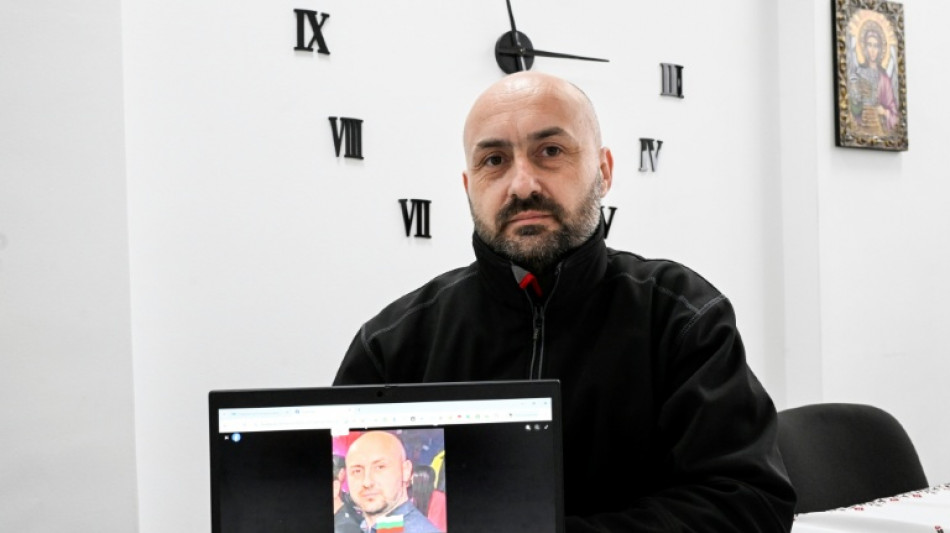
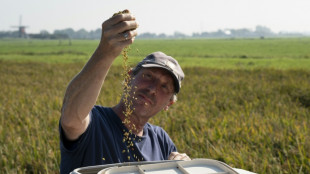
The Bulgarian mechanic Kremlin propaganda keeps killing / Photo: Nikolay DOYCHINOV - AFP
 Cable car offers small hope for Mongolia's gridlocked capital

 Man City scandal risks damage to Premier League's booming brand

 First-time Sepang F1 racers will master track 'from opening lap'
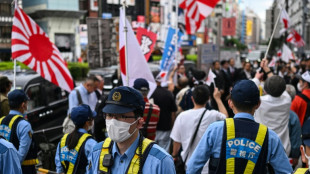 Japan tightens rules for foreigners wanting permanent residency
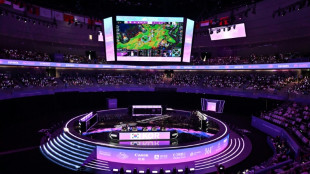 'Happiest moment': China's Mu first woman to win eSports Games gold
 EU talks deportations as five nations seek migrant centre in Africa
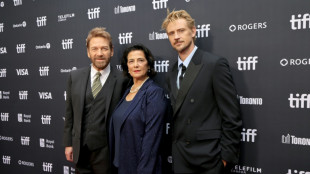 Kenneth Branagh examines the scars of Iraq war in 'Atonement'
 Hundreds held, dozens wounded as French school protests escalate
 US government's new AI chatbot pulls back from debunking Trump
 US tennis star Navarro reveals health battle, ends season
 Panic, anger, tears: Evan Gershkovich's uneasy journey after Russian jail

 UK PM says 'strong indications' Iran involved in airbase incident
 Google restricts access to new AI model over safety concerns
 Watchdog clears former US Fed chief Powell in renovation probe
 Israel PM hails Indian pilot of rerouted flight for averting disaster
 Fury, Joshua kick off 'battle of Britain' in good spirits
 Ronaldo leaves Portugal training camp after coach says he is dropped
 Florence Pugh stars in 'East of Eden' adaption on Netflix
 Watchdog finds no criminal misconduct over US Fed renovations despite Trump probe
 In Manchester, City fans 'devastated' while rival fans call for relegation
 UK-France Channel migrant exchange deal scrapped: London

 Portugal boss denies 'incident' with Ronaldo

 Israel PM says one of the pilots of rerouted flight tried to crash plane

 Manchester City: Main points of damning judgement and possible sanctions

 Italy looking for 'identity' under Mancini says Scalvini
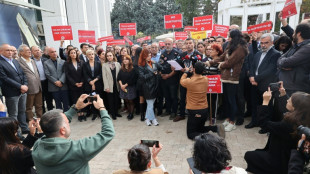
For almost a decade, Nikolay Gentchev has faced a strange question: "You're not dead, are you?"
A photo of the Bulgarian mechanic has been regularly published on pro-Russian sites claiming he was burned alive by a Ukrainian mob in Odesa in the aftermath of the protests that drove the country's last pro-Kremlin ruler from power in 2014.
"When they published my photo for the first time, my friends called me to ask if I was alive," he said.
But "I've never been to Odesa or Ukraine", Gentchev told AFP.
His picture has since been used as proof that Ukrainians hate or are hostile to Bulgaria and Bulgarians.
Despite Gentchev's repeated attempts since 2017 to put the record straight, the story and his photo continue to circulate on social media and in parts of the Bulgarian press.
It resurfaced again in a Facebook post shared by thousands in late November. "Do you remember the Bulgarian burned alive in Odesa on May 2, 2014 by people from Euromaidan and the Banderites?" the post said, referring to Ukraine's 2014 protest movement and admirers of Stepan Bandera, an Ukrainian nationalist leader who collaborated with the Nazis against the Soviets during World War II and has since become a figure symbolising the fight for independence in parts of Ukraine.
The disinformation has its roots in real deadly clashes between pro-Russian and pro-Ukrainian activists in the Black Sea port city in May 2014.
More than 40 people were killed in the violence, the vast majority in a fire at the Trade Unions House. Most of the dead were pro-Russians barricaded inside the building.
"The Odesa fire story is often used to portray Ukrainians as enemies of Bulgarians," said Nikola Tulechki, a disinformation expert at data analysis company Data for Good, as a part of the Kremlin's ongoing attempt to paint Ukrainians as Nazis.
"It fits into Russia's broader narrative about the 'liberation' of Ukraine from a fascist regime," he added. Indeed that was one of the arguments used by Vladimir Putin to justify his "special military operation" the night the invasion began in 2022.
- Russia's enduring influence -
Tulechki said Russian propaganda is everywhere in Bulgaria, repeated by politicians and influencers, and even in school history classes, playing on "extremely low levels of trust in Bulgarian society, a shared past and geographic and cultural proximity to Russia."
Once the staunchest of Soviet satellites where nostalgia for the good old days of communist rule is rife, the country is fertile ground for anti-Western narratives despite now being a member of NATO and the EU.
Indeed, being the victim of Russian disinformation has not stopped Gentchev sharing lots of pro-Kremlin talking points himself on social media, even blaming Ukraine for the invasion.
Nor is he particularly angry with Russian propagandists.
"Let's say they made a mistake, that the algorithm confused people," said the 42-year-old from the central town of Kazanlak, known for its arms factories and rose oil.
"I have recovered (though) it was really tough."
On Facebook, where he has 5,000 followers, Gentchev regularly shares anti-European and pro-Kremlin posts, often railing at "corrupt politicians".
Nor was he happy about Bulgaria finally joining the euro on January 1. It "was really absurd", he said. "In reality, we don't benefit from the EU."
Asked about the terrible human toll in Ukraine, Gentchev said: "I don't know, I wasn't there, I didn't see anything. You can't trust journalists."
His hometown of Kazanlak is kept afloat by Bulgaria's largest arms factory, which churns out ammunition largely for the Ukrainian army.
"If it's not us producing these weapons, someone else will," he said.
L.Davis--AMWN