Study finds 41% of EV drivers would avoid Tesla over politics / Photo: Sergei GAPON - AFP
 Hong Kong court set to sentence activist Joshua Wong in security case
 Australia raises benchmark rate to highest level in 18 years

 'The Remarried Empress' Cast Discusses Bringing Fantasy Royal Drama to Life

 Asian stocks retreat as AI worries outweigh steep oil-price drop

 Hamad International Airport stages emergency drills during WATAN 2026

 Global failure to punish attacks leaves journalists at continuing risk
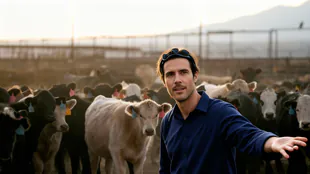 Researchers Warn 'Bookkeeping Trick' Masks Beef Industry's Methane Emissions
 Climate Change Intensified Atlantic Hurricanes, Study Finds

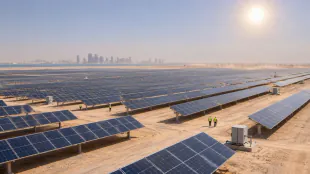 Qatar solar expansion opens scope for technical performance gains

 Fiscal 2027 Second Quarter Results
 IXOPAY Announces IXO One, a Modular Payments Platform Built for an Era of Fluid Commerce

 Fulcrum Metals PLC - Eight Uranium Zones Identified at Fontaine Lake

 InterContinental Hotels Group PLC Announces Transaction in Own Shares - November 03
More than 40 percent of electric car drivers worldwide would avoid owning a Tesla, the brand run by controversial billionaire Elon Musk, for political reasons, according to a recent survey.
More than half of electric vehicle (EV) drivers -- 53 percent -- said they would avoid certain brands or countries of production for political reasons, according to the survey published Monday.
More than 26,000 electric car owners in 30 countries were queried on behalf of the Global EV Alliance, an international network of national electric vehicle driver associations.
When asked to specify which brand or country of production they would avoid, 41 percent of all EV drivers named Tesla, 12 percent said China, and five percent said the United States.
The survey was conducted in September and October, and the results were weighted based on the share each country represents in the global EV market.
Tesla CEO Elon Musk, the world's richest person, was almost inseparable from US President Donald Trump as he headed the cost-cutting "Department of Government Efficiency," or DOGE, but the pair later fell out bitterly over government spending plans under the Trump-led budget.
Musk has also made headlines by supporting European far-right movements, criticising diversity policies, and making a gesture many observers interpreted as a Nazi salute.
There have been calls for a boycott around the world, but their impact has been hard to quantify.
According to the survey, reservations against Teslas were particularly strong in the United States (52 percent), Germany (51 percent), as well as in Australia and New Zealand (45 percent).
In Norway, which is leading the world in the adoption of electric vehicles, 43 percent of respondents said they would avoid a Tesla.
However, in India the figure was just two percent.
Globally, 12 percent of electric car drivers said they would avoid buying cars produced in China, though there were significant disparities between countries on this issue, with 43 percent of Lithuanian drivers wanting to avoid Chinese-made EVs compared to only two percent of Italian and Polish drivers.
"It has to do with the availability of cars," Ellen Hiep, a member of the Global EV Alliance steering committee, told AFP.
Hiep noted that Chinese models, which are less expensive, are much more common in developing countries than higher-end brands like Tesla.
"In the Global South, people don't have too much choice. So I think sometimes they want to drive electric, and they want to have an affordable car while maybe in Europe and the US, we've got a bigger choice," she said.
P.Martin--AMWN