French luxury houses give unsold goods a second chance
 Pegula dethrones Swiatek to book Cincy final against Gauff
 South Korean survivor fights for workplace harassment 'justice'

 Starc strikes as Bangladesh struggle to stay alive in 2nd Test

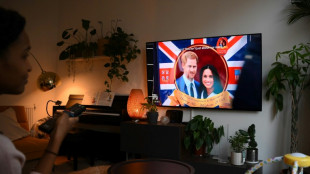 Prince Harry: royal misfit making unlikely UK return

 Blowing in the wind, humble balloon gets green makeover
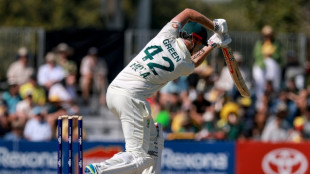
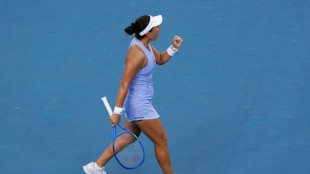 Pegula dethrones Swiatek to reach Cincinnati final
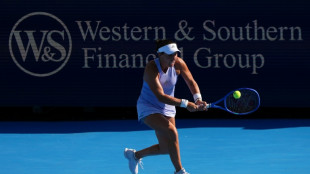
 IndyCars zip among iconic Washington landmarks ahead of Freedom 250

 Real Madrid snatch late win at Espanyol on Mourinho's return

 Real Madrid beat Espanyol in Mourinho's first game on return
 Olise helps Bayern past Dortmund in German Supercup
 Coach Rennie hails clinical All Blacks after Springboks Test win

 Charlton deliver blow to 'under pressure' Hammers boss Nuno

 Carrick keeps calm despite Man Utd misery, big-spending Spurs crushed

 Canada's Carney stands up to Trump, despite risks

 Lens hammer Auxerre thanks to Thauvin penalty double

 No singles for Serena, but she joins Alcaraz for US Open
 Joao Pedro extends Chelsea stay with new long-term deal

 Yamaguchi to face An in hunt for fourth badminton world crown

 Norris clinches pole for Dutch GP

 Norris clinches pole for Dutch Grand Prix
 Pope Leo calls for courage in Rimini visit after stop in tiny San Marino
 Man Utd must learn from 'frustrating' defeat at Hull: Carrick

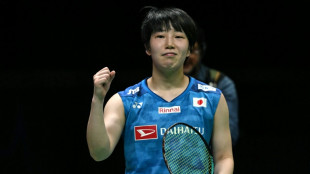 Yamaguchi on course for fourth badminton world crown

 Man Utd humiliated by Hull in dismal start to Premier League season

 Anthropic market debut could break SpaceX IPO record: media

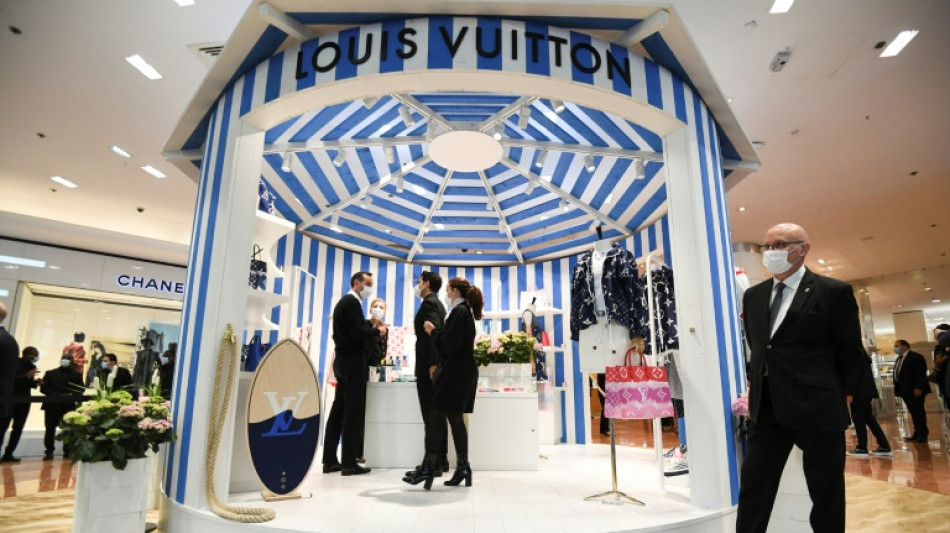
In the extravagant world of the French luxury industry, brands used to prefer destroying their unsold goods rather than offering their high-priced products at a discount.
But gone are the days of binning the coats, handbags and shoes pooh-poohed by shoppers after a new anti-waste law came into force at the start of the year.
Now luxury houses are managing their stocks more carefully, offering deals to staff, making donations and recycling goods.
"It's a subject that has become important today," said Julie El Ghouzzi, a luxury goods expert at the Cultz consulting agency.
She pointed to the scandal that engulfed Burberry in 2018 after the British luxury brand disclosed that it had destroyed 28 million pounds ($38 million, 34 million euros at current exchange rates) of unsold goods in 2017 -- the equivalent of 20,000 of its trench coats.
Following the firestorm the revelation triggered, Burberry announced it would halt the practice from the following year.
Markdowns to move goods are not an option in the luxury business as lower prices can undermine the attractiveness of their labels, which thrive on their elite status.
"In the luxury sector, if the price tag is lower, so is the desire to buy it," said El Ghouzzi.
- Mentalities have changed -
Luxury houses are paying more attention to the subject now, said Arnaud Cadart, a portfolio manager at Paris-based asset manager Flornoy.
"Mentalities have changed, we're no longer in an economy that values unbridled creation above all else," he said.
Also gone is the mentality that "if it doesn't work we'll destroy it," said Cadart.
Now luxury houses strive to fine-tune their stocks.
The Kering group, which owns the Gucci, Saint Laurent, and Balenciaga labels among others, has invested in artificial intelligence in order to better manage its stock.
At its competitor LVMH, the world's largest luxury group that includes Louis Vuitton, Dior, and Celine among many others, environmental development director Helene Valade said "the luxury business model is closely adjusted to demand" with low levels of stock being held by the firms.
Nevertheless, she acknowledged that the new law will push luxury houses to learn even more about their clients to better anticipate their purchases and thus reduce stocks to a minimum.
El Ghouzzi said Louis Vuitton is already quite good at keeping track of its stock.
"They know exactly what they have in stock and are capable of managing it down to the millimeter," she said, adding "that's not the case in many other houses."
When there are nevertheless unsold goods, selling them to staff at advantageous prices is one option. These large fashion groups have large staffs, with more than 150,000 employees at LVMH, 38,000 at Kering and 16,600 at Hermes.
Gifts to associations is another option.
LVMH has a partnership with Cravate Solidaire, an association that collects donations of professional clothing and provides it to people with disadvantaged backgrounds trying to land jobs.
- Upcycling -
Designers have also begun to make use of discarded or leftover materials, a practice often called upcycling.
"Previously, a designer with a brilliant idea would go search for materials to realise their idea," LVMH's Valade told AFP.
"Today, the process is sometimes the reverse: there are certain designers who start with the materials at hand -- old collections, unused fabric hanging about, leftover bits of leather... and it inspires them," she said.
This was the case for late American designer Virgil Abloh, who was the artistic director of Louis Vuitton's menswear collection from 2018 until his death in 2021.
Marc Jacobs in New York works with Fabscrap, which recycles unused fabric to create insulation or products like furniture lining, or donates it to students and artists to use for their creations.
LVMH also has a partnership with WeTurn, which collects unsold clothing and material to recycle it into new thread and fabric.
Hermes said that in 2020 it sold 39,000 upcycled products.
"The activities which destroy the most are fashion, leather goods and cosmetics," said portfolio manager Cadart.
Given the efforts undertaken and the current economic conditions, items are more often out of stock than lying about unsold.
"Since 2014, Hermes has thrown out almost nothing, everything flies off the shelves," Cadart added.
At LVMH, Valade said, "leather goods are, at the moment, in more of a situation of being out of stock" than not being sold.
She pointed to an upcycled Loewe bag made from scrap leather cuttings that sells for 1,700 euros and which is currently out of stock.
G.Stevens--AMWN