Ahead of Beijing Games, is China really 'a winter sport country'?
 Energy costs spark inflation surges in France, Italy

 South Korea break China hearts to reach Asian Games football final

 Eala storms into Asian Games semi-finals to thrill adoring fans

 Turkey freezes ex-minister's assets as fund crisis grows

 What we know about the North Korean POW dispute

 Most equities rise after oil price plunge, US data in focus
 Polar oceans transformed as warming melts ice habitats: research

 Lost shark becomes viral star in South Korea

 Dangote to launch $16bn refinery in Kenya

 North Korean leader 'extremely obese': Seoul spy agency

 Yankees and pope-backed White Sox start MLB playoffs with wins

 Malaysia's ex-PM Mahathir in hospital for observation
 'No limits': Marathon world record holder Sawe chasing history

 Countdown begins to biggest-ever Rugby World Cup

 Bangladesh women lose ground after quota reform

 Vietnam admits 'differing opinions' on Hanoi development

 Stocks temper gains as oil pares heavy losses, US data in focus

 New Zealand denies breaching climate commitments to EU

 Albert becomes youngest US scorer in 4-2 win over Chile
 Pirate island's plunging population shows Greece's demographic decline
 With elections ahead, Latvia's Russian-speakers reject Moscow's help

 Brazil football clubs face massive sponsorship blow from betting ban

 ChatGPT maker wants to be the App Store for AI as safety concerns grow

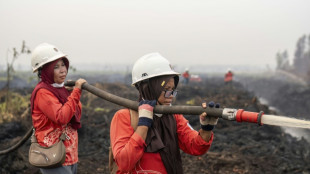 Women fight fires and sexism in Indonesian Borneo

 Forsling's OT blast lifts Florida over Carolina in NHL opener

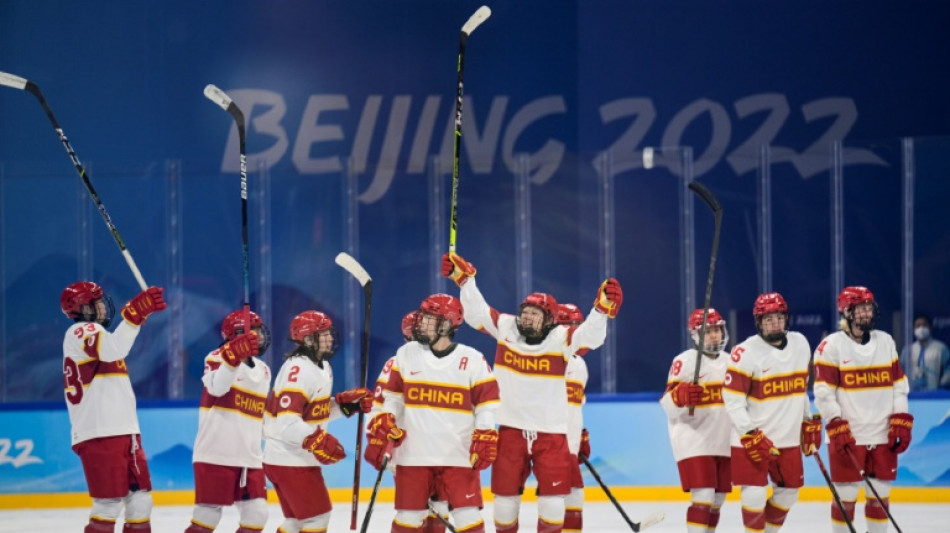
Beijing says it met and even exceeded its target to make more than 300 million Chinese people winter sports enthusiasts since it won the bid to host the Winter Olympics.
The International Olympic Committee declared on Thursday that China is now a "winter sport country".
But has a vast country with no tradition of winter sports really created a nation of skiing, skating and snowboarding fans in less than a decade?
AFP Sports unpicks the numbers ahead of Friday's opening ceremony of the Beijing Olympics:
What does China claim?
The 300 million target first surfaced in talks between President Xi Jinping and IOC chief Thomas Bach in 2014.
The country's General Administration of Sport (GAS) said last month that 346 million Chinese people "participated" in winter sports since winning the bid for the Games in 2015, citing a survey carried out on its behalf by the National Bureau of Statistics.
How was it calculated?
The GAS survey used a "stratified random sampling method" and "computer-assisted telephone interviewing" to collect data from both urban and rural adults in China's provinces, GAS said.
The figure -- also hailed by the IOC -- would account for around a quarter of the people in the world's most populous country.
People aged 18 to 30 and those based in China's colder, mountainous northeast were more likely to participate than others, officials have said.
Are the numbers accurate?
Chinese authorities have typically talked about more than 300 million people "participating" in winter sports. However, Bach on Thursday talked repeatedly -- and perhaps pointedly -- about them "engaging".
Of those "participating", GAS official Luo Jun has said about 40 percent did so "once or twice per year".
Crunching the numbers, Heather Dichter, a specialist in sport history at De Montfort University in England, said that over a 12-month period "only about 11 percent of the people have engaged in winter sport activity three or more times".
She concluded: "If the majority of individuals don't go back to ever participate in that sport again, you know it is not really an expansion of those sports within the country."
What's the bigger picture?
Other independent experts are equally sceptical about China's claims.
Mark Dreyer, a Beijing-based expert on sport in the country, said the 300 million number was more "symbolic".
China has seen a "huge amount" of winter sports growth and newly built ski resorts are "absolutely packed with Chinese people on the beginner slopes, all learning for the first time", he said.
Dreyer added that the headline figure was "frustrating because it detracts from what is a really good positive growth story in terms of winter sports".
P.M.Smith--AMWN