Polish researchers invent anti-smog sound cannon
 Nepal floods leave trail of destruction, aid challenge

 Experts outline sustainable ways to declutter Australian homes

 Bulk book purchases feed AI training through destructive scanning

 George and Amal Clooney attend Lake Como event after France evacuation

 Michelle Obama describes relief and adjustment after daughters leave home

 Very strong El Niño forecast to peak during southern African summer

 SAFA opens tender for dressing rooms, ablutions and grandstands

 TEEKS brings Māori-rooted soul and a new view of masculinity to South Africa

 Saudi customs seize 1.95 million amphetamine pills in lentil shipment

 Trump says Russia will not attack NATO as CIA chief visits Moscow

 British Museum schedules new Bayeux Tapestry ticket release
 From forced labour to living heritage: Sao Tome's colonial plantations

 Motorola September 2026 Deals: Up to $700 Off Razr Ultra and Moto G

 In war-split Myanmar 'spirit consorts' commune across divide

 Leaders of Russia, China, Iran to attend summit in Kyrgyzstan

 Alpha1 AI Expands Support for Federal Agencies

 Kane confirms talks on Bayern extension

 Trump govt. mulls deal to give away part of Yosemite park

 Indian release of Sonia Gandhi memoir uncertain after publisher clarification

 Cities show cleaner transport policies can reduce severe air pollution

 Four patients harmed in Nashville hospital medication mix-up

 Essex council hires private guards as Wethersfield asylum centre expands

 Haakon VIII becomes Norway's king after Harald V dies at 89

 Six injured after sign falls at Christian festival in West Sussex

 Dubai airport expands scanners that keep laptops and liquids in bags

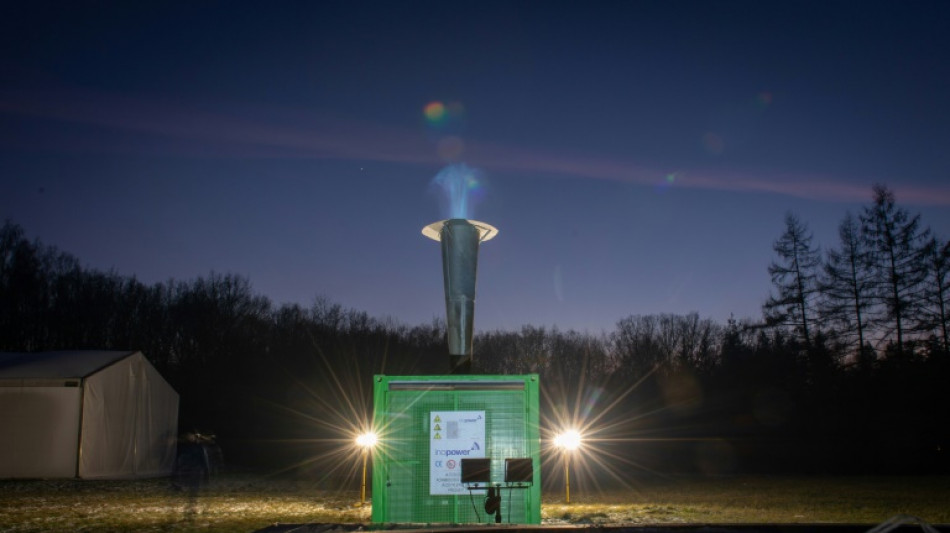
In a battle against Poland's constant smog, scientists are testing out a new "cannon" that uses soundwaves to push toxic particles higher into the atmosphere to allow residents to breathe.
Installed on top of a metal container, the experimental device consists of a large upside-down cone that makes a loud sound every six seconds.
The aim is to chase the smog from Kalwaria Zebrzydowska, which like many Polish towns and cities faces the problem every winter when residents fire up highly polluting heating systems.
When the sun goes down, a heavy smog descends on the town as chimneys belch out thick smoke.
Poland is one of the most polluted countries in Europe, breaching EU norms by hundreds of percentage points at the worst times of year.
By creating soundwaves, researchers say that the "cannon" helps reduce the concentration of harmful PM2.5 and PM10 particles in the town's air.
"We are using a vertical shockwave that is created by the combustion of acetylene and air," said Dominik Grybos from the Academy of Mining and Metallurgy in Krakow, one of the inventors.
"The wave projects the polluted air higher," he told AFP.
The toxic particles are sent up several hundred metres (yards) higher, making them harmless for residents.
"We have found that if we use the cannon for between half an hour and an hour, the pollution is reduced by 15-30 percent within a perimeter of two-three kilometres (1.2-1.9 miles) from the cannon," Grybos said, adding that the effects last for "between one and three hours".
Researchers are trying to work out the required frequency of the blasts, as well as the duration and the time needed for the entire procedure.
The price is estimated at 1,000-1,500 zloty ($250-$375) for one hour of use.
Grybos said he hopes the invention could find a commercial use, particularly in Poland.
Residents of Kalwaria Zebrzydowska are broadly in favour of the idea despite the sound.
"The smog is very heavy here. We can't air our flats because it stinks so much. So, if it can help, let them do the tests," said Jolanta Walkowicz, a 43-year-old accountant.
"We can barely hear the sound -- it's like fireworks going off," she added.
C.Garcia--AMWN