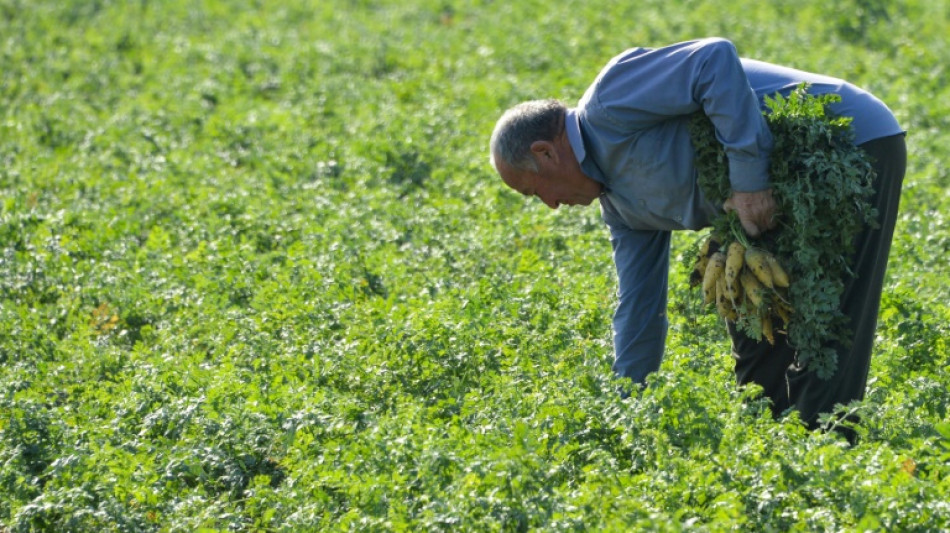
Crops under threat as surprise March heatwave hits Central Asia: study / Photo: VYACHESLAV OSELEDKO - AFP
 Hospitality leaders ask Burnham to halve VAT amid rising costs

 Worcestershire invited to nominate groups for 2027 King’s volunteer award

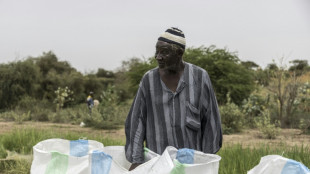 Just add fish: Scientists pursue more rice, less disease in Senegal paddies

 Louisville adds LJ Wells for fifth season of eligibility

 Florida State dismisses athletics director Alford and appoints interim leader

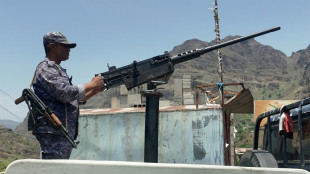 Saudi Arabia warns it will react 'firmly' to Houthi attacks

 Designer Bob Mackie dies at 87 after career spanning television, stage and fashion

 'Widow's Bay' and 'The Pitt' win big at Emmy Awards

 China retail sales growth weakens further in August

 Eala to Yu Zidi: Six emerging stars set to light up Asian Games
 Brady and Bündchen’s former Brentwood estate combined luxury and resource-saving systems
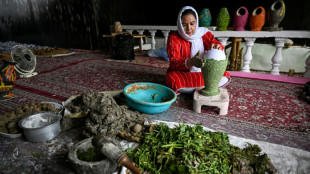 In Kashmir, lake weeds mix with traditional art

 Chinese architect Ma Yansong melds nature with 'futuristic feel'

 Trump says he will decide whether US pursues Iran deal

 'Widow's Bay' and 'The Pitt' take key Emmy awards

 Television's A-listers glitter on Emmys red carpet

 US Supreme Court blocks Trump mail-in ballot restrictions

 Dodgers clinch playoff berth in bid for third straight World Series
 Doomers and boosters: who's who in the AI wars
 GAC presents autonomous trucks and MONTX concepts at Hannover show

 EU extends Russia sanction deadline

 Thai wildlife investigators track traffickers through social media

 InterContinental Hotels Group PLC Announces Transaction in Own Shares - September 15

 PRAAMS Launches AI Co-Investor 5.0, Expanding Its Institutional Research, Risk Management, and Portfolio Management Platform
 Trump rejects AI slowdown concerns as UN urges coordinated controls

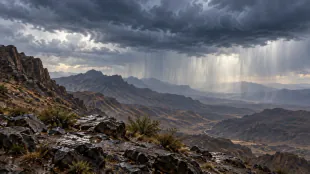
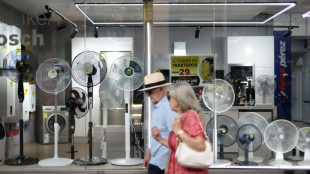
A surprise heatwave hit Central Asia in March, a new study published Friday showed, putting in danger crops and water supply in a largely rural region already heavily affected by the impacts of climate change.
Temperatures across the month were up to 10 degrees Celsius (50 degrees Fahrenheit) hotter in the region than the pre-industrial average, according to World Weather Attribution, a coalition of scientists that studies the impact of climate change on extreme weather events, which conducted the research.
Climate change intensified the heatwave by about 4 degrees Celsius, the group said, though cautioned that figure "is likely an underestimate."
"This is a heatwave that didn't make headlines –- it happened in spring and in a region that isn't exactly known for blistering heatwaves," said Maja Vahlberg, a technical adviser at the Red Cross Red Crescent Climate Centre who took part in the study.
The research was conducted across the five Central Asian states of Kazakhstan, Kyrgyzstan, Tajikistan, Turkmenistan and Uzbekistan.
"Our heatwave studies often detect changes of 2 to 4 degrees Celsius (35-39 degrees Fahrenheit), so 10 degree Celsius is quite frankly bonkers," said Ben Clarke from Imperial College London.
"Hotter March temperatures are impacting agriculture harvests and access to water in Central Asia, as well as people's health," said Friederike Otto, co-head of World Weather Attribution.
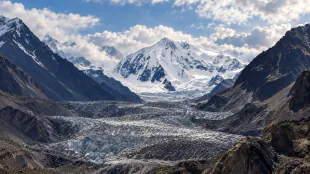
The melting of thousands of glaciers is a major threat to people in the landlocked region, which already suffers from water shortages.
Between 14 and 30 percent of glaciers in the Tian-Shan and Pamir -- the two main mountain ranges in Central Asia -- have melted over the last 60 years, according to a report by the Eurasian Development Bank.
The heatwave coincides with a crucial agricultural season, when almonds, apricots and cherries bloom and wheat is sowed.
Around half of all workers in Tajikistan and Uzbekistan are employed in agriculture, which makes up one-fifth of the region's economy.
In particularly hot spots, temperatures hit 30 degrees Celsius -- highly unusual for March.
Central Asia is typically characterised by exceptionally hot summers and harsh, cold winters.
Climate scientists said early heatwaves in the region would likely continue, seeing it as a trend rather than a one-off event.
"We should expect events like this often," Clarke told AFP during an online briefing.
M.Fischer--AMWN