Venezuela to ICJ: Rights to oil-rich region 'inalienable' / Photo: Nick Gammon - AFP
 Bolsonaro's escape to the US: How it happened

 Russell calls on Scotland to 'kick on' and beat big teams
 Airbus aims for record deliveries despite disappointing quarter
 Cuba wins UN vote against US embargo with weakest backing in 30 years

 Real Madrid, La Liga apology over Mbappe shows power of Chinese market
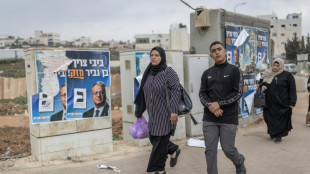 From Gaza to Ramallah, Palestinians see little hope in Israeli vote
 US labor leader Dolores Huerta dead: family
 Investors turn cautious ahead of tech results, Fed update on rates

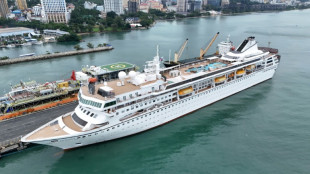 'Cruise for life' strands passengers in Cambodia as operator goes bust
 Bolsonaro flees Brazil for US after election defeat
 A throne on wheels, popemobiles star in new Vatican show

 Spain high-speed train crash kills 68, injures over 100

 UK woman drugged by husband tells rape trial she woke up bound
 Clean-up starts as Serbian students movement prepares to govern
 Flavio Bolsonaro: right-wing heir falls from presidential hopeful to exile

 UK budget lifts bank tax to offset surging energy bills
 Spain high-speed train collision kills 64, injures over 100
 Brazil's Bolsonaro lands in Florida after election defeat: AFP
 Russia woos African leaders at Moscow summit
 Local ceasefire in Russia-occupied Ukrainian city holds for second day

 Odegaard urges Arsenal to move on after Fleetwood upset

 Japan, Germany leaders target closer ties on critical minerals
 Spain high-speed train collision kills 31, injures 80
 Turkey hosted Libya east-west reunification talks last week

 Spain high-speed train collision kills 30
Venezuela's rights to the oil-rich territory of Essequibo are "inalienable", its representative told the top UN court on Wednesday at hearings aimed at resolving a centuries-old border dispute with Guyana.
The International Court of Justice in The Hague is holding a week of hearings between the two countries over the row that has at times threatened to spill over into military action.
"Venezuela's historical rights are inalienable and Venezuela is determined to defend them peacefully," Samuel Reinaldo Moncada Acosta told the court.
The pair have been wrangling over the region since the 1800s, with the dispute intensifying after ExxonMobil discovered massive offshore oil deposits a decade ago, giving Guyana the largest crude oil reserves per capita in the world.
The Essequibo region comprises more than two thirds of Guyana, which currently administers it.
Neighbouring Venezuela, however, claims the territory, which runs roughly along the western side of an eponymous river over an area of 160,000 square kilometres (62,000 square miles).
ICJ judges have been asked to rule on the validity of the border established between the two countries in 1899 under British colonial rule.
Venezuela argues that the border should be drawn in accordance with a later document from 1966 signed before Guyana gained its independence.
It says that the Essequibo River, located much farther east than the current border, is the natural frontier, as it was in 1777 under Spanish colonial rule.
- 'Existential' case -
In testimony on Monday, Guyana's Foreign Minister Hugh Hilton Todd told judges the case had "an existential quality for Guyana" with more than 70 percent of its territory at stake.
"For the Guyanese people, it is tragic even to think about having our country dismembered by stripping from us a vast majority of our land, together with its people, its history, its traditions and customs, its resources and precious ecology," he said.
Venezuela's Acosta dismissed this argument.
"The characterisation by Guyana of an alleged threat to its territorial integrity or to its sovereign territory constitutes a flagrant misinterpretation. a deliberately misleading presentation of both facts and law," he told judges.
The ICJ, which seeks to resolve disputes between states, will hold hearings until Monday but a ruling is likely to take months if not years.
The court's decisions are binding but it has no power to ensure that they are upheld.
Acosta reiterated Venezuela's stance that the ICJ had no power to rule on the case.
"Our historical experience has taught us that delegating vital matters... to international judicial bodies has been detrimental to our sovereignty and our territorial integrity," he said.
"As a result, Venezuela has never agreed to submit this controversy to the court's jurisdiction."
O.Norris--AMWN