Kamila Valieva's Olympic doping scandal: What happens next?
 Myanmar names Norwegian Andersen as head of national team
 Russell back as Scotland tackle world champions South Africa
 Tour de France yellow jersey protocol: 90 minutes of 'stress'
 Crude stabilises after US-Iran flare-up rocked peace hopes

 Playmaker Jalibert moves to fullback as France swing axe for Australia clash
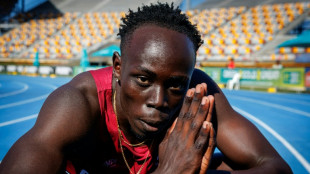 Australian sprint star Gout out of U20 worlds with hamstring tear

 Unions to protest as Volkswagen thrashes out job cut plans
 Teeth bared in Greece's bear-human showdown
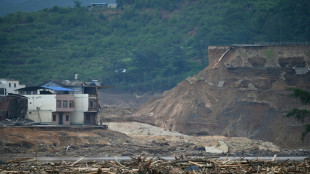 Alpacas, mini pigs on the loose after floods hit south China zoo
 All Blacks make five changes for Italy Nations Championship clash

 Western Europe records its hottest June as heatwaves surge: EU monitor
 Fashion's mystery man Margiela sells off his archives
 Nuclear test-scarred Marshall Islands criticises China missile

 Chip titan SK hynix to set price for mega US listing

 Crude extends rally as US-Iran flare-up rocks peace hopes
 Democrat accused of rape exits key US Senate race

 Japan student Ito keeps place against Ireland as Jones returns

 Darwin Microfluidics Enhances Scientific Product Discovery with Bioz Badges

 Apex Critical Metals Announces Listing of Common Shares on Euronext Access Paris

 InterContinental Hotels Group PLC Announces Transaction in Own Shares - July 09
 Belgium bid to crack Spain's ironclad defence in World Cup quarter-final
 US man sentenced after swapping 17th century manuscript
 US launches new strikes on Iran after Trump vows to hit 'hard'
 Taylor Swift fans pay $25 for garbage from outside wedding

 After quakes, Venezuelans fear losing damaged homes

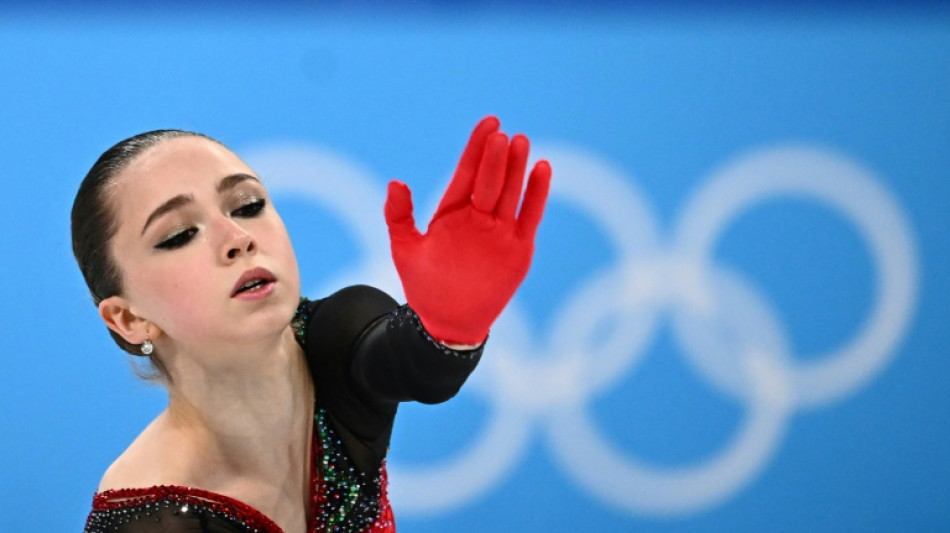
Russia's Kamila Valieva came a disappointing fourth in the Beijing Olympics women's single event on Thursday, after more than a week of intense scrutiny over a failed doping test. Her Olympics is over -- but the saga is not.
A week into the Games, it emerged the 15-year-old had tested positive in December for trimetazidine, an angina medication that is banned because it can increase blood flow efficiency and help endurance.
The Court of Arbitration for Sport (CAS) on Monday ruled that she could carry on competing in the Chinese capital.
But that did not mean the Russian has been cleared of doping and she could still face punishment at a later date.
Here's what is expected to happen next:
- No medals? -
The International Olympic Committee (IOC) had said there would be no medal ceremony for the women's individual event if Valieva finished in the top three.
Her non-podium finish made that point moot -- but there is still the matter of the medals for the team event, in which the teenager led the Russians to gold.
They have yet to be awarded, and the IOC has said it will make no decision until "due process" has been followed to decide if Valieva infringed the World Anti-Doping Code (WADA).
It is not clear if the whole Russian team will be disqualified if she is found guilty.
International Skating Union (ISU) regulations only collectively disqualify a team if a doping test is failed in competition -- which is not the case here.
- Process 'could take years' -
The Russian anti-doping agency, RUSADA, had initially suspended Valieva for the failed test, but lifted the ban a day later -- we still don't know on what grounds.
RUSADA's investigation into whether she broke anti-doping rules continues.
Valieva has the right to request analysis of her "B sample" -- when athletes take doping tests their samples are split in two.
But in the CAS hearing, Valieva provided a reason for why the trimetazidine was in her system -- because of "contamination" from her grandfather's medicine.
She claimed it could have come from using the same dishes or a glass as her grandfather.
RUSADA's eventual ruling can be appealed by the World Anti-Doping Agency (WADA) or the International Skating Union (ISU) through CAS.
Bill Bock, former General Counsel for the US anti-doping agency USADA, told AFP he expected the whole process to take at least six months to a year.
"It can take years if it goes to the Swiss Federal Court, which is the final judge of the CAS decisions," said David Pavot, law professor and antidoping expert at the University of Sherbrooke in Canada.
- Possible sanctions -
Valieva is considered a "protected person" under WADA rules because she is under 16.
Had she not been such a high-profile athlete who had already medalled when the test result was received, her case might never even have been reported.
Her status also means that she could receive lighter sanctions. Instead of a four-year ban, Valieva could get anything from a warning to a two-year ban.
Bock said her case was unique because the rules relating to protected persons only came into effect at the start of 2021.
- Consequences for Russia? -
Russia is already under sanctions for a massive state-sponsored doping programme that reached its peak at the 2014 Sochi Winter Olympics.
Senior IOC member Denis Oswald, who oversaw the investigation into the Sochi doping, said that Valieva's case was different.
"The state doping was a big system and it doesn't seem to be such a situation here," he said.
But the entourage around Valieva -- her coaches and advisors -- is being investigated.
RUSADA has already indicated it has begun that process.
WADA have also separately said they will investigate her team, which could mean parallel inquiries running.
"Obviously, because of the past and the liabilities and the importance of the case, WADA's departments will I think look at the case closely," said Pavot.
- Could Rodchenkov Act be used? -
There have also been suggestions that the United States could prosecute Russian individuals allegedly involved in the case.
The Rodchenkov Anti-Doping Act (RADA), passed by the Trump administration in 2020, allows the United States to impose criminal sanctions on people involved in doping at international sports competitions that feature US athletes, broadcasters and sponsors.
USADA head Travis Tygart told AFP last week that he thought the law, named after the Russian who oversaw the Russian doping programme at the 2014 Sochi Winter Olympics, could come into play in the Valieva case.
"We're a long way from that happening because all the facts aren’t out. But we'll see," he said.
D.Moore--AMWN