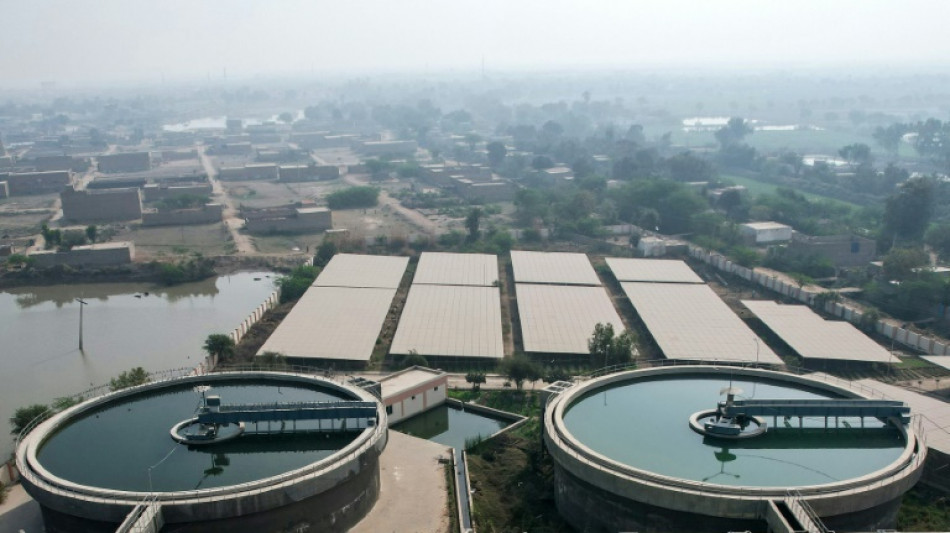
Trump aid cut imperils water scheme in scorching Pakistan city / Photo: Fida HUSSAIN - AFP
 Florida State dismisses athletics director Alford and appoints interim leader

 Saudi Arabia warns it will react 'firmly' to Houthi attacks

 Designer Bob Mackie dies at 87 after career spanning television, stage and fashion
 'Widow's Bay' and 'The Pitt' win big at Emmy Awards

 China retail sales growth weakens further in August

 Eala to Yu Zidi: Six emerging stars set to light up Asian Games
 Brady and Bündchen’s former Brentwood estate combined luxury and resource-saving systems
 In Kashmir, lake weeds mix with traditional art

 Chinese architect Ma Yansong melds nature with 'futuristic feel'
 Trump says he will decide whether US pursues Iran deal
 'Widow's Bay' and 'The Pitt' take key Emmy awards

 Television's A-listers glitter on Emmys red carpet

 US Supreme Court blocks Trump mail-in ballot restrictions

 Dodgers clinch playoff berth in bid for third straight World Series

 Doomers and boosters: who's who in the AI wars

 GAC presents autonomous trucks and MONTX concepts at Hannover show

 EU extends Russia sanction deadline

 Thai wildlife investigators track traffickers through social media

 PRAAMS Launches AI Co-Investor 5.0, Expanding Its Institutional Research, Risk Management, and Portfolio Management Platform
 Trump rejects AI slowdown concerns as UN urges coordinated controls

 US judge postpones new visa rules for foreign students, journalists

 Higher wages draw migrant workers to Kashmir despite attacks

 Oil supply concerns and AI warnings weigh on global markets

 'I am the hoax buster': Trump rejects AI danger warnings
 Macklemore dropped from Ed Sheeran tour after 'free Palestine' speech

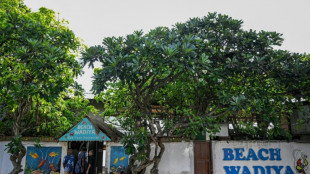
In one of the world's hottest cities, fresh and filtered water can quench the searing onslaught of climate change -- but US President Donald Trump's foreign aid freeze threatens its vital supply, an NGO says.
Pakistan's sun-parched Jacobabad city in southern Sindh province sometimes surpasses 50 degrees Celsius (122 degrees Fahrenheit) in increasing heatwaves causing critical health problems like dehydration and heat-stroke.
In 2012, USAID committed a $66 million grant to uplift Sindh's municipal services, including the flagship renovation of a plant pumping and purifying water from a canal 22 kilometres (14 miles) away.
But Pakistani non-profit HANDS says Trump's aid embargo has blocked $1.5 million earmarked to make the scheme viable in the long-term, putting the project at risk "within a few months".
"This has transformed our lives," 25-year-old Tufail Ahmed told AFP in Jacobabad, where wintertime temperatures are already forecast to pass 30C next week.
"If the water supply is cut off it will be very difficult for us," he added. "Survival will be challenging, as water is the most essential thing for life."
Between September and mid-January Sindh saw rainfall 52 percent below average according to the Pakistan Meteorological Department, with "moderate drought" predicted in the coming months.
Heatwaves are becoming hotter, longer and more frequent due to climate change, scientists say.
- Services withdrawn -
The project pipes in 1.5 million gallons (5.7 million litres) daily and serves about 350,000 people in Jacobabad, HANDS says -- a city where grinding poverty is commonplace.
HANDS said it discovered Trump's 90-day freeze on foreign assistance through media reports with no prior warning.
"Since everything is just suspended we have to withdraw our staff and we have to withdraw all services for this water project," HANDS CEO Shaikh Tanveer Ahmed told AFP.
Forty-seven staff, including experts who manage the water purification and service the infrastructure, have been sent home.
The service will likely stop functioning "within the next few months", Ahmed predicted, and the project will be "a total failure" unless another funder steps in.
The scheme is currently in the hands of the local government who lack the technical or revenue collection expertise HANDS was developing to fund the supply from bill payments, rather than donations.
The international aid community has been in a tailspin over Trump's campaign to downsize or dismantle swathes of the US government -- led by his top donor and the world's richest man Elon Musk.
The most concentrated fire has been on Washington's aid agency USAID, whose $42.8 billion budget represents 42 percent of humanitarian aid disbursed worldwide.
But it accounts for only between 0.7 and 1.4 percent of total US government spending in the last quarter century, according to the Pew Research Center.
Trump has claimed USAID is "run by radical lunatics" while Musk has described it as a "criminal organisation" needing to be put "through the woodchipper".
In Jacobabad, 47-year-old local social activist Abdul Ghani pleaded for its work to continue.
"If the supply is cut off it will severely affect the public," he said. "Poverty is widespread here and we cannot afford alternatives."
- 'Supply cannot be stopped' -
Residents complain the Jacobabad supply is patchy but still describe it as an invaluable service in a city where the alternative is buying water from private donkey-drawn tankers.
Eighteen-year-old student Noor Ahmed said before "our women had to walk for hours" to collect water.
HANDS says the private tankers have a monthly cost of up to 10 times more than their rate of 500 rupees ($1.80) and often contain contaminants like arsenic.
"The dirty water we used to buy was harmful to our health and falling ill would cost us even more," said 55-year-old Sadruddin Lashari.
"This water is clean. The supply cannot be stopped," he added.
Pakistan -- home to more than 240 million people -- ranks as the nation most affected by climate change, according to non-profit Germanwatch's Climate Risk Index released this year and analysing data from 2022.
That year a third of the country was inundated by unprecedented monsoon floods killing more than 1,700 and causing an estimated $14.9 billion in damages after a punishing summer heatwave.
Jacobabad's water system also suffered heavy damage in the 2010 floods which killed almost 1,800 and affected 21 million.
Pakistan produces less than one percent of global greenhouse gas emissions which scientists say are driving human-made climate change.
Islamabad has consistently called for countries which emit more to contribute to aid for its population suffering on the front line of climate change.
"It's incredibly hot here year-round," said Lashari. "We need water constantly."
D.Kaufman--AMWN